
Online Classes and Conflicting Desires


Voting offers limited information, and that’s true whether voting with your ballot or with your feet. When you chose Smith over Jones, was it because of a policy position, a party identity, personal familiarity, or because you liked their name better? And if it was based on a policy position—most votes aren’t, at least directly—did you understand the nuances behind the policy?
Political scientists have long spilled ink over the “ignorant voter” problem (or the “false consciousness” problem, if you prefer). People don’t always know what they want, or what’s implied by what they want, or how a given policy is likely to affect their chances of getting what they want. It isn’t a new issue. John Stuart Mill proposed giving educated people more votes than less educated people, on the theory that they’d be better able to take the long view than the shortsighted masses. (As it happens, educated people can be shortsighted, too …)
The fear of “demagogues,” or leaders who pander to the masses’ worst instincts, goes back at least to ancient Greece. In the U.S., part of the point of the Electoral College was to prevent the election of demagogues. Some of us have thoughts on how well that has worked, as well as what those “worst” instincts were, but the idea was there.
What happens when freely expressed individual choices lead to collectively bad outcomes? More interestingly, what should happen?
Conflicting desires play out beyond electoral politics. I’m seeing it in the push-pull of students wanting a more robust on-campus college experience while simultaneously crowding into online classes. The desire for a robust on-campus experience conflicts with the desire for a convenient schedule.
A few weeks ago, we had a student speak-out on campus, in which students could ask any questions they wanted of college leadership. Several students asked variations on “Why can’t we have more on-site classes?” The unpleasant but true answer is that to make the budget work, classes need critical mass of enrollments. If the online section of Intro to Hypothetical Studies routinely fills at 25, but the in-person version putters along in the low single digits, there isn’t really an argument to be had. Students vote with their feet, wisely or not.
Perhaps contrary to internet stereotypes, the admins with whom I work agree that we’d rather see more students take in-person classes. The academic outcomes are better, cheating is harder and the livelier campus adds another dimension to the experience. But as public funding continues to decline and we rely ever more on tuition, we don’t always have the option of pushing back.
When online classes were relatively new and enrollments were a lot higher, it was easier to see online classes as ways to expand access for people who otherwise couldn’t attend. Asynchronous online classes work well for working adults, people with heavy caregiving responsibilities and those with mobility issues. They also worked to help students with jobs build some flexibility into their schedules.
Over time, though and especially since the pandemic, online classes have become the new normal in what we used to call “chalk-and-talk” disciplines. Between dual enrollment and online classes, the physical presence of classic gen ed classes on campus simply isn’t what it used to be. That has a predictable effect on campus life.
Some students have picked up on that, and they want to regain what has been lost. Honestly, I want that for them, too. But the market wants what the market wants, and we don’t have the economic breathing room to ignore it. I wish the market knew better, but here we are.
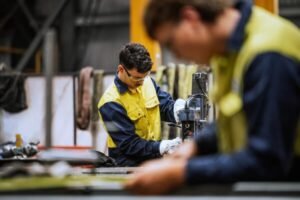
The impact is uneven across disciplines. We don’t offer welding or dental hygiene online, for obvious reasons. Nursing, culinary, phlebotomy, HVAC and the like really have to be taught in person. Those fields are also relatively AI-proof in the sense that, say, Anthropic isn’t going to weld that pipe for you. That helps, but it still leaves real gaps.
My colleagues and I don’t want to go back to the days before online classes (or dual enrollment, for that matter). But we would like to see more students roaming the halls, talking to each other and seeing what they’ve been missing. I can’t help but wonder how much of their voting with their feet reflects not knowing what they could have had.
You may be interested
Cyclospora triggers a trust crisis for Taco Bell, Taylor Farms
new admin - Jul 24, 2026[ad_1] Health and Human Services Secretary Robert F. Kennedy Jr. said this week that the cyclospora outbreak is “under control.”…
NCAA D1 Board Has No plans To Change Age-Based Eligibility Rule
new admin - Jul 24, 2026[ad_1] NEWYou can now listen to Fox News articles! The NCAA Division I Board of Directors doubled down Thursday on…

Pentagon website “anomalies” that removed names of 4 killed in Iran war remain
new admin - Jul 24, 2026The Pentagon website that informs the public about the dead and wounded in different military conflicts removed four deaths from…