


Why Read “The Infinity Machine” in the Age of Half-Crappy University AI

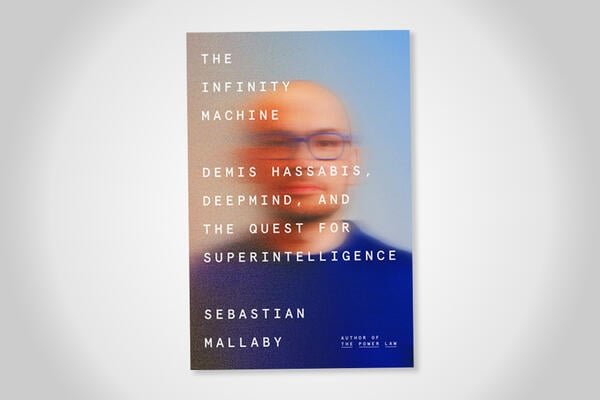
The Infinity Machine: Demis Hassabis, DeepMind, and the Quest for Superintelligence by Sebastian Mallaby
Published in March 2026
Universities are living through the age of half-crappy AI. Reading The Infinity Machine is a data point in support of the idea that this age will end sooner than we might think.
Anyone thinking about the future of AI and the university needs to gather information from outside higher education, because basing our understanding of the AI future on the present state of campus AI will limit more than it enlightens.
The Infinity Machine tells the origin story of DeepMind (now Google DeepMind), and its co-founder, Nobel Prize winner Demis Hassabis. I didn’t know that I’d be interested in the DeepMind, Google AI or Hassabis story until I read The Infinity Machine. Part of my enthusiastic recommendation for the book comes down to the fact that Sebastian Mallaby is a terrific writer. The (major) part of why I think you will like this book, and why it is worth your precious time to read, is for what The Infinity Machine might illuminate about the future of campus AI.
Unless you are a total AI nerd, the two things you are likely to know about DeepMind are AlphaGo and AlphaFold. While the first AI mastered Go, the second (for which Hassabis won the Nobel Prize) revolutionized the science of modeling protein folding. Where generative AI gets all the headlines (and campus controversy), advances such as AlphaFold provide glimpses of AI’s true trajectory.
DeepMind, an Alphabet subsidiary, was spun back into the Google mother ship in response to OpenAI’s November 2022 release of ChatGPT. As the book details, this changed DeepMind from a research lab (mostly) focused on scientific AI to an engineering team (mostly) focused on product releases, like Gemini. Those DeepMind AI scientists and engineers, however, still deeply believe that the current era of generative AI will be a brief stop along the way to useful, practical and transformative artificial general intelligence, also known as superintelligence. (Hence the subtitle of the book).
The belief—at least within DeepMind—is that what AI did for the field of protein science with AlphaFold, tomorrow’s AI will similarly revolutionize, well, everything. How might the analogy of AI-driven advances in protein science map to potential future AI advances in what happens at colleges and universities? What might change if the AI we use today stopped hallucinating, gained situational awareness and became smart enough to exercise judgment?
Can we imagine a (near) future in which ubiquitous, embedded, integrated and embodied AIs operate as trusted collaborators rather than shortcuts for producing suboptimal text, decks and spreadsheets?
What are you reading?
You may be interested

Next James Bond film screenwriter speaks out on his script inspiration | Films | Entertainment
new admin - May 21, 2026Last year, Denis Villeneuve was announced as the director of the next James Bond movie, alongside Steven Knight as screenwriter.…

Xavi Talks New Album ‘Dosis,’ Barack Obama
new admin - May 21, 2026[ad_1] For the past two years, Xavi has been on a non-stop roll. The música mexicana singer took the genre…
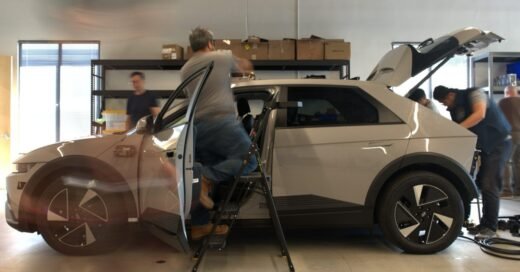
Uber is deploying its own self-driving cars again, just not as robotaxis
new admin - May 21, 2026Uber is putting its own autonomous vehicles back on the road as part of its new AV Lab project to…