

Sonny Rollins, Jazz’s Saxophone Colossus, Dead at 95

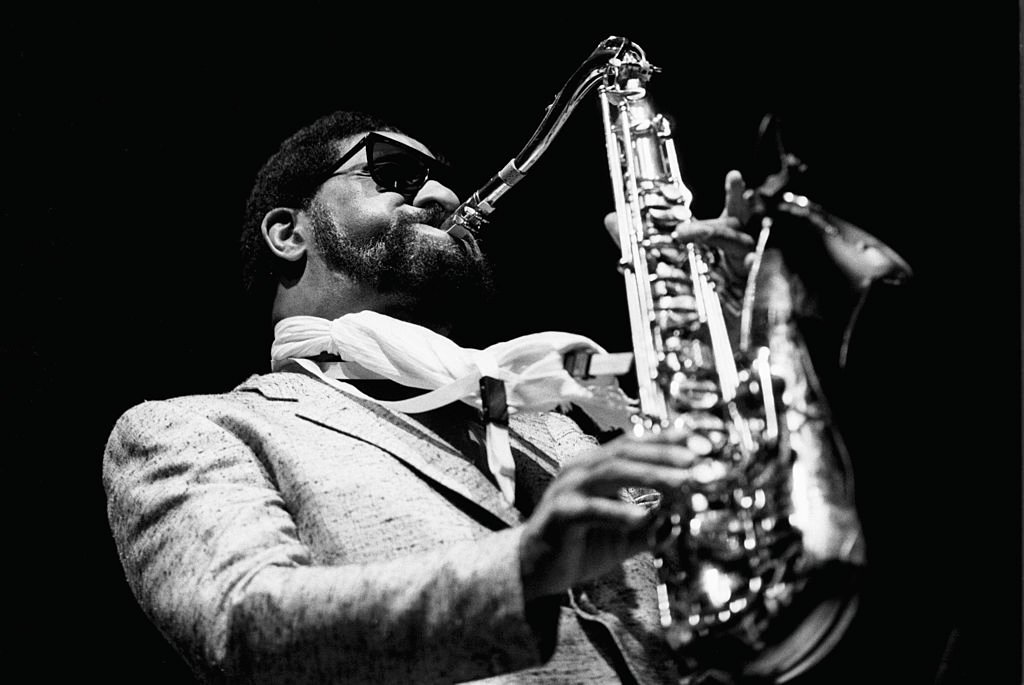
Sonny Rollins, the jazz legend dubbed the Saxophone Colossus who redefined the language of jazz with his inimitable improvisational skills, died on Monday at his home in Woodstock, NY. He was 95.
His death was confirmed in a statement by his publicist, Terri Hinte. A cause of death was not immediately available. The statement announcing Rollins’ death included a 2009 quote from the musician: “I think when the creative person ends, he continues in the next existence. I’m a person who believes this life isn’t the be-all and end-all of everything. A spiritual person doesn’t feel like that.”
The Harlem-raised Rollins came to jazz at an early age, first as a pianist before switching to the saxophone. “My mother gave me my first saxophone, an alto saxophone, when I was 7 years old. I got the saxophone and I went into the bedroom and I started playing — that was it,” Rollins told Jazz Times. “I was in seventh heaven. My mother had to call me: ‘It’s time to eat dinner and come out.’ I could have been there forever. I love playing by myself. I’m practicing but I’m also communicating with my musical muse.”
While still in high school, Rollins honed his craft on the tenor saxophone alongside fellow Harlem classmates Jackie McLean and Art Taylor, and upon graduation, immediately joined bands led by established bebop greats like trumpeter Fats Navarro and pianist Bud Powell; one of Rollins’ earliest recorded appearances was on 1949’s The Amazing Bud Powell, a landmark in the hard bop genre that Rollins would soon pioneer.
Rollins’ trajectory was briefly halted by a stint in prison for armed robbery and a heroin addiction that he managed to kick by the mid-Fifties, but amid his troubles was able to participate in the historic 1951 session that yielded Miles Davis’ Dig. Additional sessions alongside Davis would result in Collectors’ Items and Bags’ Groove, the latter featuring the Rollins-penned “Oleo,” a signature tune that would become a jazz standard and performed by the likes of Davis, Coltrane, Eric Dolphy and countless more.
In a career that spanned decades — from the late 1940s to his retirement in 2014 — the Fifties were perhaps Rollins’ most fertile period, with the saxophonist playing sideman on jazz classics by Thelonious Monk (Monk, Brilliant Corners), Dizzy Gillespie, Max Roach and Davis in addition to his most vital string of albums as band leader.
Recording for Bob Weinstock’s Prestige Records for the middle part of the decade, the saxophonist released his Sonny Rollins With the Modern Jazz Quartet, Moving Out, Work Time, Sonny Rollins Plus 4 and Tenor Madness (the title track featuring Rollins alongside an emerging John Coltrane) before Rollins recorded what’s considered his tour de force as band leader, 1957’s Saxophone Colossus.
“To saxophonist Sonny Rollins, the recording of Saxophone Colossus didn’t seem that different from any of his previous albums. To jazz fans, however, it would become… one of the defining albums of Rollins’ career,” the Library of Congress wrote in 2017 when the album was entered into the National Recording Registry. “With only five tracks and under 40 minutes, the album may appear slight, but the quality of the music has earned it a place of honor among jazz fans for more than 60 years. Solidly anchored by a rhythm section of drummer Max Roach, bassist Doug Watkins and pianist Tommy Flanagan, Rollins is able to solo with power, grace and humor.”
Even decades later, Rollins said of what’s considered his greatest work, “It was just another record date, you know? It wasn’t one of my first dates as a leader, so it didn’t have any particular significance. Of course, I had great musicians on that record, and with great musicians the music was always paramount—trying to make it the highest quality. But other than that there was no reflection at that time about that album, or even later.”
Less than a year after the Saxophone Colossus session, Rollins and two musicians he’d never with played with before — bassist Ray Brown and drummer Shelly Manne — congregated in a Los Angeles studio for a late-night session that produced another jazz masterpiece Way Out West, with the stripped-down backing — the lineup was the among the first in jazz to not feature a pianist — serving as the steady foundation for Rollins’ robust exploration.
“Basically, if I had my druthers, I prefer the sax, drums and bass format,” Rollins told Jazz Times. “I think that really gives the artist the most leverage and the most freedom to create.” A three-piece lineup — with Rollins, drummer Max Roach and bassist Oscar Pettiford — would feature on the saxophonist’s excellent Freedom Suite.
(While Rollins later claimed that Ornette Coleman inspired him to play piano-free, it was actually Coleman who was influenced by 1957’s Way Out West, with the free jazz trailblazer employing a similar configuration on his 1959 classic The Shape of Jazz to Come.)
Following his white-hot streak at the forefront of jazz, Rollins took a three-year sabbatical from recording — from 1959 to 1962 — but continued to his fine-tune his artistry; Rollins claimed that he spent most of that time playing saxophone on the Williamsburg Bridge. “What made me withdraw and go to the bridge was how I felt about my own playing,” Rollins told the Guardian. “I knew I was dissatisfied.” When Rollins finally did return to the studio, his first album back was titled, appropriately, The Bridge.
Over the next decade, Rollins — established as the genre’s best improviser on tenor saxophone — continued to record and perform at a torrid pace, playing alongside fellow jazz legends like Don Cherry, Coleman Hawkins, Ron Carter, Herbie Hancock, Elvin Jones and more, and composed the music for the hit 1966 British film Alfie in addition to his own free jazz foray with East Broadway Run Down.
Following another lengthy sabbatical in the late Sixties where Rollins practiced meditation, he returned in the 1972 with Next Album, the first in a run of albums on Orrin Keepnews’ Milestone Records.
In 1981, Rollins made one of his most enduring appearances by providing the sax solo on the Rolling Stones’ Tattoo You hit “Waiting on a Friend,” with drummer Charlie Watts — long an admirer of Rollins’ — recommending him to his band mates, and Rollins’ own wife encouraging him to participate. “There are people who burn bright and fade quickly, and there are those who burn bright and keep going. You have to admire that. Sonny has never made a bad record – ever; some are simply greater than others” Watts said of Rollins in 2010.
“When he stands and plays, there isn’t a saxophone player who doesn’t look on in awe. He’s the last one standing, and he’s still playing as well today as he was then. He’s still at the peak at what he does. It’s great inspiration that there isn’t really a time limit, but very few people can do it at that level.”
(Rollins — who played on three Tattoo You tracks — later told the New York Times of playing on the Stones’ single, “The Rolling Stones, I didn’t relate to them because I thought they were just derivative of black blues. I do remember once I was in the supermarket up in Hudson, New York, and they were playing Top 40 records. I heard this song and thought, ‘Who’s that guy?’ His playing struck a chord in me. Then I said, ‘Wait a minute, that’s me!’ It was my playing on one of those Rolling Stones records.”)
One of Rollins’ noteworthy releases this century came just days after September 11, 2001: Living blocks from the World Trade Center at the time of the attack, Rollins was forced to evacuate his apartment with only his saxophone in hand. Just days later, on Sept. 15, Rollins staged a concert in Boston that was later released as his acclaimed and cathartic Without a Song: The 9/11 Concert.
Fellow jazz legend the late Wayne Shorter once said, “I don’t have a favorite Sonny Rollins album. I just have the whole total of Sonny Rollins in my pores, in my body, in my entity.”
Rollins received the Grammys’ Lifetime Achievement Award in 2004, followed by a National Medal of Arts in 2010 and the Kennedy Center Honors in 2011. However, in 2012, Rollins made played what would be his last concert and, two years later, revealed his retirement from music due to pulmonary fibrosis. “My main problem is that I can’t blow my horn anymore. I’m surviving, but my problem is I can’t blow my horn,” Rollins told The New Yorker during the Covid-10 pandemic.
Despite his forced retirement, Rollins told Jazz Times in 2020, “I still have hopes of improving and sounding better and making a better record. Hope burns eternal. I’m going to put off going into the vaults and trying to find something I’ve done before.”
As Rollins approached his 90s, ensconced in his home in Woodstock, New York, he talked about the inevitable end of his career.
“Dying, it’s funny,” Rollins, a believer in reincarnation, told the New York Times in 2020. “Everybody is afraid to die because it’s the unknown. But my mother died. My father died. My brother died. My sister died. My uncle died. My grandmother died. They’re all great people. If they can die then why can’t I die? I’m better than they are? It’s ridiculous to feel, Oh, gee, I shouldn’t die. My body is going to turn into dust. But my soul will live forever.”
You may be interested

Grand Theft Auto VI exists in its own universe
new admin - Aug 23, 2026This is The Stepback, a weekly newsletter breaking down one essential story from the tech world. For more on GTA…
'I visited UK's caravan capital – I was shocked to find people completely on the edge'
new admin - Aug 23, 2026With over 150 caravans lining Glastonbury's streets, there's growing friction between van-dwellers and 'bricks and mortar' residents Source link

Best tanks, top general and the truth behind Hitler's biggest myth – WW2's wildest debates
new admin - Aug 23, 2026As the hit podcast We Have Ways of Making You Talk arrives in book form, its creators ponder some of…