


Valuing Black Studies Requires Valuing Black People


Reporters, radio show hosts and podcasters have reached out in recent days asking to talk with me about the state of Black studies programs and departments on campuses across the country. “Universities that have closed or merged African American studies units over the past two years include the University of Iowa, the University of Texas at Austin and the University of Kansas,” Todd Wallack wrote in a Washington Post article last week. “Others have eliminated or begun phasing out majors and degrees, including Kennesaw State University, the University of Toledo and Indiana University at Bloomington. Several colleges have also trimmed classes, removed them from the core curriculum or cut staff.”
Wallack notes that declining enrollments, the anti-DEI policy environment and federal budget cuts to higher education are being used to justify the elimination of Black studies programs: “U.S. colleges awarded fewer than 700 African American Studies degrees in each of the past three years, the lowest levels in two decades.” This is indeed alarming. Could enrollment declines be explained, at least in part, by insufficient institutional efforts to attract student applicants to Black studies? Could it be that too few colleges and universities value Black studies enough to strategically showcase it as one of the most important academic offerings on campus? Or might it be that enrollment declines signal something bigger: an undervaluing of anything and everything in higher education—except big-time revenue-generating sports—that involves Black students and employees?
“This university does not care about Black people” is one of the strongest and most recurring appraisals that Black students, faculty and staff offer during interviews for my qualitative campus climate studies. For years, students have named Black studies courses, along with Black culture centers, as the only sites on campus that offer affirmation, cultivate sense of belonging and provide culturally relevant learning opportunities. Accordingly, these are spaces where Black students recover from “onlyness’ (being the only one or one of only a few Black people in almost all their courses), microaggressions and overt encounters with racism on campus.
Defunding or altogether eliminating Black studies will surely exacerbate racialized persistence and experiential and student outcomes inequities on predominantly white campuses. Black students will be most negatively affected, which will delight white supremacists and others who do not believe that Black people actually deserve to be admitted to or employed by colleges and universities that were never designed with us in mind.
Consider a racially stratified institution where the overwhelming majority of Black professionals work in food service, groundskeeping and custodial positions; where Black people are terribly underrepresented in professorships, directorships, deanships and executive leadership roles; where Eurocentric content and ways of knowing continually pervade the curriculum; where white students and employees get away with calling Black people the N-word without consequence; and where Black people routinely encounter racist stereotypes, racial profiling and at times racial violence on campus. It should surprise no one that Black studies is not valued at those places. I am acknowledging, not normalizing or excusing any of this.
The devaluing of Black studies is persistent and pervasive, not new. The field emerged first and foremost from the brilliance of Black writers, teachers and thinkers. Its formal creation and multiplication on campuses across the country are attributable to student protests throughout the 1960s at Merritt College, San Francisco State College and elsewhere. Black student activists and allies demanded the creation of courses, curricula and full academic programs where everyone (including, but not limited to Black collegians) could learn about Black history and culture. Institutions resisted. Many invested the bare minimum into infrastructure, physical spaces and faculty hires for the earliest Black studies programs. In most places, that never changed. Black studies has always had to fight for its life and operate without sufficient resources.
For myriad reasons, my love for Black studies is deeply personal. I highlight a half dozen herein. First, I have been Black for 50 years. I love Black people, history and culture enough to demand inclusion. Giving us scraps has never been acceptable to me. Second, I love America enough to insist that its full truths be taught and learned, including what it did and still does to Black people. I want these truths to be rigorously taught and learned across the curriculum. But Black studies is the place I trust most for such curricular consistency and integrity. To be sure, I want both: Black studies departments and the teaching of Black topics everywhere else.
Third, I love very smart people. Many on last week’s list of A-plus Black scholars teach in Black studies at elite postsecondary institutions. Many more teach at historically Black colleges and universities, including the one from which I proudly graduated. During my decade on the University of Pennsylvania faculty, one of my three appointments was in Africana studies. Some of the smartest people I have ever met were my colleagues there. I am a proud member of the Black Studies Center here at the University of Southern California. Because the faculty scholarship is so extraordinary and because we do the outsize work of exposing USC students across all racial groups to Black content that prepares them for work and citizenship in a racially diverse democracy, ours really should be a department—at very least, a full academic program.
Fourth, I am a lover of interdisciplinarity. By design, Black studies is deeply and impressively interdisciplinary. Colleges and universities that claim to value interdisciplinarity ought to recognize Black studies as a constant exemplar that deserves more, not fewer resources. Fifth, I love colleagues and academic units that do what I called “accepting educational responsibility” in my American Educational Research Association presidential address. Many people misunderstand Black studies to be only for Black students. On the contrary, Black studies faculty have always accepted responsibility for ensuring that all students—including Asian Americans, Latinos, Native Americans and whites—do not go into workplaces and societies with racist, inadequate and anti-Black misunderstandings of who Black people are.
The sixth reason I highlight here is most important: I love Black elders and greatly value enduring treasures they left behind. Black studies is one of those treasures. Black Americans fought for the creation of Black studies in the 1960s. They and others continued fighting throughout the ’70s, ’80s, ’90s and 2000s. I love them for never giving up and for refusing to be pushed off campuses. Generations of Black scholars give me hope during these outrageous times. As has always been the case, it will be Black people who fight for and ultimately save Black studies. I will continue doing my part to ensure that these programs and departments, as well as Black people within and beyond them, are valued in higher education.
You may be interested

Nepal flood rescue recovery efforts keep hope alive for some, but not all, as 4,200 people remain missing
new admin - Aug 31, 2026Kathmandu, Nepal — Five days after a rocky mountainside and the glacier it supported collapsed near Nepal's border with Tibet, unleashing…
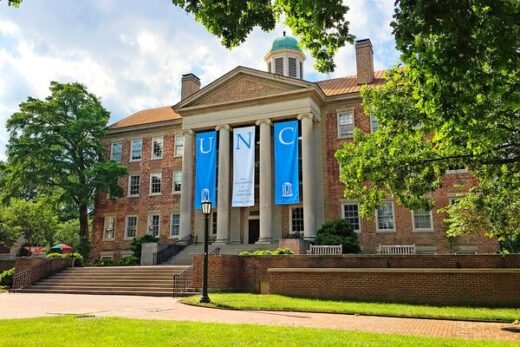
UNC Ends Study Abroad Program in China
new admin - Aug 31, 2026[ad_1] The partnership with Fudan University in Shanghai was last renewed in 2022. DNY59/iStock/Getty Images The University of North Carolina…

The sardine shortage is real. Why the tinned fish is sometimes hard to find
new admin - Aug 31, 2026[ad_1] Where are the sardines? The humble little fish, once a plentiful, budget-friendly staple in your grandpa’s pantry, can sometimes…