

Higher Ed Needs to Prove Students Are Learning (column)

Over the last few weeks, I’ve talked to some of the sharpest people I know about a topic that’s been troubling me.
It’s this: After decades covering higher education, and now doing what I can to help figure out how the industry can win back public trust, I’ve concluded that colleges and universities collectively are unable—or have declined—to measure and prove whether and how much their students learn.
As a result, we lack tangible, direct and incontrovertible proof that colleges and universities actually help learners develop the capabilities, skills and habits of mind that the institutions purport to deliver.
Why does that matter? Well, it’s hard to persuade people that your primary “product” is worth paying for when you can’t prove they’re actually getting it. That’s going to get even harder as AI continues to scramble our sense of what knowledge and skills are going to matter going forward.
I’m not saying I don’t believe learning happens in college: I have a lifetime of anecdotal and personal evidence from the many people I’ve seen grow and thrive after being at our institutions, and there’s no shortage of data that shows the economic, health, civic and other benefits that college-goers collectively display.
But believing (and asserting with authority, which is what college and university leaders do best) is different from knowing (in your heart and in your head, as I suspect many of you do). And knowing is different from proving.
Higher ed never really had to prove itself. Through the 1970s, at least, most people took for granted the wisdom of going to college, especially those fortunate enough to go, but even many Americans who strove to be among them (or for their kids to be).
To the extent evidence for the benefits of college was sought or put forward, it consisted mostly of the “million-dollar premium” in lifetime earnings that economists showed accrued to those with a degree over those who lacked one.
Because higher education got the public’s benefit of the doubt, institutions, individually and collectively, never really felt significant pressure to prove themselves. That was especially true of the colleges and universities that the public (and journalists and politicians, their narrators) widely presumed to be the best. You know the ones—those that have lasted the longest, enrolled the students with the highest test scores and grades, had the most esteemed professors, and topped the U.S. News rankings (based heavily on indicators like those).
Doubts always nagged, though, accelerating periodically when recessions hit, job markets tightened, government spending or student debt spiked, or Americans (or their self-appointed spokespeople, politicians and journalists) otherwise started wondering whether college was really “worth it” for individuals.
There’ve been a handful of crucible moments—the culture-war critiques of Bill Bennett, Allan Bloom and Dinesh D’Souza in the 1980s, the push for student learning outcomes by then–Education Secretary Margaret Spellings’s Commission on the Future of Higher Education in the mid-2000s, and the post–Great Recession debt concerns that were accompanied by the publication of Academically Adrift. None was as serious as the crisis of confidence today.
Lacking actual data on what and how much students learn and grow, politicians and policymakers have opted to rely on proxies they can measure, like postcollege earnings, to try to gauge postsecondary quality and success, even though they are reductionist and ignore many other contributions a higher education makes for individuals and society.
Imperfect as they are, that data tells a story of most programs at most institutions surpassing the very low floor of leaving graduates better off than peers with only a high school diploma—but with enormous variation by job field, academic discipline, race and other demographic traits, region, and institution. This data has reinforced rather than resolved the public’s doubts.
And I’m increasingly convinced that unless and until we can prove to prospective students and their families, employers and governments that colleges and universities are really arming learners with the capabilities they say they do, higher education won’t win back hearts and minds (and tuition dollars).
I plan to return to this topic in the coming weeks, to dig further into how we got here, talk about the all-important question of what it is that we should be trying to measure (a hint: For me, it’s about “durable skills” that might remain vital, no matter what AI or any other technology ultimately throw at us), explore promising approaches to how we might measure, and share thoughts from smart people like Richard Arum, Tim Knowles, Kate McConnell, Johann Neem and Hollis Robbins (and some of you?). Please write about these issues.
I hope you’ll come touch the third rail with me.
You may be interested
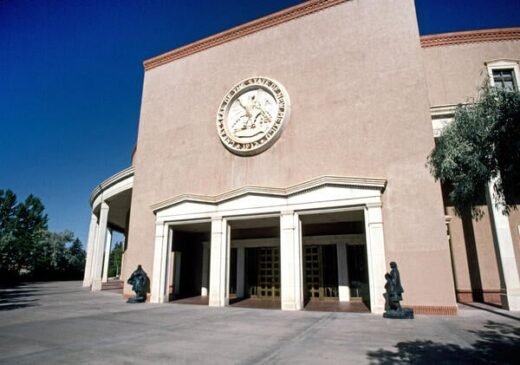
4 New DOJ Lawsuits Over Tuition for Undocumented Students
new admin - Aug 31, 2026[ad_1] New Mexico is now among 21 states being sued by the Department of Justice for offering in-state tuition to…
ED Awards TRIO Grants to Hundreds of Colleges
new admin - Aug 31, 2026[ad_1] The Department of Education announced $186 million in TRIO grants for college-access initiatives around the country. PeopleImages/iStock/Getty Images Plus The…

Student Parents in Texas Unaware of Key Supports
new admin - Aug 31, 2026[ad_1] For Laura Ann Castillo, juggling college with caring for her 11-year-old son, Mason, means carefully planning her class schedule…