


Pop Phenom’s Debut Sets Sights on Stardom

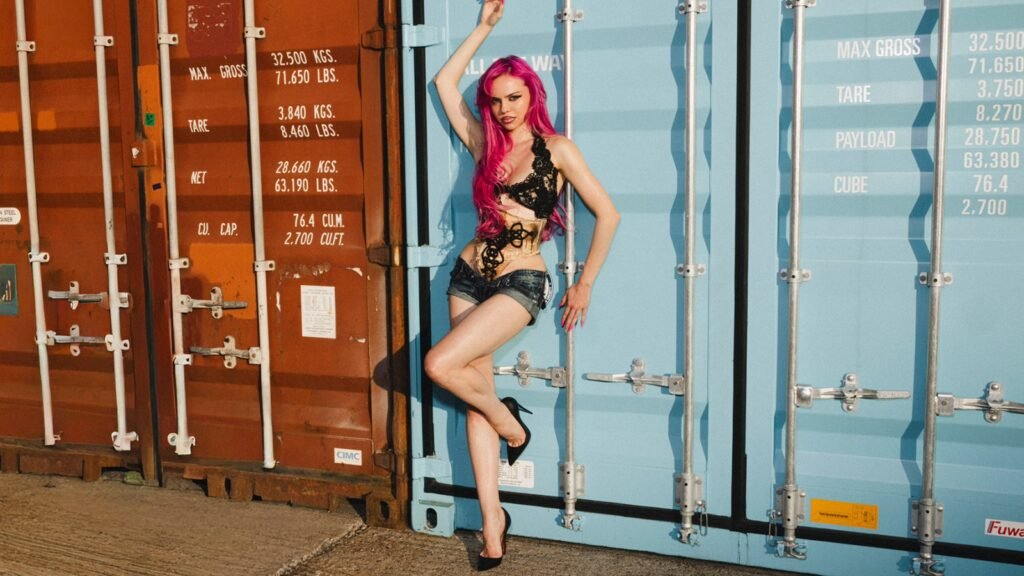
Adéla is missing home on “Therapy,” the penultimate song on her debut album, Prima. The quiet, almost distorted ballad shows a different side of the 22-year-old pop phenom: On the nine songs that precede “Therapy,” she is hungry for pop success. “KGB,” the rattling dance note on which she opens the album, is defined by its tenacity — the late nights she worked to learn English, the pop giants she studied while growing up in Slovakia, her plan to leave a bold mark on the genre. But “Therapy” is just sad.
Midway through the song, Adéla sounds deflated as she sings about her younger sister, who she’s been away from during her global journey to cement herself in pop. “When I left home, she was so tiny/Now I come back, and she is my size,” she says, “And that’s awful ’cause she’s my baby/And she grew up, grew up without me.” Her delivery is even more devastating than lines about not being able to afford to move her mom out to where she is, or having to smile in the faces of annoying old white men — her words — who “hold the keys to my future.”
Adéla surrenders (however reluctantly) to sacrifice and struggle because she knows how much she has already given up. She made the move to Los Angeles four years ago, then became one of the first girls eliminated from Pop Star Academy, the Netflix series that formed the girl group Katseye. Maybe she dodged a bullet — at least she isn’t selling Tic Tacs, candy bars, and car insurance. But she still has a long road ahead and she has to make it all count. Prima is an ambitious debut fueled by determination, pop potential, and a quick-witted perspective.
As the album’s lead single, “KGB” tries too hard to be convincing about something that comes far more naturally across the rest of the record. “You want a pop star with a big bra for them big hits/I wanna pop off so these big mouths can’t say shit,” she sings. It fizzles out fast, and the elaborate dance break she performs in the accompanying music video does little to save it. Adéla hits her stride when she stops telling you she wants to be a big star and starts showing you exactly why she should be one. In some instances, it feels as though she already is.
Anyone hoping to introduce Adéla to someone new should reach for “Nicole Kidman” before anything else. She delivers one of her most compelling vocal performances on the track over skittering, bass-heavy production courtesy of Blake Slatkin and Dylan Brady. “When I talk my shit, don’t interrupt me,” she sings in a soft tone that contrasts sweetly with the authority she commands across the song. It’s an ode to prominence and luxury (“Should I wear Louboutins or Jimmy Choos?”), but also her carefully timed humor. “My bra should probably be a bigger size, maybe that’s why they can’t look me in my eyes,” she considers, adding, “They’re up here.”
Adéla delivers these kinds of lyrics not with a wink, but with unwavering eye contact. “Always like to have the upper hand/It’s true, I like my boys a little feminine,” she sings on “I’m the Man,” later offering, “Why don’t you come and sit on my lap? Slap on your ass.” She leans in more on the animated and racy “Fantasize.” They’re both dance floor-ready, but don’t come close to the entrancing pull of “Boys.” Adéla draws from the Britney Spears playbook on the track and ends up with a riotous song destined for Top 40 dominance.
Prima is careful not to venture too deeply into referential territory, but sometimes, she can’t seem to help it. She goes back to peak 2015 hyperpop on “Marijuana” with drudging lyrics like “Playin’ Nirvana, ride you in your Honda/I like how you look at me like I’m the next Madonna,” and could have left “Starving Artist” off the record entirely — it’s way too soon to feel like we’re listening to Tate McRae throwaways. The song might have worked fine for someone who doesn’t have as much to say. Adéla titled the break-up piano ballad “Hitachi” after a vibrator brand and rhymed “dirty shoes” with “dad issues” on the standout “Red Bottoms.” Predictable doesn’t really work for her.
“I’d rather be a nobody than to be like everyone,” Adéla sings on “Ain’t in LA,” the final song on Prima, which is on track to become the defining song of her career thus far. There’s no better option on the album. While the record drew early comparisons to the aesthetics that flooded the internet in 2016, “Ain’t in LA” is more spiritually connected to 2013 — and not just because it features bass-flooded vocals from Theron Thomas, who also appeared on Miley Cyrus’ “We Can’t Stop” that year.
There’s an optimism to “Ain’t in LA” that has landed a bit corny and theatrical over the past decade. Self-consciousness has embedded itself too deeply in our collective culture, replacing the abandon needed to strive without embarrassment, or take a chance on the choice that doesn’t feel the safest. Adéla can’t afford to not take the chance. Her confidence and attitude are essential to who she is as an artist, and there’s more waiting out there. Even when she seems weighed down by the pressure of proving herself, Adéla makes it easy to root for her. As she shakes off the doubt and sharpens her perspective, it all starts to click.
You may be interested

£130 fine warning if caught breaking school gate restrictions when dropping kids off
new admin - Sep 04, 2026Parents face fines for breaking school gates restrictions during drop-off and pick-up times, as councils crack down on school run…

Newsom tours the South as speculation grows about a future White House run
new admin - Sep 04, 2026Newsom tours the South as speculation grows about a future White House run - CBS News Watch CBS News California…

Oh good, looks like yet another swarm of rogue AI agents from OpenAI
new admin - Sep 04, 2026A swarm of rogue AI agents from OpenAI reportedly commandeered a German website and transformed it into a messaging board…