




Ohio State to Pay Feds $2.1M Over Researchers’ China Ties

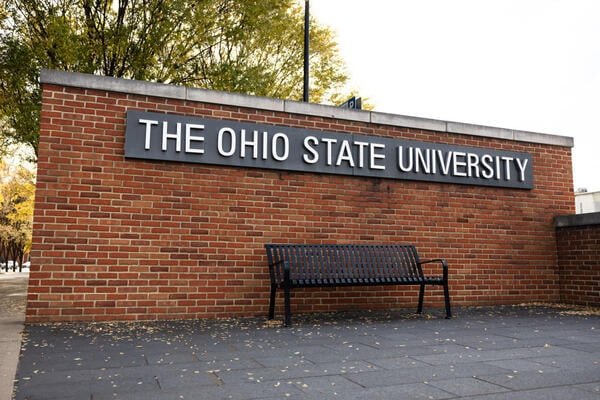
The settlement revolves around grants the university received from NASA and the NSF between November 2012 and August 2023.
Megan Jelinger/AFP via Getty Images
Ohio State University will pay the government $2.1 million to resolve allegations that it failed to disclose federally funded researchers’ ties to China, according to a settlement finalized last week.
The settlement, which is not admission of liability or guilt by OSU, centers around grants that the university received from the National Aeronautics and Space Administration and the National Science Foundation between November 2012 and August 2023. A 2011 federal law prohibits using federal grant money to collaborate with China, including its universities or companies.
While annual faculty activity reports submitted to OSU identified some affiliations with Chinese universities and research organizations beginning in 2014, the government alleges that the university did not share that information with NASA or the NSF. The government also alleged that OSU learned in 2019 that C. K. Shum, a principal investigator for the NASA-funded project, was part of China’s Thousand Talents Program—which recruits science and technology researchers from abroad—but did not inform NASA or NSF until 2023.
In 2024, OSU repaid a portion ($254,661) of the money it had received from NASA and NSF; the $2.1 million payment OSU agreed to last week is the remaining balance.
“Together with the Department of Justice and NASA, we have secured a major financial recovery on behalf of the American public,” Robert Steinau, a senior official at the NASA Office of Inspector General, said in a news release Monday. “We will not tolerate institutions that conceal foreign ties and compromise national security. Our cutting-edge research must not fall into the hands of our adversaries.”
In a statement to Cleveland.com, OSU spokesperson Chris Booker said Shum is no longer employed at the university, which has cooperated with federal authorities.
“Ohio State takes national security seriously, and the university has long been recognized for its efforts to promote research integrity and security,” he said. “Safeguards include dedicated research compliance and secure research offices, mandatory conflict-of-interest and research security disclosure systems, and robust security and foreign influence training programs.”
You may be interested

New York AG Slams St. John’s Suit
new admin - Sep 02, 2026[ad_1] CSU Teamsters rallied over the summer for contractually promised raises. Arwen Clemans/Los Angeles Times/Getty Images Skilled workers’ unions in…

America’s data center future is Loudoun County’s past
new admin - Sep 02, 2026InIn 2007, the US was on the cusp of an economic recession, and Buddy Rizer was tasked with finding Loudoun…

What One Year of “The Public Scholar” Taught Me
new admin - Sep 02, 2026[ad_1] A year ago, I started this column on the premise that the public wants what scholars know and scholars…