




Marking World Breastfeeding Week on Campuses (opinion)

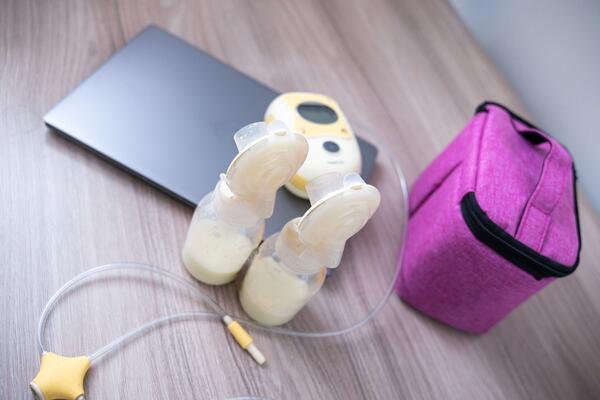
At 36 weeks pregnant, I clocked five miles a day inside the sprawling Toronto Convention Centre as I walked between conference sessions, ecstatic to be presenting three roundtable papers at the American Education Research Association annual meeting as a Ph.D. student. At 38 weeks pregnant, I defended my master’s thesis. The night after turning in my paperwork to receive my master’s degree, I went into labor. Luckily for me, my university gave me six weeks of paid leave to cover my spring semester assistantship teaching load. I spent my unpaid summer with my newborn finishing final course papers, and used student loans to cover my daily expenses. Once back at work for the fall semester, I was shocked by the difficulty I had trying to pump at work on my long days of taking classes and teaching. I expected it to be more straightforward at my university. But as many student parents and faculty parents find, that was not the case.
World Breastfeeding Week is this week, Aug. 1–7, and it’s a good time to celebrate positive changes in higher education settings related to reproductive labor like pregnancy, childbirth and infant-feeding, and to consider what can be done better. (Changing the name to use the more gender-inclusive term “bodyfeeding” would be a good way to start.) Since 2023, most workplaces are required by the federal PUMP Act to provide employees with time to pump and a private space for that purpose that is not a bathroom. There are also great new-ish resources, like the Pregnant Scholar, “the nation’s legal resource center on the rights of pregnant and parenting postsecondary students.” Many institutions offer paid parental leave for faculty and for graduate students. Yet, these changes aren’t enough. In higher education, we still treat reproductive labor as “women’s work” that happens outside the everyday routine of productive labor like teaching or taking courses and pursuing our scholarship. Far from a culture of support, there is a persistent “motherhood penalty” for the predominantly female-identified folks who perform reproductive labor.
Every department and every college needs to have clear, explicit and regularly shared policies and practices related to pregnancy, parental leave and lactation. But it doesn’t stop with just sharing this information with the expecting parent. All faculty need to be aware of the policies and practices related to reproductive labor, so that the culture of the department and/or college changes in tandem with the policies to value the reproductive care work in a structural way. All faculty need to know this information because they are mandated to comply with Title IX requirements related to pregnancy and lactation for their students, and because applying this knowledge is another way to support equitable outcomes for all.
It is not easy in the best of situations to navigate early parenthood, even for those with the most access and know-how about navigating their higher education institutions, such as faculty. Faculty who need accommodations for reproductive labor still face perceptions that they are less productive, and that childrearing is fundamentally “your own business.” Yet the narrative that personalizes reproductive labor contributes to the growing pro-natalist national sentiment that pushes for the “mother of the nation” who will save us from our rapidly declining birth rate by giving up her job and having lots of kids, rather than looking at systems that would support American women to not have to choose between a robust career and having children. Higher education institutions need to support their pregnant and parenting faculty explicitly because it’s the law, and because it makes the chances of more equity between the sexes higher.
The struggle to navigate reproductive labor is more precarious for undergraduate and graduate student parents, who constitute one in five undergraduates, and roughly one in three graduate students. The struggles of pregnant students have been well documented, as students often find administrators are unclear about available accommodations.
Though there are federal and state laws protecting pregnant and lactating employees, compliance with these laws varies. In her study about how workplaces implement lactation laws, Elizabeth Hoffmann found wide variation in their implementation both across and within workplaces, depending on the approaches of the managers and human resources specialists charged with enacting them.
In higher education institutions, Title IX coordinators are the key link between the parent and the information they need, and how they choose to act makes all the difference. But sometimes Title IX workers have too big of loads or other barriers to their effectiveness.
After struggling on my own journey to access needed information about how parental leave works, what my rights were as a pregnant scholar, and how to find lactation spaces (and take time to use them), I changed my own approach to begin explicitly outlining, verbally and in print, accommodations in the spaces where I am teaching or facilitating. In my syllabi, I include a section entitled “Reasonable Accommodations for Pregnancy, Childbirth, Lactation and Related Medical Conditions.” I outline the rights of individuals to be provided accommodations by the university with a hyperlink to the university’s policy. I include on my syllabus the explicit language “the University excuses a student’s medically necessary absences that are due to pregnancy, childbirth, lactation or a related medical condition. In addition, students may request excused break time during class to express milk.” In this section of my syllabus, I also include information and hyperlinks for a number of equity-related resources, including university and local supports for those who are food or housing insecure and for undocumented students, as well as the contact for the Title IX coordinator.
When I teach in person, I include information about the closest personal needs spaces in my welcome email to each class. I hyperlink the campus inclusivity map, which includes pins for gender-neutral bathrooms, sensory rooms, lactation rooms and meditation/prayer rooms. I write out the exact locations of the closest accommodations to the building where our classroom is and how to access them (is there a code? Do you need a key?). I make a slide for the first day of class that repeats the information in the syllabus and on the inclusivity map. I also do this when I facilitate faculty workshops, grants and any other meetings on campus.
Whether it is a broken leg, chronic pain, migraines, diabetes, pregnancy— we all have seasons or permanent conditions that deserve accommodation at systematic levels, and compassion on a personal one. While some folks argue that issues related to reproductive labor are individual problems, and that institutions need only do the bare minimum, our actual equity work occurs in the ways we implement policies in practical ways in our classrooms, departments and universities.
Whenever I talk about my research concerning teachers lactating in K-12 settings, colleagues in higher education are eager to tell me their stories. At conferences, in faculty writing retreats and in staff meetings, I learn how much parents across identities and institutional contexts have struggled, often alone, to balance being a new parent and being in higher education. We can make higher education institutions places that act out their commitments to equity by making policies and practices clear to everyone and by providing many ways to access the information.
You may be interested

New details in CIA chief John Ratcliffe’s unusually visible trip to Russia
new admin - Aug 27, 2026New details in CIA chief John Ratcliffe's unusually visible trip to Russia - CBS News Watch CBS News CIA Director…

Sleep score court is in session
new admin - Aug 27, 2026We all know that the woman who sits before you is tired. Just look at the circles under her eyes.…

Lindsay Clancy murder trial heads to closing arguments in Massachusetts courtroom
new admin - Aug 27, 20262m ago Lindsay Clancy trial crowd As of 8:10 a.m, there are more than 90 people in line waiting…