

Departing UNCF President Reflects on How HBCUs Have Changed

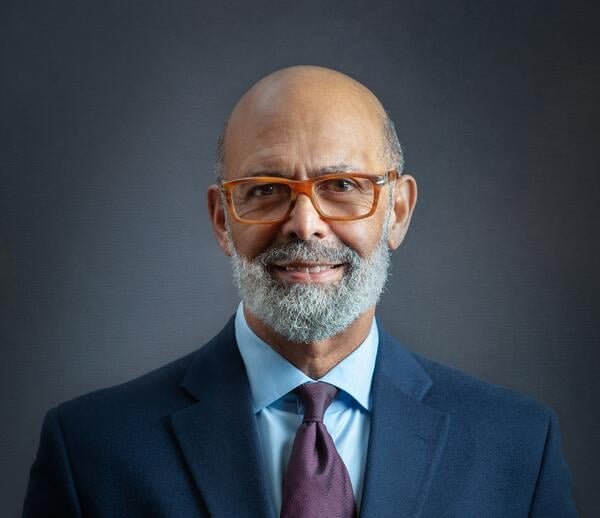
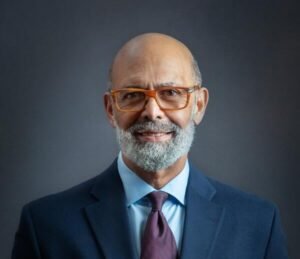
Michael L. Lomax has been the face of the United Negro College Fund, a major advocacy organization for historically Black colleges and universities, for 24 years. Now the organization that represents private HBCUs is looking for its next president and CEO as Lomax plans to step down next summer.
Lomax’s connection to HBCUs stretches back to his days as a Morehouse College student in the 1960s. At UNCF, he’s credited with raising over $4 billion to support the often underresourced institutions, creating a pooled endowment for HBCUs and raising their profile among philanthropists and policymakers of all political persuasions.
Though his tenure is coming to an end, the soon-to-be-retired HBCU thought leader says his work with the institutions is far from over. He spoke with Inside Higher Ed about what’s next for him and his hopes for the future of HBCUs.
The conversation has been edited for length and clarity.
Q: Reflecting on your career, how do you think the landscape for HBCUs has changed? How is the sector different now than it was when you first started at UNCF?
A: I thought we were going to go all the way back to when I first started at Morehouse. In ’64, I went off to college from Los Angeles to Atlanta, Ga., to the Deep South, and my high school classmates thought I had lost my mind. “Why would you do that? You can go to UCLA. Why would you do that? You can go to USC.” And gosh, I feel like I made the right decision. I got such a great education, and I fell in love with HBCUs.
Now, I must admit that not everybody felt the same way about HBCUs 60 years ago. They thought they were the past and not the present or the future. But enrollments continued to grow, but not at the same rate that enrollments were growing outside the sector. And now, it’s like we’re in a new period of renaissance, rebirth, energy, enthusiasm, excitement about these wonderful institutions.
I think, first of all, it’s amazing. I think that even in this era of AI, people want to feel a deeper personal connection around the education they receive and the environment in which they receive the education. And for a whole new generation of students at HBCUs, I think they’re there with the intention of getting an immersive educational experience, which also has social and cultural dimensions to it, which reinforces who they are and gives them the tools to navigate the world in which they find themselves. So, this is a very special moment, and I’m just pleased to be witnessing it.
Q: What do you think accounts for that renaissance moment you’re seeing?
A: This generation of college graduates don’t want to go into environments where they’re just tolerated. They want to go into environments where they are embraced for who they are. These schools are not just Black schools; they’re historically Black schools, but the majority of their students are African American.
I think that’s a shift in this new generation—the 20-somethings, the teenagers, they have a kind of self-confidence about who they are, and they have their own set of expectations about what a living and learning environment has to be like, and it has to embrace them. It doesn’t mean that it has to be a free-for-all. It’s just what they want. It means it’s an environment which says you are a whole person to begin with, and what this education is going to do is make you an even more competitive whole person in this challenging world in which we live.
Q: What do you think are the biggest challenges facing HBCUs right now?
A: Well, I think that the biggest challenge remains how their core students and students’ families pay for the education they’re going to receive. HBCU attendees still tend to be disproportionately from moderate- to low-wealth families. And paying to go to school, not working, deciding to defer employment and compensation on behalf of educational enrichment, is sometimes a very, very big struggle for those students. And they are now much more risk-averse than earlier generations, and the risk is they don’t want college debt. So, I think it’s still, and particularly for private HBCUs, how do I get the money to go to the school that I want to go to without being in so much debt that it lasts for decades into my professional life?
What we’ve been focused on at UNCF is how do we support HBCUs in building more institutional wealth? As you know, if you go to an HBCU, they’ve got about $15,000 in endowment [funds] for each student that attends. A non-HBCU has about $400,000 per student. How do we close that institutional wealth gap? You do that by helping these institutions build endowments, and so our focus in these last five years at UNCF has been on growing endowments and testing that in our capital campaign. When I got to UNCF, we had an endowment of $60 million. When I leave in the next 12-plus months, it should be $600 million. It needs to be $6 billion, but we’re moving in the right direction.
And I think what we’re seeing is a philanthropic community that believes that HBCUs and UNCF are good investments. We’ve had just extraordinary support—$100 million toward our endowment program from Lilly Endowment Inc., America’s largest private foundation. We’ve gotten $80 million from MacKenzie Scott, someone I’d never even heard of when I started this job, who has rewritten the book on supporting HBCUs. I can’t say exactly why she’s done that. I can’t say exactly why Lilly Endowment.
I met with N. Clay Robbins, who is the chairman and CEO of Lilly, last week. I told him thank you. I said, “Look, you really set a new bar by Lilly Endowment making a gift of $100 million to our campaign, unrestricted, and saying use it on what you think is the right part of that campaign.” We put it into the pooled endowment. The funding we got from MacKenzie Scott went there. And now each of our institutions has a $5 million stake minimum in that. And if we continue to do that kind of work with other philanthropic support, I think it’ll be easier for us, our students and particularly our first-generation and moderate-income students to realize their dream of an HBCU education.
Q: Going off that, what do you think are the biggest opportunities ahead for HBCUs?
A: Well, I think one of the biggest opportunities for HBCUs right now is to face this moment, particularly this AI and technology moment, grounded in the belief that what the world needs, and ultimately what the world will reward, is educated graduates who are both ready for the world of work, with technical and technological skills, and adept in navigating their way through the technological challenges of the 21st century. But also [graduates who] bring values, belief systems, creativity and a sense of purpose in their lives—which make them even stronger than if they were only doing the skill and technology preparation or only doing the liberal arts preparation. It’s got to be the two. It can’t be one or the other. It has to be a combination.
And I think in an era when the world seems a bit more unhinged than at any other time in my three-score and 10-plus years, we need citizens prepared to be citizens based on their understanding of history, of culture, of the arts, creativity, society, their belief systems as human beings, spiritual and moral beliefs and values. I think we need it all. And I think this is a time when we should challenge students to be hungry for both.
Q: We’re in a moment of great technological change, but you’re also leaving at a time of political change and tumult for higher education. How has the political moment affected HBCUs? And for you and other HBCU leaders, what policy issues are top of mind right now?
A: Well, I think that one of the things that we’ve been very disciplined about at UNCF is that we are scrupulously nonpartisan and, in a sense, scrupulously nonideological. We are very focused on being able to serve our country as a source of college-educated graduates, and I think that being scrupulously nonpartisan has really worked on our behalf. We talk to Democrats, we talk to Republicans, we talk to progressives, we talk to conservatives, and we tell them the same thing: This is the work that we do. It benefits our nation.
And the students we serve and the faculty we employ do this work with as little bias as possible, and I think that’s the healthiest place to be. People have views. There’s no question about that. Sometimes they congregate with people who only have their views. But I’ve watched HBCUs work very hard—and particularly HBCU presidents—I’ve watched them work very hard to stay in communication with their students about their civic preparation. You’ve got to be leaders, and that means you’ve got to be able to navigate these sort of cutthroat, take-no-prisoners approaches to how this country will operate.
I think that from the beginning, when HBCUs were started and their focus was to give the newly enfranchised former enslaved people the literacy, the numeracy, the skills that they would need to read the Bible and interpret it for themselves, read the Constitution and make it their civic document, we’ve been very focused at our institutions on empowering our graduates to live enriched spiritual and civic lives—not to tell them how to [or] what to believe but to help them shape their own beliefs. Not to tell them what they must do but enable them to choose how they will live their lives. I think it’s put us in a strong position to talk to so many different people who ordinarily might not be our allies and to make them our allies.
I think the one [policy] area that needs the most attention is what is the loan policy going to be? I think we’re trying to close the gaps, and we’ve seen increases in the Pell Grant. But even with a Pell Grant, so many students are going to need some additional funding to get their educations.
I think the federal government, at least for the time being, is not going to give more grants. But can we have more forgiving loan programs? And I mean literally forgiving. You look at the loan programs. They have high origination fees. They have very high interest rates for repayment. There are countries in the world, Australia being one of them, where it’s much easier to borrow. The repayments are more moderate. They are easy to pay through just having deductions taken from your paycheck, and they’re not so onerous that you can’t be a member of the middle class with a college degree.
I want to enlist a broad cross-section of people to work on this because I think that making it hard for a student to borrow and to repay is going to mean that we’re going to miss a lot of talent in our professions, in areas where we need more people to get more education, particularly health care, doctors, nurses. You don’t want just anybody walking off the street doing that. You’ve got to get education for it, and I really think that we’re being very shortsighted about that. I think we’re being shortsighted about investing in research and innovation. That’s what’s made this country so strong and powerful and influential in the world. I wish we would make some more investments in those areas.
Q: After UNCF, what’s next for you?
A: I always promised myself that I would return to where I started when I wasn’t going to be a CEO anymore: the classroom. I want to teach. I want to write. I want to mentor. And so, my goal is to return to Morehouse College. And I always have to say, really to return to Morehouse and Spelman—SpelHouse is the correct term for that, because I took half of my classes at least at Spelman when I was a student. It’s to return to those two great institutions and help to mentor and develop the next generation.
I find that other people’s grandchildren are much more responsive to me than my own. They still listen, and they make you feel younger. And that’s what I want to do. And I want to work until I can’t work anymore. Look, I won the lottery with the jobs I’ve had. I’ve gotten to do the kind of work I love and believe in and get paid for it. And so, I want to give back. I love Morehouse College. I love Spelman College. Those are my two because they helped shape me so much.
While I want to return to the Atlanta University Center, where I got my education, I want to continue to just do whatever I can for these great private HBCUs that have been responsible for my family and our education for over a century. That would include, if I went down the list, Bennett College and Spelman College and Morehouse and Howard and Tuskegee and Fisk and Dillard. There’s just a bunch of them, and so I can’t pick and choose one or two. I just want to continue to do the work.
And I have said that I got pretty good at fundraising. If there’s any one thing that I think HBCU presidents need to learn to be better at, it’s fundraising. And so, anybody who, after I leave UNCF, wants a free fundraising consultant, I’m going to hang up my shingle, and say, “For a good meal and maybe a place to sleep, I’ll do some training.”
Q: What would be your advice for your successor?
A: First bit of advice: thick skin. Anybody who has to work for a board of over 30 and a group of member presidents of over 30, you’re going to get a lot of advice and a lot of criticism. Don’t take it personally but do listen. I think that’s No. 1.
No. 2, the foundation of good fundraising is strong relationship-building. Get out of the office and go meet the people who can make the decisions about the resources that you’ll have to do the job. Don’t let the first thing you ask them be for a gift. The first thing you ask any of those people you want a relationship with is to find out what they believe in and what they want to accomplish and then figure out how working with you will help them realize their beliefs and do the work that they want done. I suppose just listening to people and building relationships with them is central to everything that I’ve done at UNCF. I was hardheaded and slow, but now that I figured it out, I’m going to be an evangelist for relationship-building and communications as the foundation for good leadership.
You may be interested
Eli Lilly takes aim at illicit market for its experimental weight-loss drug
new admin - Aug 12, 2026Eli Lilly said Wednesday it is suing six companies selling versions of its experimental weight-loss drug retatrutide, calling it the…
A Pre-Orientation Designed for Student Parents
new admin - Aug 12, 2026[ad_1] Student parents often arrive on college campuses balancing responsibilities that extend well beyond the classroom, from caring for their…

Strait of Hormuz traffic falls to new low as Iran-backed Houthis kill 6 in Red Sea, authorities say
new admin - Aug 12, 2026Pakistan's interior minister is visiting Iran to discuss regional security, stability and other developments, the Pakistani foreign office said Wednesday,…