



Academic Forests Are Hidden Jewels of Higher Ed (opinion)

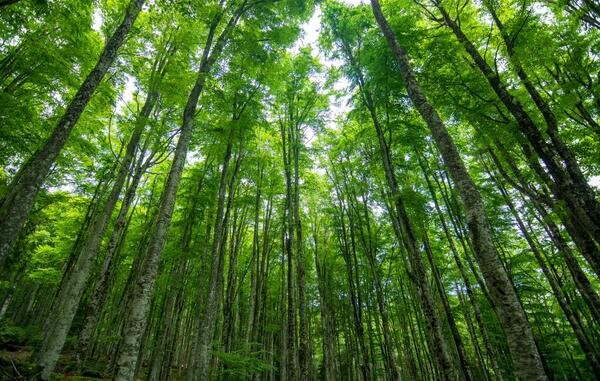
Forests and other natural areas are more integral to academic life than is widely known. Many academic institutions own and use significant areas of forested land for research, education and conservation, and some of these forests have done as much to shape intellectual disciplines as famous laboratories. The Arnot Teaching and Research Forest at Cornell University and Wytham Woods at the University of Oxford gave rise to foundational theories and practices in ecology, forestry and land management. University forests have also inspired engineering, psychology, literature and cultural studies. Recent surveys of faculty at our institution, Clemson University, reveal strong attachment to our forest, with all 13 colleges, schools and the library having faculty engaged in using it for teaching, research and outdoor recreation.
Academic forests are distributed globally, and some have been established for centuries. While not precisely known, we estimate that upward of a million acres of forest are owned by academia. An array of geographic settings and relationships to campuses exists. For example, Dartmouth College’s The Grant is well visited, even though it is about 100 miles from campus. Other forests are nearby and integral to the daily life of students, staff and faculty. These forests vary in size from small (11.5 acres within the main campus of Virginia Tech) to medium (Duke University Forest at roughly 7,000 acres) to large (Berry College’s forest is 27,000 acres—the largest known that is adjacent to a campus). Others surround their campuses, including the ones here at Clemson (19,200 acres) and at the University of the South (13,000 acres).
Some universities own forests with widely varying proximities to campus, such as at North Carolina State University (two recreational forests and nine other research forest units, ranging in size from 100 acres to the more industrial tract of roughly 79,000 acres, for a total acreage of about 94,000) and Oregon State University (10 research forest units across the state, with the closest located 15 minutes from campus, for a total acreage of 18,000). Finally, forests play a central role in the identity of some programs, such as those of Paul Smith College—the “College of the Adirondacks”—which markets that it owns about 14,000 acres of forest, lakes and streams, including a visitor interpretive center. The diversity of settings leads to varied management strategies across each institution’s holdings.
Our Faculty Senate conducted a study to assess faculty use of the Clemson University Forest. This study revealed the widespread importance of the forest for both teaching and research, as well as recreational value linked to quality of life, faculty recruitment and retention. The following quotes from faculty illustrate these benefits:
“I must be inspired to think and write and find it nearly impossible in the sterile offices and buildings on campus. I write my grants and manuscripts, design experiments, and find solutions all while walking through the CEF [Clemson Experimental Forest].”
“The Forest has had a huge impact on my quality of life … between teaching days, the forest has been a place where I can re-center.”
“I would not be here as a faculty member if the forest were not available for recreation, research, teaching, family outings, hiking time with students and friends.”
Quotes such as these indicate the deep attachments members of the campus community have to their natural areas, and how their experiences are integral to their scholarly endeavors.
Why Academic Forests Matter
Academic forests have a pervasive but underappreciated effect on campus life. Their proximity, size and infrastructure offer opportunities for studies at relatively low cost. Accessibility invites outdoor classes, field studies and other endeavors that would otherwise require travel.
Natural areas have been shown to have positive benefits on mental and physical health for people who live and work near them. Recent research shows that students who use campus green spaces report higher quality of life, better overall mood and lower perceived stress.
Forests cost universities money—it is true. Their maintenance, especially for recreation and research infrastructure, is an expense. However, forests also contribute revenue. Timber production has been the mainstay, supplemented by revenue from grants, gifts and user fees. More recently, colleges and universities have taken advantage of markets for carbon, biodiversity and water services.
Moreover, academic forests are an important source of ecosystem services to surrounding communities, providing open space, clean water, air, wildlife, outdoor recreation and other benefits. Academic forests benefit conservation through the environmental education that occurs there. The famous dioramas at the Harvard Forest have taught generations about profound changes in forests due to New England land use. At Clemson, our website and associated materials tell the story of the forest’s 90-year history, rooted in the New Deal, and dozens of classes that focus on its natural history and ecology are taught there.
In times when academic forests need advocates, those advocates tend to arise from the ranks of the faculty using them. Not surprisingly, academic forests have been seen by those responsible for university finances as liquid assets, or venues for university development projects. Tom Straka, a professor emeritus of forestry and environmental conservation at Clemson, compiled examples from institutions including Clemson and the Universities of California, Kentucky and Mississippi of public and internal university concerns with such proposals for forests or other natural lands. In each of those cases, pushback from local residents or faculty opposition channeled through committees, shared governance and scholarship succeeded in convincing stakeholders it was best not to move ahead with such proposals (or at least scale back the size of the affected tracts).
The Clemson Forest —a New Deal Project in the 21st Century
The Clemson story illustrates both the vulnerability and the resilience of academic forests. In the New Deal era, the federal government purchased marginal farmlands throughout the U.S. for the purpose of restoration, education and recreation. At Clemson, a resilient faculty member, George Aull, fought persistently to lead the effort to secure land that surrounded campus. His feeling was that as a land-grant university we ought to lead the way in showing how to restore and manage land, and eroded and barren lands near campus were an obvious place to begin. In 1954, more than 27,000 of these acres were deeded to Clemson by the U.S. Congress.
In most ways, the presence of the forest drove the founding of the academic forestry department in 1956. At that time it took over the management of the land. Generations of students in natural resources, forestry, biology, environmental sciences and related disciplines got all or part of their field education in the nearby New Deal asset.
Yet, increasing development pressures both threaten academic forests and sharpen the focus on their importance. In what writer John McPhee called the forming of a Megalopolis, the forces of urban sprawl have grown around university-owned lands. Where academic forests were once embedded in a matrix of similar rural and forested land uses, they have become islands in a sea of roads and developments.
The Clemson University Forest is located in the I-85 corridor connecting Charlotte and Atlanta—locally named “Charlanta.” Clemson’s enrollment also has grown about 500 percent since 1960. With the needs for teaching and housing space and recreational facilities, the campus needed to expand. In about 2004, the university explored a planning project to substantially alter the forest for development. This proposal energized and engaged hundreds of faculty and community members. Based on critical feedback, the university abandoned the project. The incident demonstrated the depth of connection between the faculty, community and the forest.
Ironically, this spawned numerous projects to improve the protection and management of Clemson’s forest. By one count, seven different university committees operated over a 10-year period. The most influential was a 2021–22 Faculty Senate temporary committee. This committee thoroughly incorporated previous committees’ work, conducted its own quantitative and qualitative study, met with staff and administrators, and engaged experts from other academic forests.
In the history of the forest since the New Deal, the Senate report was the first to clearly identify the ways in which the forest was a teaching, research and quality-of-life asset. Arising from the Senate work, university leadership highlighted the forest in Clemson Elevate, the university’s strategic plan. The Office of the Provost established a new administrative structure, identified funding streams to enhance forest management and led a strategic-planning process for the forest itself. The Board of Trustees instituted a new system of protections and requested that the administration adopt a guiding land ethic. One could say that the spirit of the New Deal lived well into the next century due to the activism by faculty and follow-through from administration.
A Call to Action
Academic forests are a pervasive feature of campuses worldwide. They play heavily in academic endeavors and shape community and campus quality of life. However, in times of financial stress, they can be scrutinized like any other university asset. Therefore, it is important to secure revenue streams that can fully or at least partially cover management costs.
Despite recent financial headwinds, we suggest that institutions of higher education take a long-term view of their forests. Conversion to developments—even campus buildings—is a one-time decision taking away future educational, environmental and social benefits of the forest itself. At Clemson, National Science Foundation–funded researchers are using the forest’s permanent plot network to study soil carbon dynamics— work that requires decades of data and could only be done where land remains forest for decades.
We suggest embracing and protecting our open lands for their roles in teaching, research, outreach, campus recreation, health and environmental stewardship. We emphasize that accessible green space is a personnel and student well-being asset. In addition, academic forests provide surrounding communities with numerous benefits that strengthen town-gown relationships. The forests we protect today are where the foundational science of tomorrow gets made, and where generations of students form their deepest connections to the natural world.
You may be interested

Loss of International Students Could Cost Economy $3.4B
new admin - Aug 12, 2026[ad_1] The United States may have as many as 112,000 fewer international students enrolled in higher education this coming academic…

Powerful cartel in Mexico sought to buy weapons overseas in exchange for fentanyl and meth, U.S. says
new admin - Aug 12, 2026The U.S. Justice Department unsealed indictments on Tuesday against four members of one of Mexico's most powerful drug cartels accused…

I visited Duchess Sophie’s go-to fashion brand – and found the prettiest dress I’ve seen
new admin - Aug 12, 2026[ad_1] This floral midi is an effortlessly elegant buy that will see you through the final days of summer and…