


Demands for Reform in Connecticut

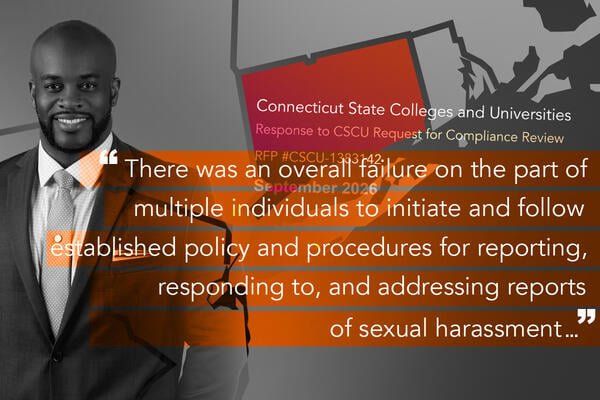
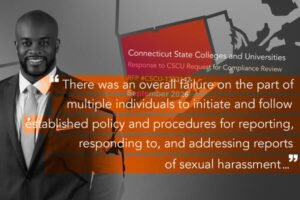
When Connecticut State Colleges and Universities Interim Chancellor John Maduko resigned in April after 10 months on the job, officials noted he stepped down amid an investigation into a policy violation. Now an independent report has revealed that the system failed to adequately respond to multiple allegations of sexually inappropriate conduct by Maduko toward women working in the system.
The report also found that the board ignored basic vetting practices in elevating Maduko, who had previously served a roughly three-year stint as president of Connecticut State Community College.
Maduko is the second chancellor to leave in less than a year. His predecessor, Terrence Cheng, exited the role in June 2025 after the Board of Regents refused to renew his contract following a report that he spent lavishly on meals, alcohol and chauffeured rides to his home in New York.
Even as critics pounce on the report showing that the system mishandled the allegations against Maduko, another leadership controversy is brewing at a member institution: Employees have accused Central Connecticut State University President Zulma Toro of bullying and intimidation. The system opened an investigation into Toro last month.
As that investigation continues, state lawmakers and employees are raising alarm over the failure of the board to police misconduct at the top levels. And as their demands for reform grow, system officials have promised changes to current oversight practices.
Missed Warnings
The first complaints about Maduko date to fall 2022, months after he became president of the community college, when an administrator reported concerns about his treatment of women and rumors of inappropriate incidents. Additional complaints followed in 2024 and 2025, including allegations that he sent sexualized messages to women working in the system. Some employees told investigators they were reluctant to report his conduct due to concerns about retaliation.
(Contacted via LinkedIn, Maduko did not respond to a request for comment.)
Independent investigators found that regents and administrators within the system failed to uphold policies on handling sexual misconduct reports, noting that their response lacked “timeliness, safeguards, supportive measures, and appropriate communications, among other failings.” The report, released last week by the firm Grand River Solutions, also found that employees who experienced sexual harassment lacked trust in the reporting process, “in part due to concerns about how confidential information had been handled and potentially shared in the past.”
Investigators also concluded that the board did not adequately vet Maduko for the job.
Regents “did not perform a background check, review performance or personnel records, or obtain recommendations because Maduko was an internal candidate for an interim position and thus had already gone through a background check when first hired,” the investigation found.
Board leaders stepped down shortly after Maduko. Then-Board Chair Marty Guay resigned in May, days after complaints against Maduko became public. Guay said in his resignation announcement that he had already planned to leave but “now is the right time to step aside.”
System spokesperson Sam Norton said that CSCU accepted the findings of the Grand River Solutions report, which identified “serious issues involving accountability, reporting responsibilities, leadership decision-making, and institutional response,” and has begun working toward reforms.
“These actions will include strengthening employee reporting and escalation requirements, improving leadership screening and vetting, reinforcing compliance and training, reviewing governance and oversight practices, and taking appropriate personnel action,” Norton wrote in an emailed statement to Inside Higher Ed. “The report provides a clear roadmap for change. Our responsibility now is to implement those changes, hold ourselves accountable, and restore confidence in the systems that are intended to protect our students and employees.”
A Trail of Complaints
Complaints elsewhere in the system are fueling broader leadership concerns.
Last month, Lisa Bigelow, director of institutional advancement at Central Connecticut State University and president of the union that represents administrative employees in the state system, filed a complaint with the system’s Office of Compliance alleging that Toro routinely yelled at, intimidated and retaliated against her subordinates.
Bigelow accused Toro of verbally berating employees, including her, and asking staff members to perform personal errands, such as scheduling her medical appointments and watching her dog, according to a copy of the complaint that Bigelow shared with local media.
Current and former employees have also lodged several complaints against Toro since 2019.
Bigelow previously filed a complaint against the CCSU president with state auditors, also in 2019, alleging a “pattern of increasingly abusive and bullying behavior being exhibited by Dr. Toro.”
CCSU communications professor Serafin Mendez-Mendez also raised concerns about Toro’s behavior in his own complaint in 2019, according to local TV station WFSB. The news outlet reported that a former employee also emailed Cheng in 2021 to complain that Toro shamed, bullied and intimidated people she didn’t like but did not receive a response from the chancellor.
Central Connecticut State University referred a request for comment to the system.
Norton, the system spokesperson, told Inside Higher Ed by email that “CSCU takes all complaints seriously” and “acted immediately to initiate a formal process” after officials received the allegations.
“The investigation, opened August 20, 2026, is now underway and no findings have been made,” Norton wrote. “It is important that we allow the established process to work and that we not prejudge either the facts or the appropriate employment action before those facts have been fully assessed. As this is an ongoing personnel matter, we cannot comment further at this time.”
Calls for Reform
Though CSCU has pledged to make changes on its own, that may not be enough for lawmakers.
State Senator Gary Winfield, a Democrat and chair of the Senate Judiciary Committee, was one of multiple lawmakers who castigated the system for what he called a betrayal of public trust.
“What’s before us in this report is not a simple policy-related failure; we’re dealing with a failure of basic human decency and leadership,” he said in a statement last week that followed the release of the report. “The report gives the appearance of cover-ups and people who are more worried about themselves than the people they’re supposed to serve. Connecticut residents don’t fund state institutions of higher education to serve as a shield or cover for abuse.”
While Winfield noted that the board chair resigned in the wake of the Maduko scandal, he suggested the Legislature “should weigh the possibility of changes to the state Board of Regents” next year.
State Senator Derek Slap and State Representative Gregg Haddad, co-chairs of the Higher Education and Employment Advancement Committee, also released a statement signed by 10 other Democratic lawmakers calling for “a significant change in workplace culture, better safeguards and training and an end to the abuse of power, resources and taxpayer dollars.”
When the Legislature reconvenes, so will the work to hold the system accountable, they said.
“The Higher Education Committee passed legislation increasing accountability and transparency for the entire system and we stand ready to continue that work in January,” the group of lawmakers wrote in a statement last week. “This is another data point that indicates the system has not been working as intended and we are prepared to consider all options moving forward.”
You may be interested
Venezuela opposition leader María Corina Machado blocked from entering country 3 times in 24 hours, team says
new admin - Sep 23, 2026Caracas — Venezuela's opposition leader, 2025 Nobel Peace Prize recipient Maria Corina Machado, was prevented from returning to the South…

Provosts’ Survey 2026: Responsiveness Amid Constraint
new admin - Sep 23, 2026[ad_1] Provosts are confident in their role and their relationship with their president, according to the 2026 Inside Higher Ed/Hanover…

DOJ defends Trump media ban, cites national security and says White House access is a ‘privilege’
new admin - Sep 23, 2026[ad_1] The Department of Justice said in a court filing late Tuesday that President Donald Trump has the right to…