



CUNY Launches LGBTQ+ Institute

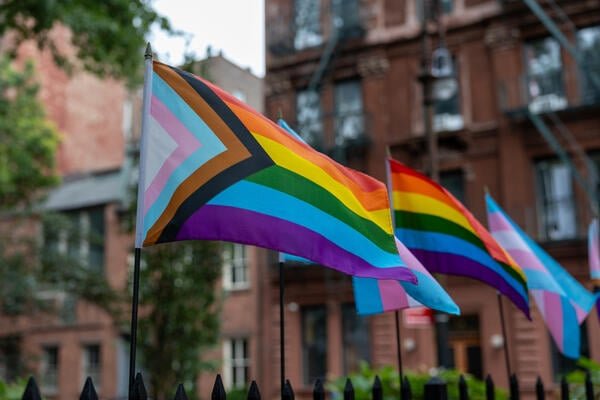
As Pride Month arrives, colleges and universities across the country are marking the occasion in different ways. While some institutions have scaled back public displays of support for LGBTQ+ communities, the City University of New York is expanding its efforts.
Last week, the university system announced the creation of the Institute for LGBTQIA+ Community Engagement and Public History. Located at LaGuardia Community College, the institute will serve as a CUNY-wide hub to support LGBTQ+ students, strengthen collaboration across campuses and partner with community organizations.
The institute, established by a unanimous vote of the CUNY Board of Trustees in April, builds on the work of the university system’s LGBTQIA+ Consortium. Founded in 2017, the consortium, an initiative that funds and coordinates LGBTQ+ programming across CUNY, has grown from serving five campuses to operating across nearly all of the university system. University leaders say the new institute’s permanent structure will make it easier to expand student support services and preserve New York City’s LGBTQ+ history.
Allie Brashears, director of CUNY’s LGBTQIA+ Consortium, said the consortium has become one of the largest sources of LGBTQ+ programming support within the university system, and that its transition into a formal institute will strengthen its ability to secure funding, apply for grants and hire staff.
“My big fear was if I step down or if something happens to me, there’s no clear path for any sort of continuance of this,” Brashears said. “I wanted to make sure things could get institutionalized so that there was a hiring line with it, there would be an account so we could apply for grants, and that way it’s not attached to any one person and actually located within CUNY.”
Brashears said the university system’s investment in the institute is especially noteworthy given CUNY’s tight budget.
“This is a public university, everything’s on a shoestring, and it provides a fantastic education to students with limited resources,” Brashears said. “So just us coming in and providing that funding has created a huge number of opportunities for staff and faculty to give LGBTQIA+ visibility and experiences to students, and it’s really necessary.”
Support across campuses: Since its launch, Brashears said the consortium has expanded its reach across CUNY, offering programs and services including violence prevention training and LGBTQ+ history walking tours around New York City.
Brashears said the institute’s role is to support and fund LGBTQ+ programming across CUNY’s campuses. Because the university system serves a highly diverse student population, including many immigrants, first-generation students and students from lower-income backgrounds, campuses approach their programming efforts through an intersectional lens, she said.
“We’re not prescriptive in the type of programming we fund,” Brashears said. “It’s really up to each campus and the representatives and partners who are working with us to come up with their own programming so they can tailor it to their student population.”
“Campuses that have a large Caribbean student population, that may shape a lot of their programming. Those with large Italian American student populations, that can also shape programming,” she added. “Each campus has the flexibility to meet students where they are and respond to their needs on a campus-by-campus basis.”
The newly established institute joins more than 100 research centers, institutes and consortia recognized by CUNY. Through partnerships with the LaGuardia and Wagner Archives, CLAGS: The Center for LGBTQ Studies, The LGBTQ Policy Center at Roosevelt House and the CUNY LGBTQI+ Council, the institute aims to expand archival collections, support graduate research, inform public policy discussions and create leadership development opportunities for LGBTQ+ students.
Beyond research and archival work, the institute will also serve as a bridge between CUNY students and the broader New York City community. Brashears said it will organize public exhibitions, workshops, lectures and events, including Pride celebrations, aimed at promoting understanding, inclusion and civic engagement.
“LGBTQIA+ rights are tied to visibility. Visibility leads to tolerance and acceptance, and it also leads to pride in your community,” Brashears said. “Our history is part of that visibility. When students see where we have made strides—and it’s not just in Manhattan, but also in the outer boroughs like Queens, Brooklyn, the Bronx and Staten Island—it shows how each of those places has contributed to LGBTQIA+ history.”
“It’s really important to continue working to surface those histories and make them visible to the public and our students because they see themselves in that,” she added. “It gives them both a foundation to stand on and a sense of how far they can go, and what work still needs to be done.”
Shifting national landscape: CUNY’s expansion of LGBTQ+ programming follows similar efforts at other institutions in the region. At Union Theological Seminary, LGBTQ+ inclusion is a central part of campus life. Nearly half the students in the 190-year-old seminary’s most recent entering class identify as LGBTQ+, reflecting the institution’s efforts to create an affirming faith-based academic community.
The university system’s launch also comes amid a shifting national landscape for LGBTQ+ initiatives in higher education. As Inside Higher Ed reported, several institutions have posted and then deleted Pride Month messages on social media, while others have withdrawn from local Pride events or limited the display of Pride flags on campus.
Among them, the University of North Carolina at Chapel Hill, UNC Greensboro and Lamar University in Texas removed Pride Month messages after posting them. Meanwhile, the University of North Texas dropped plans to support a local Pride festival, and the University of Chicago Laboratory Schools announced it would no longer fly the rainbow Pride flag or other banners signaling support for the LGBTQ+ community on campus.
Against this backdrop, recent data from The Trevor Project found that 90 percent of LGBTQ+ young people surveyed reported that recent anti-LGBTQ+ laws, policies and public debates caused them stress or anxiety. More than 70 percent of respondents also said the current political climate makes them feel unsafe and has negatively affected their mental health.
Brashears said CUNY’s decision to establish the institute signals a broader institutional commitment to LGBTQ+ students.
“It sends a wonderful message that we are not only standing by our LGBTQIA+ students, but all students,” Brashears said. “It signals that we value diversity and are creating an environment where students can be successful. I think a lot of universities are missing the writing on the wall.”
“I’m really proud that Chancellor [Félix V.] Matos Rodríguez and the CUNY Board of Trustees decided to recognize this institute,” she added. “It took some courage in this current political climate.”
Get more content like this directly to your inbox. Subscribe here.
You may be interested

Coast Guard and FBI boarded 2 energy tankers due to cyberattacks. How big is the risk?
new admin - Sep 17, 2026U.S. Coast Guard personnel and FBI agents boarded two Texas-bound energy tankers last month after cyberattacks struck the vessels while…

Snap is launching a new Specs AI tool, and it’s coming to iOS and Mac
new admin - Sep 17, 2026SPECS Intelligence builds an understanding of your goals, priorities, relationships, and routines from the apps and tools you choose to…

Yankees RHP Clarke Schmidt Returns As Reliever After 14-Month Rehab
new admin - Sep 17, 2026[ad_1] NEWYou can now listen to Fox News articles! The New York Yankees returned right-handed pitcher Clarke Schmidt from his…