

A Constitution Day Discussion Academic Freedom and Trump


On Constitution Day (Thursday, Sept. 17) from 5 p.m. until 6 p.m. E.T., I will be interviewing two distinguished scholars, Geoffrey R. Stone and Valerie C. Johnson, about their recent books for a free webinar (use this link to join) on “Academic Freedom and Constitutional Rights in a Time of Crisis.”
At a moment when scholars worry about threats to academic freedom, this Constitution Day discussion will look at the First Amendment protections for academic freedom. These issues are the subject of a new book coedited by Stone and former Columbia University president Lee Bolinger, Academic Freedom in the Era of Trump (Oxford University Press, 2026), which brings together legal scholars with many perspectives on the academic freedom debate.
This event is co-sponsored by the Illinois conference of the American Association of University Professors, Project Censored, a nonprofit organization that promotes critical media literacy, independent journalism and civic engagement, and the Park Center for Independent Media at Ithaca College, whose director, Mickey Huff, will introduce the event.
Johnson is a professor of political science at DePaul University and associate provost for diversity, equity and inclusion. She’s the author of Black Power in the Suburbs: The Myth or Reality of African American Suburban Political Incorporation (SUNY Press, 2022) and coeditor of Power in the City (University Press of Kansas, 2008). Her latest book, co-edited with Ellen Schrecker and Jennifer Ruth, is The Right to Learn: Resisting the Right-Wing Attack on Higher Education (Beacon Press, 2024). Last year, Inside Higher Ed interviewed Johnson about her book.
Stone is the Edward H. Levi Distinguished Service Professor at the University of Chicago, where he has been dean of the law school, provost and chair of the committee that wrote the “Chicago Principles.” He is a scholar of constitutional law, and the author of dozens of books on the subject. Inside Higher Ed interviewed Stone and Bollinger last month about their book, but I had some additional questions for Stone:
DI: Why did you want to bring together legal scholars to write a book about academic freedom? Are you hoping to influence judges to better understand academic freedom? Or do you think law professors have something important to teach the rest of academia about what academic freedom means?
Stone: We put together the book because we felt that academic freedom had become a critical element of the functioning of universities, because universities had become an important element of our democracy by promoting a broad range of competing views on important issues, and because the Trump administration’s actions were clearly intended to threaten the continued vitality of academic freedom. Our goal was to bring together a broad range of academics with a range of perspectives to explore these concerns and to offer their views about the extent to which the Trump administration’s actions threatened both academic freedom and the First Amendment.
DI: Many essays in this book focus on the Trump administration’s attacks on academic freedom. Did the Trump administration often succeed at forcing colleges to obey their demands? Was there a failure of the courts to protect academic freedom or a failure of colleges to fight against the government?
Stone: As Trump well understood, universities today are highly dependent on federal funding of research in order to achieve their core goals. He recognized that cutting off such funding in order to compel universities to change their policies in a way that accommodated his own preferences would have a powerful effect on the universities, because, even if it violated the First Amendment for the government to engage in such conduct, it would often take years for universities to win lawsuits challenging the constitutionality of Trump’s actions, and losing the funding during those years could require major cuts in the institution’s core research programs. Thus, by unconstitutionally bullying the universities, Trump could effectively compel significant restrictions on their First Amendment rights.
DI: The current conservative Supreme Court has overturned a number of liberal legal precedents such as Roe v. Wade and affirmative action cases. Will fundamental legal precedents for academic freedom such as Sweezy and Keyishian be next on the chopping block? And how would ending academic freedom as a constitutional right affect intellectual liberty on campus?
Stone: I don’t think the Supreme Court will undermine academic freedom as a fundamental First Amendment right. This isn’t to say that a majority of the justices don’t disapprove of what they, like Trump, see as a liberal bias in these institutions. But I expect that any decisions on these issues, even by this Court, would be quite narrow and would generally reaffirm academic freedom. But even narrow decisions along these lines could have significant negative effects.
Please join us on Constitution Day, Sept. 17 at 5 p.m., E.T., for this important conversation.
You may be interested
AI’s Perceived Effect on Human Connection, Thinking
new admin - Sep 16, 2026[ad_1] A new survey from Elon University found that although 65 percent of respondents regularly use AI, many also express…
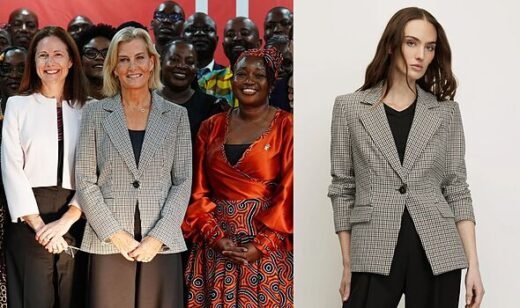
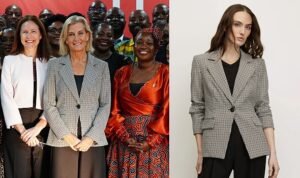
Duchess Sophie rocks ‘chic’ blazer perfect for autumn from Zara’s Tindall’s go-to label
new admin - Sep 16, 2026[ad_1] Duchess Sophie has put the classic houndstooth blazer back on the style agenda, and we have put together an…

War-damaged Gaza building housing displaced Palestinian families collapses, killing at least 14 people
new admin - Sep 16, 2026A building housing displaced Palestinian families collapsed in Gaza City on Wednesday, killing at least 14 people, most of them…