



Will Trump’s Accreditation Revamp Force Campus Changes?

About 43 percent of presidents who responded don’t know whether the proposed new requirements for credit transfer will encourage them to revise their own processes.
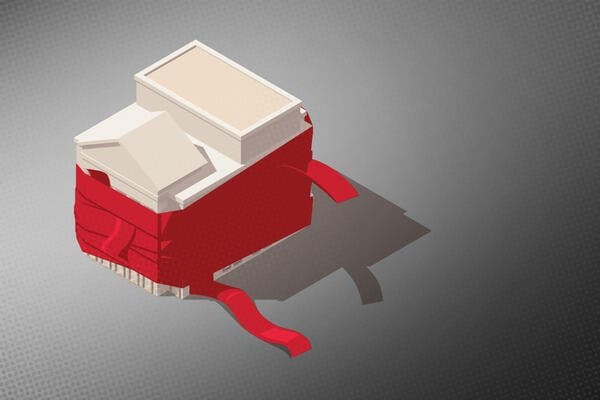
Photo illustration by Justin Morrison/Inside Higher Ed | tarras79/iStock/Getty Images
More than 70 percent of college presidents who responded to a recent American Council on Education (ACE) survey anticipate that the Trump administration’s proposed changes to accreditation will not make their institution any more likely to change accreditors. Nor will the changes promote academic innovation or help colleges spend less on the accreditation process, roughly the same proportion of presidents say.
But that doesn’t mean the looming accreditation overhaul—which would make it easier for new agencies to gain federal recognition, require all accreditors to enforce First Amendment law and include more prescriptive requirements as far as what they must evaluate—will have no effect at all.
In the same survey, released last week, nearly 45 percent of the 109 presidents surveyed said the proposed changes would have a “meaningful impact” on their institution. It just remains unclear exactly what the impacts will be, which types of institutions they will most affect and to what extent. Many accreditation advocates have warned it could have major implications on academic freedom.
“It’s hard to really know what the impacts are truly going to be until this goes into effect,” said Emmanual Guillory, ACE’s senior director of government relations. “It could be that we are just not aware of the true impacts yet.”
Trump has prioritized the accreditation policy changes since the early days of his third campaign for office. Some of the goals, including catalyzing innovation, ensuring positive student outcomes and reducing both operational costs and the sticker price for students, have received broader support. But others like firing “radical Left” accreditors and eliminating “Marxist” DEI standards have faced significant pushback.
The survey was conducted a month before the Education Department published the proposal for public comment—a period that ends Sept. 21. But an advisory committee signed off on the proposal in May, so colleges have known for months what to expect. If finalized before Nov. 1, the rule would take effect July 1, 2027.
And though the ACE survey indicates that many college presidents expect Trump’s accreditation overhaul to have limited implications in key areas—like changing accreditors, promoting innovation and lowering costs—some expressed uncertainty.
Even when it comes to the areas of minimal anticipated impact, between 17 and 22 percent of respondents said they couldn’t yet determine the effect the proposal would have. This could be in part because the policy isn’t finalized. Most of the policy changes also will affect accreditation agencies first and then institutions.
One area of the regulation that could lead to some changes at institutions is the provision dealing with credit transfer policies.
Under that section of the proposal, accreditors would be required to ensure that the institutions they oversee provide a written rationale for denying any credit transfer that is denied and allow students to appeal any decision that is made. But based on the ACE survey, 43 percent of presidents say they don’t know whether Trump’s policy change would encourage them to revise their own credit transfer process. Just over 20 percent of presidents said it would encourage them to amend their policies and 37 percent said it would not.
Some ACE member institutions “are still assessing what the impact will be, so they can’t affirmatively say yes or no,” Guillory explained. “You do hear the rumblings of certain institutions that are like, ‘Well, let’s just see if this even is going to become a thing.’ But we try to make sure that if we hear that, we encourage our membership … that’s not the mindset we should be in. So that’s something that we are making sure we articulate clearly to our members.”
You may be interested

Plaintiffs Suing Over ED Layoffs Seek Withheld Documents
new admin - Sep 16, 2026[ad_1] The lawsuit stems from Education Secretary Linda McMahon’s decision to lay off half of her department’s staff. Anna Moneymaker/Staff/Getty…

Saudi Arabia accuses Houthis of attacking Mecca, warns holy city is a ‘red line’
new admin - Sep 16, 2026Saudi Arabia has accused the Iran-backed Houthi rebels of attempting to attack Islam’s holiest city, declaring Mecca a “red line”…

Anyone with 'clicky' knees issued important message and told 'see GP' advice
new admin - Sep 16, 2026A joint pain specialist has shared the six warning signs that 'clicky' knees could indicate something more serious - and…