



Cornell Bans Processing Wild Animals in Communal Kitchens

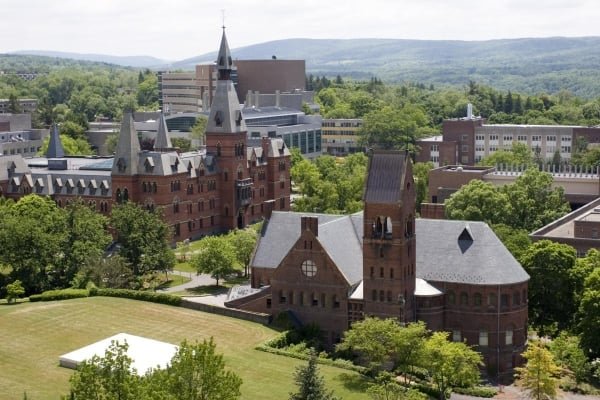
Cornell University is located in upstate New York.
kickstand/Getty Images
Administrators at Cornell University recently implemented a new policy that bars students from processing game in campus residential halls—specifically communal kitchens. The change follows an incident last year when two students skinned and butchered a black bear in one of the kitchens in Ganędagǫ: Hall.
The bear was legally hunted, according to The Cornell Daily Sun and The Ithaca Voice. But local reporters say the situation made some students uncomfortable, prompted sanitary concerns and raised questions about whether the bear was a cub. (Hunting cubs is illegal in the region surrounding Ithaca, according to the New York Department of Environmental Conservation.)
Nearly a year later, “this update aims to provide clarity regarding what is or is not appropriate to do in a communal kitchen space,” a university spokesperson said in an email to Inside Higher Ed. (Graphic images of the skinning circulated online.)
The provision—included in the university’s broader Community Living Standards—says that processing wild animals in community kitchens is “strictly prohibited.”
That said, students attending the land grant university in upstate New York can still participate in legal hunting while living on campus, the spokesperson clarified. “There are many certified vendors near and around campus who can work with hunters to process game.”
You may be interested

10 ‘old-fashioned’ vintage baby names making a comeback this year
new admin - Aug 06, 2026The UK's most popular names have been revealed by the Office for National Statistics (ONS), based on last year's birth…

You can now ask Google Maps’ AI to order food for you
new admin - Aug 06, 2026The AI-powered “Ask Maps” tool in Google Maps can now perform a broader range of personalized and conversational requests, including…

No Carrots and No Sticks?
new admin - Aug 06, 2026[ad_1] Education Secretary Linda McMahon’s three-page letter on Monday raised more questions than it answered. Higher ed leaders are unsure…