


Public Colleges Anchor State Workforce Pipelines


The national survey of 100,000 college-educated workers is intended to fill an information gap about post-graduation migration patterns.
Lisa-Blue/iStock/Getty Images
The type of college a person graduates from is one of the strongest predictors of whether they’ll remain in the state to work after graduation, new data shows.
According to a report the Strada Institute for the Future of Work published Thursday, 62 percent of workers between the ages of 20 and 65 who graduated from a public institution attended college in their home state and now work there, compared to 44 percent of workers who graduated from a private, nonprofit institution who did the same.
“State support permits public colleges to subsidize tuition for in-state students, helping to retain these students for college and often after college as well, making public postsecondary institutions anchors for states’ talent development,” the report says. “Private colleges typically do not offer such discounts; thus, students are less incentivized to choose a private college in their home state.”
At the same time, an institution’s selectivity plays a role in determining which graduates will stay.
About two-thirds of workers who graduated from a public institution with broad access admissions policies (such as California State University, Long Beach, Texas State University or Ball State University in Indiana) attended college in their home state and remained for work, compared to about half of workers who graduated from the most selective public universities, including the University of California, Los Angeles, the University of North Carolina at Chapel Hill, and the University of Virginia.
A similar pattern emerged for private, non-profit colleges. About 60 percent of graduates of the least selective institutions (such as Golden Gate University in San Francisco or the University of Bridgeport in Connecticut) were homegrown, compared to just 24 percent of those who attended the nation’s most selective colleges, such as New York University and the University of Southern California.
“These differences in migration patterns among institutional selectivity tiers are important to highlight for the opportunities they present for states to grow their pools of college-educated workers,” the report said. “Investing in these broad-access institutions in ways that support students advancing through and completing their degree programs, as well as connecting with local employers and securing quality jobs upon graduation, could have an outsized impact on states’ homegrown talent pools.”
Strada’s survey of 100,000 college graduates aims to close a crucial information gap for policymakers. While many states have set lofty college attainment goals to help grow their skilled workforces, they’ve been working with limited information about why some graduates remain in the state and others leave.
“We know that highly educated populations help create and sustain economic growth and resilience,” said Peter Riley Bahr, vice president of employer engagement and managing research director of Strada Institute for the Future of Work. “But states are developing the policies to reach those goals largely in an information vacuum about where their college-educated workers actually come from.”
The report, “Talent in Motion: Interstate Migration of College-Educated Workers,”provides a state-by-state breakdown of where college students come from—in or out of state—and the factors associated with their decision to remain in the state after graduation.
“There have been a variety of different studies done on this topic, but to the best of our knowledge this is the first national-scale, generalizable study that tracks individuals from the state where they attended high school to the state where they attended college to the state where they’re now working,” Bahr told Inside Higher Ed. “That allows us to look across those three junctures for each individual, and make some much stronger claims about the pathways than prior work has been able to do.”
The survey found that two-thirds of college-educated workers live in the state where they attended high school. While 55 percent of them attended college in their home state, 12 percent returned to their home state after attending college out of state.
“That’s contrary to the way this problem is often contemplated,” Bahr said. “The discourse is often about recruiting college-educated talent from other states. But here we see that states, by and large, build their college-educated talent base from their own population, from their own high school graduates.”
In addition to identifying institution types as a strong predictor of post-graduation migration patterns, the survey also asked workers who end up in a different state from the one where they attended college about their primary motivation for relocating. About half said economic opportunity—the most-cited reason. The next most-cited reasons for moving were housing or community (20 percent) and family (14 percent), while climate was among the least-cited factors.]
State Variations
But the percentage of homegrown workers varied widely from state to state.
For instance, 72 percent of college-educated workers in Michigan—which has set a goal for 60 percent of its workforce to have a postsecondary credential by 2030—went to high school and college in the state. Meanwhile, only 36 percent of college-educated workers in Colorado—which has one of the highest college attainment rates in the country—are homegrown, “suggesting that other states may be substantially subsidizing Colorado’s college-educated workforce,” according to the report.
It also found that nearly three-quarters of the states that have above-average shares of homegrown workers have below-average college attainment rates, including Oklahoma, Alabama, Louisiana, and Arkansas. In other states, such as Colorado, Maryland and Virginia, the inverse is true: They have above-average college attainment rates but a below-average share of homegrown workers.
Bahr said he hopes that both state lawmakers and university leaders use this data to help craft their education and workforce development policies.
“For higher education funding purposes, states will want to contemplate where their college-educated talent base comes from and ensure that informs their policy priorities,” he said. “For higher education institutions, it recognizes the important role that they play in doubling down on programs that lead to real opportunity in the local workforce.”
You may be interested

Taylor Swift Donates $50k to Help Mother of Three Hit by Car
new admin - Aug 29, 2026[ad_1] The superstar donated to a GoFundMe launched to help Ashley Taunton, who was hit by a vehicle while helping…

Judge throws out confession of Khalid Sheikh Mohammed, man accused of plotting 9/11 attack
new admin - Aug 29, 2026Coming up on 25 years since the September 11th terrorist attacks, the effort to bring to justice the alleged mastermind,…
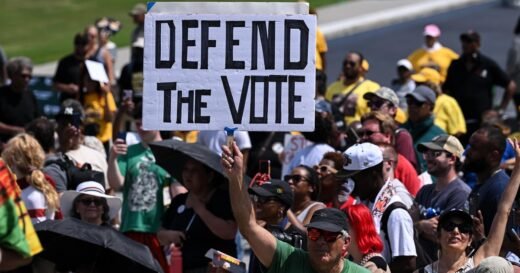
Thousands march in Washington for Defend the Vote rally
new admin - Aug 29, 2026Sixty-three years after the March on Washington, thousands gathered Friday in the nation's capitol for a Defend the Vote rally…