



ABA Council Votes on Long-Contested Diversity Standard

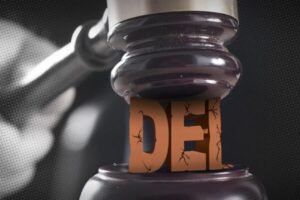
After years of heated debate, the American Bar Association’s accreditation council is scheduled to make a final decision Tuesday on whether it will repeal a decades-old standard that requires law schools to “demonstrate by concrete action a commitment to diversity and inclusion.”
Critics say the policy must go because it violates the Supreme Court’s 2023 decision banning the consideration of race in admissions. But supporters, including a number of law school deans and faculty members, say that view applies an overreaching interpretation of the court’s order. Ensuring diversity in the legal sector is critical to the health of American democracy, some proponents say, since attorneys—who are often architects and enforcers of the law—should accurately represent the demographics of the national population.
The council’s vote takes place amid ongoing attacks by the Trump administration on both diversity, equity and inclusion initiatives and accreditors more broadly. It also comes two weeks after the Department of Education recommended that ABA’s council, formally called the Section of Legal Education and Admissions to the Bar, be denied federal recognition—in part because of its diversity criterion.
Known as Standard 206, the accreditation council’s quality metric for an inclusive student body has gone through several iterations, beginning in the 1970s and early 1980s—when civil rights groups and the federal government were pressuring law schools to address their overwhelmingly white, male student bodies and affirmative action was at its prime. The council later added a second subsection requiring a similar commitment to diversity in the composition of faculty and staff.
The Trump administration’s recommendation to discontinue the ABA accreditation council’s federal recognition does not directly denounce the language of Standard 206. But the White House chastised the ABA and its diversity criterion specifically in the April 2025 executive order titled “Reforming Accreditation to Strengthen Higher Education,” which says, “This standard and similar unlawful mandates must be permanently eradicated.”
Some higher education experts say a vote to repeal the standard will signify Trump’s ability to use federal recognition as a political lever to bring a powerful accreditor to heel.
In an interview with Inside Higher Ed, the accreditation council’s chair, Melissa Hart, stressed that the group is considering the repeal of Standard 206 for multiple reasons, including that it conflicts with a number of state laws and court decisions. As a result, she explained, maintaining the DEI standard could prevent ABA accreditation from being recognized as a portable path to attorney licensure in all 50 states—something state supreme courts have told her they don’t want to happen.
But Hart also acknowledged that “what the current administration has made clear is that an accreditor that has diversity and equity standards will not be in compliance with the Education Department’s regulations.”
As chair, Hart will not vote Tuesday unless her ballot is needed to break a tie.
Trump Takes Issue
The language of Standard 206 is vague. It does not use the words “admissions” or “hiring” when referring to how law schools must show their commitment to diversity. Rather, it says they must demonstrate that commitment by “concrete action.”
Proponents of keeping the DEI standard say the language was chosen to avoid limiting the means by which each law school carries out its commitment to diversity. Critics argue it’s an attempt to get away with allegedly illegal and discriminatory admissions practices.
Despite mentioning the standard in last year’s executive order, the Trump administration does not directly reference its language in its most recent attack on the ABA accreditation council.
In fact, the Education Department’s 86-page staff report recommending that the council be denied recognition references the standard in only one of its 29 sections. That mention focuses on how the accreditation council itself admitted the need to change its standard shortly after the Supreme Court’s ruling on affirmative action was handed down. But the council didn’t move to change its policy until February 2025, when it formally suspended the diversity criterion. And that’s a violation of federal regulation, which requires accreditors to “initiate action within 12 months” of determining changes are necessary, the report says.
The accreditation council disagrees. In a notice announcing the Sept. 8 vote, the council said that it stopped enforcing the requirement in 2024, presumably within the allotted 12-month period. Hart later told Inside Higher Ed in an emailed statement that “the council is in compliance with the law and with Department of Education requirements.”
“The Council has diligently followed the Department of Education regulations and guidance, and when that guidance has changed, we’ve adapted accordingly and on an appropriate timeline,” Hart added.
In addition to their concerns about DEI standards and speed of change, Trump officials also argue that the accreditation council should lose federal recognition because it is not separate and independent from the ABA. And the length of time it has taken the accreditation council to decide whether it will repeal its diversity standard could either affirm or negate that argument, depending on whom you ask.
The council already voted to repeal Standard 206 once in May. But under procedural guidelines, it was required to consult the ABA’s governing body, the House of Delegates, for its opinion between that vote and this week’s.
That meeting was held Aug. 4 and the House voted “not to concur” with the council’s repeal.
So as the council heads back into its final vote today, it will have to decide whether to overturn its previous vote or flex its independence and defy the House of Delegates’ recommendation—a move ABA President Barbara Howard recently confirmed the council can make, emphasizing that the broader association will remain committed to “eliminating bias and enhancing diversity.”
Some law professors and accreditation experts say that though following such procedures takes time, it keeps the accreditation council independent and allows it to get feedback from active attorneys on what makes a quality law school.
If the council votes to finalize the repeal, they add, it would break a historic pattern of acting in lockstep with the broader ABA and show that the council can still act independently. Not only would that appease Trump’s desire to eliminate DEI, it could also reinforce the importance of taking time to maintain independence, both of which could earn good graces.
But critics, most of whom are politically conservative, note that the accreditation council conducted two full cycles of back-and-forth discussions and public comment sessions between August 2024 and February 2025 before it suspended the standard and proposed a repeal. Then, more than a year passed before the council first voted to repeal it in May, which they say indicates an attempt to kick the can down the road.
“It’s the big question: Is repealing the diversity standard enough? Is it timely enough? And does the Trump administration trust that there is actually the level of independence that is being claimed?” said Peter Lake, a law professor and director of the Center for Excellence in Higher Education Law and Policy at Stetson University.
“That could be decisive in terms of whether the ABA can maintain its pre-eminent role in accreditation of law schools,” he explained. “But it may be too little, too late. This may be a fait accompli for Trump and nothing that the ABA will do will actually satisfy this administration.”
Part of a Larger Issue
Even if the Trump administration continues to recognize the accreditation council, many higher education policy experts and law school faculty say the decision whether to repeal Standard 206 has implications beyond access to federal loans or state licensure laws; it raises larger questions about whether DEI should be a priority in legal education and to what extent the council should base any decision on the current administration’s political will.
Historically, Lake explained, the federal government has remained hands-off when it comes to debates over accreditation standards, allowing the quality-evaluation agencies and their member institutions to sort it out themselves. Now, “what we’re seeing is a new era,” he said. “It clearly puts the accrediting body in a position of either following a command of the federal administration or potentially losing their status as the accreditor,” he said. “It’s completely unprecedented.”
Conservative critics of the ABA’s accreditation council say eliminating the standard isn’t acquiescing, it’s following the law.
Michael Brickman, policy director at the Cicero Institute, who served as a Trump education adviser until August, said the ABA’s council is supposed to be a fair arbiter but instead has become a left-leaning partisan group.
“The ABA certainly should know better, because they are meant to be experts in the law,” he said. “It seems like they’re going as far as they think they can go in telling their members to discriminate based on race without saying so explicitly. I mean, I just don’t know how to read that otherwise.”
DEI advocates, on the other hand, say the fact that today’s special meeting was scheduled within hours of Trump’s attack on the council’s federal recognition makes it clear that the change would constitute acquiescence.
“Standard 206 is already suspended. So there’s no need, no obligation [for law schools] to comply with it. The fact the council is doing a special meeting and not waiting until their next meeting [in February] says that they are in a rush to capitulate,” said Steven Bender, a professor and associate dean for graduate programs at the Seattle University School of Law.
As part of the Critical Legal Collective, a DEI advocacy group, Bender has submitted multiple comments urging the council to preserve Standard 206. The comments argue that the ABA accreditation council itself began as a way to exclude racial and religious minorities as well as the socioeconomically disadvantaged from practicing law; requiring a commitment to diversity now is a small way to begin redressing historical damage.
Meera Deo, a professor at Southwestern Law School who specializes in racial representation in law, said that since its inception, Standard 206 has been “a net positive.” All it requires is that law schools provide underrepresented groups with full opportunities, she said.
“The Supreme Court case is specific to admissions policies … This administration’s demands go beyond what the law requires, even including [Students for Fair Admissions v. Harvard]. The end of affirmative action does not mean institutions have to discontinue efforts to support students of color and others from marginalized backgrounds,” said Deo, who also directs the Law School Survey of Student Engagement. “There are myriad ways to support students, faculty and staff from all backgrounds.”
Whatever happens, Lake said, the accreditation council’s Sept. 8 vote reflects a much larger battle over opposing interpretations of the Supreme Court’s view on DEI.
“What we’ve got is probably a profound discussion happening in front of the entire body politic about what the aspirations of the legal profession can be and should not be and what organizations of lawyers like ABA are entitled to do or not,” he said. “It may well be that this battle is the one that will end up back in the Supreme Court to clarify the broader implications of SFFA v. Harvard.”
You may be interested
Democrats Condemn NIH-DOD Research Agreement
new admin - Sep 08, 2026[ad_1] NIH Director Jay Bhattacharya said the partnership focuses on “research projects that will drive discoveries to improve the health…
Jill Is Rooting for a Crash?! | Money Moves with Jill Schlesinger
new admin - Sep 08, 2026You heard that right: Jill is rooting for a market crash. In today's episode, Certified Financial Planner Kayla Sabbagh joins…
Harry and Meghan ‘surprised’ by king’s letter making clear they’re still non-working royals
new admin - Sep 08, 2026LONDON — Prince Harry and Meghan, the Duchess of Sussex, were “surprised” by a letter sent on behalf of King…