


Loss of International Students Could Cost Economy $3.4B

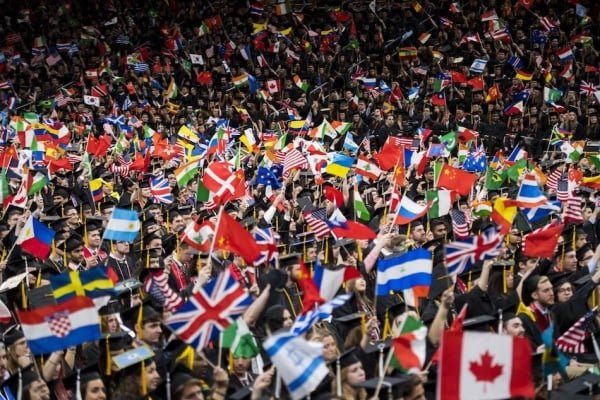
The United States may have as many as 112,000 fewer international students enrolled in higher education this coming academic year, according to new projections that NAFSA: Association of International Educators and JB International published Tuesday.
Based on data from the Institute of International Education, the analysis estimates that about 1,057,000 international students will be enrolled at a college or university during the 2026–27 academic year, compared to an estimated 1,169,000 during the 2025–26 academic year.
While the number of international students fell to 914,000 during the COVID-19 pandemic, enrollment had been on the rebound since; during the 2024–25 academic year, 1,178,000 such students attended college in the U.S.
But since coming to power in January 2025, the Trump administration has enacted numerous policies that have precipitated the decline of international student enrollment. It terminated thousands of students’ statuses in the Student Exchange and Visitor Information System in spring 2025, implemented new social media screenings for applicants, and rejected record-high numbers of visa applications. Last month, the U.S. Department of Homeland Security approved a new rule that allows international students to stay in the country for just four years (previously, they could stay as long as it took to finish their program) and restricts their ability to change majors and institutions.
If NAFSA’s projections are correct, the decline of international students this coming academic year could lead to nearly 40,000 fewer jobs and as much as $3.4 billion in lost economic contributions that come directly from international students. By contrast, at the height of international student enrollment during the 2023–24 academic year, international students contributed $43.8 billion to the economy and supported 378,000 jobs. Next academic year, international students are projected to contribute $38.3 billion and support 294,000 jobs.
“The projections underscore what we’ve long warned: U.S. policy and regulations affect where international students plan to invest their future—and their decisions carry significant short- and long-term consequences for U.S. society and economy,” Fanta Aw, executive director and CEO of NAFSA, said in a news release. “All Americans lose when international students and scholars are driven to more welcoming countries. Forfeiting U.S. position as the top destination for global talent hurts students, hospitals, research laboratories, the economies—and carries the real risk that the next big invention will not happen on U.S. soil.”
You may be interested

Of course the ChatGPT dog cancer vaccine spawned a startup
new admin - Aug 12, 2026That entrepreneur is Paul Conyngham, who says he is launching Gamgee to offer “personalised mRNA cancer vaccines for dogs.” But…

Colombia earthquake rescue volunteer reacts after pulling survivor from rubble
new admin - Aug 12, 2026Colombia earthquake rescue volunteer reacts after pulling survivor from rubble - CBS News Watch CBS News Rescue workers are racing…
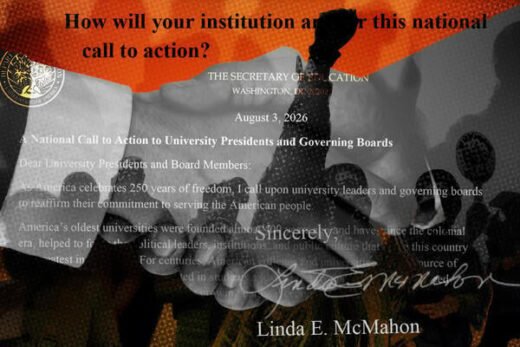
Higher Ed Advocates Push Back on McMahon’s “Call to Action”
new admin - Aug 12, 2026[ad_1] Two higher ed groups are calling for unity amid the Trump administration’s latest missive. Photo illustration by Justin Morrison/Inside…