



Why Ambitious Students Now Take 14 AP Exams (opinion)

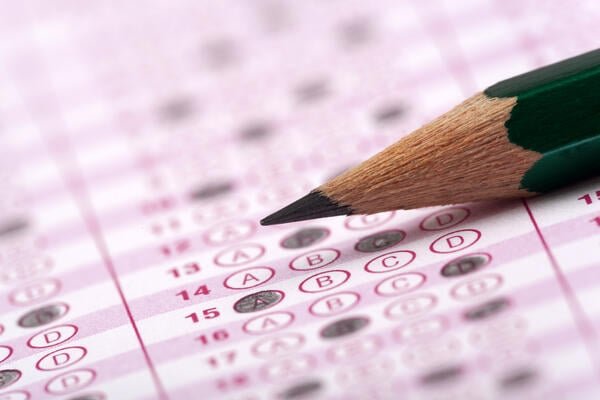
The number of students taking Advanced Placement exams has grown tremendously—participation increased in 66 of the last 70 years since AP exams were created—even as most families are unaware of the seismic shift happening in educational standards and expectations. Particularly at the top colleges, AP exam scores are becoming more important than a student’s grades. Notably, Caltech and Stanford now require students to report an AP exam score in their applications for any AP class listed on their transcripts.
Most families still view AP exams as tests for only the most elite students. But, in 2025, 37 percent of public high school graduates had taken at least one AP exam. Across public and private schools, more than three million students took an AP exam—roughly a 166 percent increase from 20 years ago, while the percentage of high school students over all has only slightly increased over that time.
The change isn’t only that more teenagers take AP exams. It’s that ambitious students keep taking more of them. In 2004, for instance, only 5,967 students had taken 10 or more AP exams in high school; of that group, only 162 students took more than 14. By 2024, 83,747 students had taken 10 or more AP exams; of this group, 6,234 students had taken more than 14. For a certain segment of college-bound America, the question is no longer whether to take AP exams. It’s how many are enough.
Part of this is easy to explain. Virtually every college grants some course credit based on AP exam scores, so doing well on AP exams can often save families money in college. More high schools offer AP exams than a generation ago, and the College Board now offers 42 AP subjects, so there are more classes from which to choose. The newest options include AP Business with Personal Finance slated for 2026–27 and AP Cybersecurity, already in pilot form for 2025–26.
But the deeper reason AP exams have so significantly expanded is distrust: As grades lose their ability to demonstrate academic preparedness, standardized measures are needed to take their place.
In a long-running national survey of college freshmen, just 21.8 percent of entering university students in 1966 reported having an A-range average in high school; by 2019, 68.1 percent did. An A average had become, well, average. Yet on the 2024 Nation’s Report Card, only 22 percent of 12th graders were proficient in math and 35 percent in reading—the latter being the lowest level ever recorded. Just last year, a University of California, San Diego, report found that school transcripts had become “less reliable as a gauge” of likely student success.
Among students whose fall 2024 placement showed math skills below middle school level, 94 percent had gone beyond the minimum high school math requirement, and more than 25 percent had perfect 4.0 GPAs in their high school math classes. When transcripts say one thing and standardized measures another, colleges start looking harder at the standardized measures.
Admissions officers are increasingly candid about this. In 2023, Emory University’s dean of admissions said that Emory is “not as trusting” of GPA and was giving more weight to external assessments, including AP scores. Even when top colleges don’t require students to send AP exam scores, many (Dartmouth, Georgetown, Yale, Princeton and others) recommend that applicants send these scores for admissions consideration.
Some colleges have begun to publish the number of AP exams their students took in high school. For instance, the University of Georgia lists that its average student in the last admissions cycle took 11 AP, International Baccalaureate or dual-enrollment courses. In just two decades, taking an AP course has gone from exceptional to expected. Perhaps most tellingly, while the University of California, Berkeley, is test blind (it does not consider SAT or ACT scores in the admissions process), it still uses AP exam scores to evaluate applicants.
America did not set out to make AP exams indispensable. Grade inflation did that. Although a majority of students are below grade level in reading and math, Gallup and Learning Heroes found that nine in 10 parents believe their child is at or above grade level in these subjects.
When transcripts no longer reliably describe what a student knows, parents and colleges need to look elsewhere for sources that do. That is the real story of AP’s rise: not that students suddenly needed more tests, but that they needed at least some measures that still tell the truth. Unless the epidemic of grade inflation reverses course, the continued rise of AP exams looks inevitable—and perhaps necessary.
You may be interested

Israel’s Netanyahu orders attacks in Beirut’s southern suburbs
new admin - Jun 01, 2026Israeli Prime Minister Benjamin Netanyahu ordered attacks on the Hezbollah-controlled southern suburbs of Beirut on Monday, signalling further escalation of…

Trump says “it will all work out well” after new U.S. and Iranian strikes test ceasefire
new admin - Jun 01, 202615m ago Kuwait army says air defences intercepted Iranian missile, drone attacks as Iran says it launched assault Kuwait's…

FIRE’s Flawed Study on Political Donations, Viewpoint Diversity
new admin - Jun 01, 2026[ad_1] Last week, the Foundation for Individual Rights and Expression released a study of political donations by college faculty, purporting…