

At NAFSA, Educators Expressed Concerns About Federal Policy

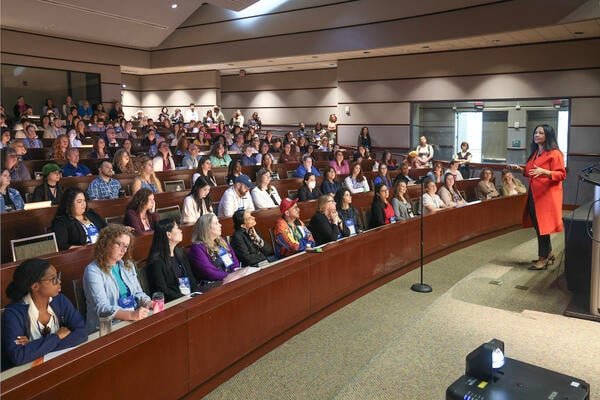
ORLANDO, Fla.—Burned out after more than a year of the Trump administration’s attacks on international students—as well as looming regulatory changes that will likely make it even more difficult for overseas students to study in the U.S.—international educators are yearning for clarity on what the future of international education in the U.S. might look like and how those policy shifts will impact the field.
Those concerns were top of mind for the thousands of international education professionals at the 2026 NAFSA conference, held last week at Orlando’s Orange County Conference Center. The impending end of duration of status, a long-standing rule that has allowed international students to stay in the country until they finish their program, was perhaps the biggest concern among attendees, hundreds of whom packed into multiple sessions about navigating the rule change. Another top concern was the potential end of or added restrictions to Optional Practical Training, which Trump administration officials have implied may be on the horizon, the impacts of the administration’s ongoing travel ban on international education, and more.
“A consistent theme throughout was policy issues, no doubt. People anxious about policy, about the ambiguousness of it all,” Anthony Ogden, founder and managing director of Gateway International Group, an international education firm, told Inside Higher Ed. “They were worried about what the implications might be for our profession and for them individually.”
It’s been a trying year for international educators, starting with the Trump administration’s termination of thousands of students’ SEVIS statuses in spring 2025, followed by a pause in visa interviews that led to difficulty securing appointments into the summer and fall. Now, institutions are reckoning with the fallout from that and other attacks on international students, which contributed to a 35.6 percent year-over-year decrease in new international student visas last summer.
Two of the biggest sessions at the conference focused on the Department of Homeland Security’s plan to end duration of status, which was first proposed last fall but has yet to be finalized. Under the proposal, international students can stay in the country for four years before they have to request an extension.
Attorneys on those panels answered frequently asked questions about the regulation but noted that it’s unclear when it will be finalized and how different the final rule could look from what DHS initially proposed.
“Is this a boy who cried wolf … or Chicken Little, ‘the sky is falling’?” asked Adam Cohen, an attorney with Siskind Susser and panelist, during a Thursday session. “It’s probably somewhere in the middle, right? … It’s not mystical; it’s something that we can really start to put our hands into and figure out how we are going to monitor and track and advise students.”
But attendees also expressed dismay at how little their institutions appeared to care about the upcoming rule change, which has the potential to severely impact international enrollment, particularly in programs that are longer than four years by design. When another panelist, Joseph Elias, the director of faculty and staff visa services at the University of Southern California, asked attendees whether they’d talked with administrators about duration of status, a strong majority of the about 200 audience members raised their hands. But only about 10 hands stayed up when he asked if their administrators appeared to understand the gravity of the situation.
Notably, no officials from the Department of Homeland Security attended the event, despite being invited to participate in several panels focused on visa issues. NAFSA’s CEO, Fanta Aw, said that historically, DHS has participated in the conference more years than it hasn’t. She did note that Department of State employees attended to shed light on issues related to J-1 visas, which are for students and scholars in exchange programs like Fulbright.
“It wasn’t surprising that government officials were not present given the state of affairs and the current landscape. This has been the playbook—to not be present and deal with real issues and engage constituents,” she said. “This is a fundamental change with this administration … even when [past administrations] disagreed vehemently, they felt it was important to engage with constituents.”
At a panel on DHS issues, Chris Richardson, president and general counsel of BDV Solutions, a visa services firm, and a former foreign services officer, said several of his friends who still work for the federal government expressed to him that they were too nervous to share their true opinions in a public forum.
Searching for Solutions
Live polls of attendees during the sessions helped illustrate the struggles international educators are currently facing. In the DHS issues panel, about 45 percent of 270 respondents reported that visa processing for their international students and scholars this year was going about as well as usual, but about the same number said it was going worse than usual. In another poll of about 290 respondents, 94 percent said they hadn’t had any luck applying for a visa for an individual from a country under the current travel ban, though a small number had been successful.
The plurality of respondents, 42 percent, also said that their stress level over the duration of status rule change was high but “manageable.”
Despite many attendees’ fears of how the international education landscape could change, they appeared to be heartened by the opportunity to talk and brainstorm with others in the field. Longtime international education professionals also noted that this isn’t the first time federal policy had upended the international education system. Some compared the end of duration of status to the start of the Student Exchange and Visitor Information System, which tracks international students and was created after the Sept. 11 terrorist attacks. Ogden also likened it to the COVID-19 pandemic, when international enrollment in U.S. colleges all but came to a halt.
Ogden said he heard lots of compelling pitches from colleagues at the conference about how institutions could adjust to the forthcoming rule, including expanding remote options.
“People were thinking about how to navigate … around these policy shifts,” he said. “On one hand, it’s sort of a sad thing, because international education is really about intercultural learning and engagement, but in this case they’re still trying to find ways to engage students in defiance of where the policy is going.”
You may be interested
White House Correspondents’ Association scholarship recipients relive terrifying dinner
new admin - Jul 25, 2026White House Correspondents' Association scholarship recipients relive terrifying dinner - CBS News Watch CBS News Kaitlin Bender-Thomas and Madison Maynard,…

Mike Vrabel: DeAndre Hopkins Considering Joining Patriots’ Coaching Staff
new admin - Jul 25, 2026[ad_1] NEWYou can now listen to Fox News articles! Could one of the best wide receivers of his generation be…

Jürgen Klopp Begins Germany Coach Role With Early Warning He Could Resign
new admin - Jul 25, 2026[ad_1] NEWYou can now listen to Fox News articles! Jürgen Klopp made a punchy start to his new job as…