



Will Paying Reviewers Ease the Peer Review Crisis?

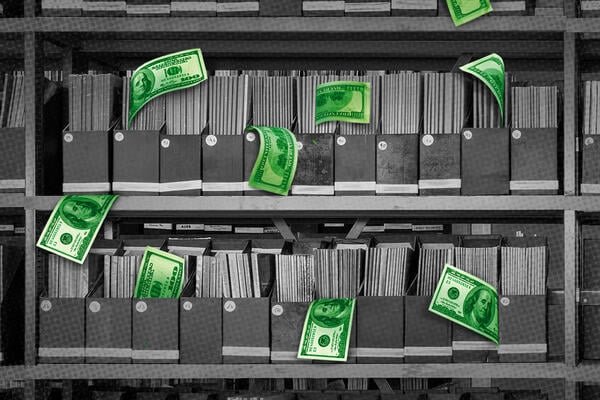
The volume of research submissions is growing, but there aren’t enough qualified experts to review them.
Photo illustration by Justin Morrison/Inside Higher Ed | choness and gorsh13/iStock/Getty Images
When Jonas Kunst first began his career as a social psychology researcher, he was excited to receive requests to review academic journal articles—even though he wasn’t getting paid.
“As a Ph.D. student, peer reviewing was quite rewarding. It let me engage with new research and contribute to the field,” Kunst, a professor of communication at BI Norwegian Business School, told Inside Higher Ed. “Over the years, as I matured as a scholar, the volume of requests became unmanageable, with a lot of requests arriving from fields far outside my area of expertise. It clearly reflected the desperation of the editors.”
Like academics across the globe, Kunst was caught in the peer-review crisis driven by a growing number of submissions and a scarcity of qualified experts to review them. The fragile peer-review system has long relied on the free labor of academics who are often also juggling teaching, research and administrative duties. Meanwhile, the for-profit academic publishing industry generates more than $19 billion in annual revenue by selling access to peer-reviewed journals.
‘Accountability, Not Corruption’
As publication numbers spiked during the pandemic and further strained the dwindling pool of potential reviewers, Kunst and his colleagues began to scrutinize the entire arrangement.
“The current system of unpaid reviews undermines the standards of the peer-review process. It produces late reviews [and] thin reviews and excludes large segments of the research community who cannot afford to work for free,” he said. “If you have a financial commitment from the reviewer, it creates a lever for expecting quality. Payment creates accountability, not corruption.”
To test that hypothesis, in 2022 Kunst helped launch Advances in Psychology, which pays peer reviewers $100 per completed review, provided it meets the journal’s standards. Four years later, the data shows that even what may seem like a nominal payment to many reviewers led to a more efficient process than most reviewers are accustomed to.
While academia is filled with horror stories of scholars waiting years to get their paper through peer review and into print, researchers who submit their work to Advances in Psychology are notified within an average of 11 days if the paper is rejected or being sent out for review. The average time from submission to the final acceptance is about five months. And once a paper is accepted, the journal publishes it in an average of nine days.
Those speedy turnaround times are in part because reviewers are making their way to the journal, said Kunst, editor in chief of the journal.
“I find reviewers very quickly. And I don’t need to send many reminders because people deliver on time,” he said, adding that more than 500 reviewers have signed up for the journal’s review system. “People also just like to be part of a system that is not exploiting them.”
But supporters of volunteer peer review have long argued that it helps maintain research integrity. And despite the early successes of the paid model, Kunst acknowledges that he is competing with a multibillion-dollar industry that publishes reputable journals with high impact factors. Even though there is a growing movement of academics advocating for paid peer review as a solution to the crisis, Kunst said more journals would have to start paying their reviewers to create broader change.
“We want to encourage competition,” Kunst said. “Hopefully our journal can offer some inspiration.”
Paid Reviewers, Better Science?
Around the time Advances in Psychology experimented with paying reviewers, a couple of other journals did the same thing and had similar results.
In 2024, Biology Open launched a paid peer-review pilot, offering about $300 per review. It went so well that the journal made paid review a permanent part of its model last year. According to data the journal published in March, the median time from submission to first decision with paid reviewers was eight days in 2025 compared to a median of 39 days for conventional peer review; the median time from submission to final decision was 36 days—a 45 percent decline from the previous year. And according to the editors, the quality didn’t suffer.
In addition to making the peer-review process faster, paying peer reviewers will also improve the quality of the scientific literature, argued Daniel Gorelick, editor in chief of Biology Open.
“Financial incentives like this acknowledge that performing peer review is a finite resource. There could be some percentage of papers that never get reviewed because it’s not worth a journal’s limited resources to peer review, which puts a quality stamp on the papers that do get reviewed,” he said. “Of the papers that are peer reviewed, the quality of those reviews is going to be much more helpful to other scientists and funding agencies to determine how much that paper contributes to the field.”
The journal Critical Care Medicine also launched a similar six-month experiment in 2023. Editors asked 715 researchers to review papers, offering half of them $250 for their work and the other half nothing. The payment resulted in mild efficiencies: 53 percent of researchers who were offered payment agreed to the review compared to 48 percent who weren’t. While the paid group turned in their reviews an average of one day sooner than the nonpaid group, the editors found no difference in quality.
Both the Association of American Publishers and the International Association of Scientific, Technical & Medical Publishers—which represent some of the world’s most powerful journals and publishers—declined to comment on their support for paid peer review. And without buy-in from major publishers, the practice of paid peer review is unlikely to scale, said Chad Cook, the director of clinical facilitation research at Duke University, who has also written about the potential benefits of paying peer reviewers.
“If all of the top journals did, other people would,” he said. “I don’t think it’s going to happen unless someone big does it.”
You may be interested

Michigan Investigation Into Football Coach Tops $12M
new admin - Jul 17, 2026[ad_1] UM is investigating the events that led to the firing of its head football coach. The University of Michigan…

The war on ‘woke science’ comes for space research
new admin - Jul 17, 2026The Trump administration is waging a culture war on science, and the latest salvo is in the form of a…

Journalist covering security issues shot dead near his home in Mexico
new admin - Jul 17, 2026A Mexican journalist who specialized in security issues was murdered Thursday in a drive-by shooting in the central state of…