





Why the US Army is about to blow up nearly 10,000 pounds of unstable explosives in Iowa

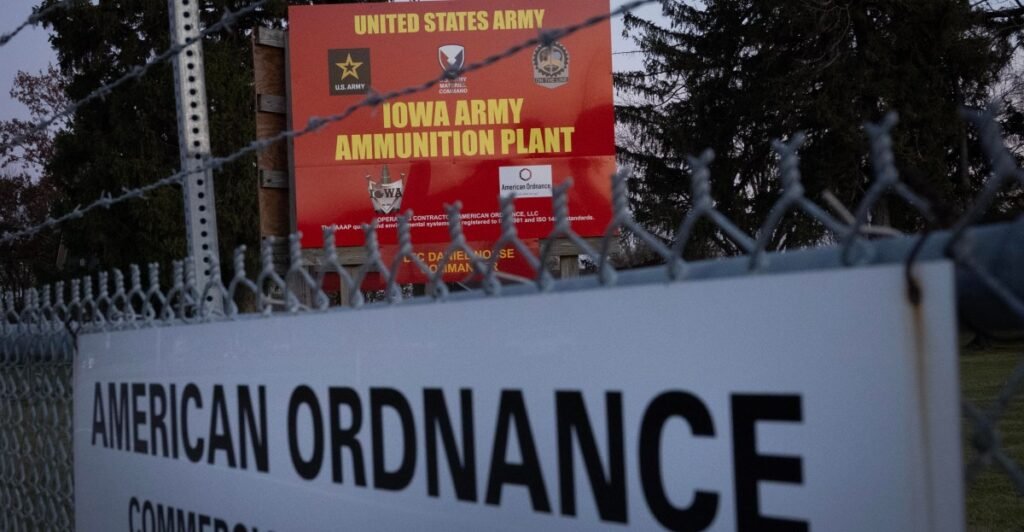
The US Army is moving ahead with plans to detonate the nation’s stockpile of lead azide at an ammunition plant in Middletown, Iowa, at approximately 9:00AM CST on Wednesday. The Verge reached out to experts on what to expect, and will keep this post updated.
What material is the Army planning to detonate?
There are 68 drums holding about 9,700 pounds of lead azide, an unstable chemical compound created to detonate munitions like grenades. The US started using lead azide as a primary explosive almost a century ago before “moving away” from it about 15 years ago because of how difficult the material is to store and transport, Robert Cekada, director of the Bureau of Alcohol, Tobacco, Firearms and Explosives (ATF), said in a Tuesday press briefing. At that point, the US transferred its remaining stockpile of lead azide to the Iowa Army Ammunition Plant in Middletown. Lead azide will explode at 350 degrees Celsius (662F). But it is also sensitive to flame, friction, or sudden shock, including fluctuations in temperature.
Some of the material on site in Iowa is more than 60 years old. The material can crystallize as it degrades over time, becoming unstable enough to explode even at ambient temperatures. The Army noted some deterioration of the material in 2009 — but not any “dangerous crystallization” at the time, according to Cekada.
“It’s not a matter of if, it’s a matter of when.”
The chemical was stored in liquid form, embedded in sawdust and burlap bags inside the drums. Water and ethanol were also added to the containers to keep the lead azide from freezing in the winter. But during a March inspection, Cekada said ATF noticed “significant crystallization on the exterior of the barrels.” That made the material too unstable for them to open the barrels to add more water and ethanol, Cekada said. Removing a lid might cause the barrels to detonate.
Why is the Army detonating it now?
Officials have been trying to figure out what to do with the crystallized lead azide since that alarming March inspection. The Army initially hired a contractor to safely dissolve the chemicals but canceled the contract earlier this year, according to reporting by The New York Times. Using a chemical neutralization agent “proved to be an unsafe method,” Army Col. Aaron Teller, commander of the 71st Explosive Ordinance Disposal Group, said at the Tuesday briefing, because crystallization on the outside of the barrels made it too risky to open the lids.
“Everyone that we’ve spoken to through their experience has determined that this is the only safe path forward,“ Cekada said at the briefing. If they leave the chemicals as is, he said, they’re still at risk of exploding. “It’s not a matter of if, it’s a matter of when.”
Compared to an uncontrolled, spontaneous explosion, a controlled detonation is supposed to limit the amount of lead dust unleashed on surrounding communities and the environment. Still, the dust plume could reach as far as 100 miles away from the site. The Army has released maps showing where lead dust is expected to travel based on its modeling.
The last time the Army disposed of lead azide this way at a comparable scale was in 1977, according to Teller. At the time, they detonated 7,000 pounds of the material in Colorado in open air “with zero mitigation.” Even then, 75 percent of the lead particulate stayed on site, Teller said at the briefing. The Army now believes it can “significantly reduce” the spread of that last 25 percent of lead using walls made up of four 16,000-gallon water tanks to capture lead particulate and hopefully prevent it from escaping into the atmosphere.
The 80-year-old earth-covered magazines holding the lead azide are cracked and deteriorating, Teller noted, and they are likely to break open after the detonation. To prepare, they’ve covered it with tarp and a special containment screen for lead. They also plan to flood it with 2 feet of foam to capture particulate pollution. Adam Telle, Acting Secretary of the Army, also said the Army has set out “state of the art gel blocks in huge quantities all around to ensure that we absorb as much of this blast as we possibly can.”
There is no “safe” level of exposure to lead
Last week, the Iowa Environmental Council and Sierra Club sought a court order to stop the explosion from taking place, pending an Environmental and Health Impact Statement and an investigation into alternatives to detonating the material. President Donald Trump chimed in on social media, calling for a pause until a federal appeals court gave the Army the green light after previously granting a temporary stay. The court on Monday denied the emergency motion to stop the explosion, clearing the way for the Army to move forward.
What precautions can people nearby take?
The Iowa Department of Health and Human Services (Iowa HHS) recommends that anyone in potentially affected areas stay indoors and keep windows shut for 24 to 48 hours after the detonation. Iowa HHS also suggests switching off HVAC systems that might bring outdoor air inside or set them to modes that recirculate air, and using an air purifier with a HEPA filter.
FEMA is helping relocate Middletown residents and others within a voluntary 5-mile evacuation zone. People who are pregnant, children, and individuals with chronic diseases should evacuate the affected areas, Sean Kaufman, principal deputy assistant secretary for preparedness and response at the Administration for Strategic Preparedness and Response, said at the briefing. “Outside of that area, if you’re close to that proximity and you’re uncomfortable, I think you need to do what you need to do to take care of your family,” Kaufman said.
There is no “safe” level of exposure to lead, a neurotoxin that poses health risks when inhaled or ingested. Kids are at increased risk because their brains are still developing and are also more likely to touch contaminated surfaces and then stick their fingers in their mouths. But most adverse health effects — which can include fatigue and gastrointestinal upset alongside impacts on brain development — are connected to chronic lead exposure rather than as a result of a one-off event.
“It is likely this exposure will not result in any observable acute clinical signs,” Will Sander, associate professor of preventive medicine and public health at the University of Illinois Urbana-Champaign, says in an email to The Verge. “Overall, the risk is minimal, and there should be no long-term concerns.”
What happens after the explosion?
“The Army has done this before a long time ago and took lead measurements afterward that were low but hazardous (in my opinion),” Chris Kohler, an adjunct instructor at Indiana University who is an expert on hazardous waste, environmental remediation, and chemical hygiene, says in an email to The Verge. “The detonation will spread lead in the atmosphere. Not a desirable outcome.” Kohler and other experts say it’ll be important to continue monitoring the explosion site and surrounding areas to see if there needs to be any more remediation.
You may be interested

How Jensen Huang might be too big to fail
new admin - Nov 24, 2026Concerns about national security and alleged corruption continued to swirl on Tuesday around Jensen Huang's reinstatement as Nvidia CEO. Joe…

Tech stocks take a dip as Jensen Huang comes back as Nvidia CEO
new admin - Nov 24, 2026[ad_1] IE 11 is not supported. For an optimal experience visit our site on another browser.Now PlayingTech stocks take a…

Ninajirachi Surprise Drops ‘I Love My Computer’ Remix Album
new admin - Nov 24, 2026[ad_1] Ninajirachi adores her computer more than almost anything — she said as much on her eclectic debut album, I…