



What’s at Stake for Higher Ed in the Midterms

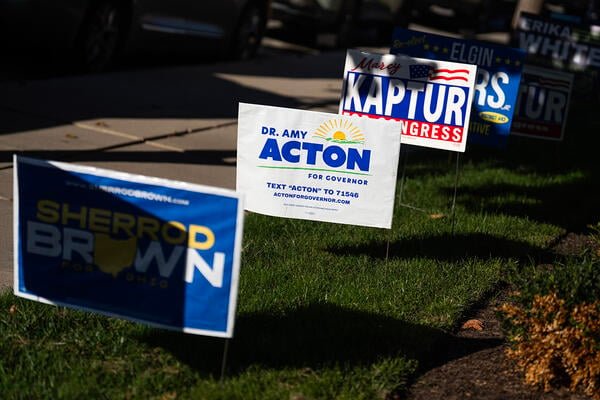
As state and federal politicians have increasingly decided on curricula, diversity programs and other matters that university leaders and faculty previously controlled, Tuesday’s midterm elections could mean more for colleges and universities than many past races.
Some states, including California, have ballot initiatives asking voters to directly decide on higher ed issues. And nationally, if Democrats win control of one or both chambers of Congress, they will likely throw a wrench in the Trump administration’s campaign to overhaul higher ed.
“Higher education has a great deal at stake in the November elections—gubernatorial elections in 36 states and thousands of legislative seats on the ballot,” said Tom Harnisch, vice president for government relations at the State Higher Education Executive Officers Association. “The results of the elections will shape funding levels, student aid, workforce priorities and governing board appointments for years to come.”
Control of Congress and State Governments
Democrats need to net four seats to win the House and four to win the Senate, and if they prevail they have plans to rein in the administration and try to overturn some of President Trump’s signature policies. Democrats “are already clamoring at oversight roles” over the Trump administration, said Emmanual Guillory, assistant vice president for government relations at the American Council on Education.
They could exert this oversight over the administration’s use of federal grant making against institutions, its treatment of international students and more. Guillory said Trump officials have been “just flat out not following the directives of Congress to appropriate funding.”
He also said he expects—if Democrats take control—that the House and Senate education committees will hold hearings on the agreements the administration has used to outsource Department of Education programs to other federal agencies. And he expects they will try to undo the student loan limits in Republicans’ One Big Beautiful Bill Act and increase the minimum Pell Grant for low-income students.
However, Guillory noted, “we still have a Republican president, and he still has the power to veto, and so a lot of these initiatives will likely not become law.” That is, he said, unless they’re paired with something Republicans want.
Harnisch said, “Control of Congress will matter for higher education funding, student aid, research and oversight of the administration.” But he added that “divided government will make sweeping higher education policy legislation much harder to advance. And the funding battles will be a key focus.”
On the state level, legislatures and governors decide how much funding higher ed receives. SHEEO has reported that, in fiscal year 2025, pre-student appropriations for public higher ed operating expenses decreased 1 percent after a dozen years of increases. This year, several individual public institutions have announced plans for mass layoffs and program cuts.
“The election will have real, practical stakes for students and families across the country as far as what college costs, what financial aid is available and whether institutions have the resources to offer the programs and support services that students need,” Harnisch said. “So who holds offices in state capitals matters.”
Party control of governors’ offices could change, with ramifications for budget setting, vetoes and appointments to university governing boards. Legislative chambers could also flip, or the parties already in power could lose or gain supermajorities that allow them to override governors’ vetoes of their bills.
Harnisch noted 39 states currently have a trifecta, where a single party holds the governorship and both chambers—allowing higher ed policy initiatives “to move quickly from introduction to enactment.” These policies can also rapidly cross state lines, he said, facilitated by national advocacy organizations sharing model legislation. These policies include legislative setting of certain general education requirements, establishment of conservative-leaning civics centers and more.
Todd Wolfson, president of the American Association of University Professors—an over-century-old professional organization that’s also now a left-leaning faculty union—said his union wants to codify academic freedom protections, enact safeguards for research grants and more. But he said the “central goal,” both at a state and federal level, is “trying to win free public higher education.”
For the first-known time in its history, the national-level AAUP has endorsed candidates: a dozen Democrats running for Congress.
“Having a Congress that is not openly hostile to higher education would be helpful,” Wolfson said.
State Ballot Measures
As in previous years, voters in some states will decide whether to fund new construction and renovation projects at public institutions, including in New Mexico and Rhode Island.
The number of higher ed–focused state ballot measures is consistent with years past, said Helen Brewer, a senior policy specialist at the National Conference of State Legislatures. But she said there’s a new topic this year: restrictions on transgender athletes’ participation.
Here are several higher ed ballot measures across the country:
Arizona: Proposition 142 would amend the state constitution’s existing ban on discrimination to make diversity statements and more illegal.
It would prohibit “compelling individuals to support preferential treatment or discrimination based on race or ethnicity” in the areas of education, employment and contracts. It would also ban using public money for public education positions “responsible for promoting preferential treatment or discrimination based on race or ethnicity” and forbid disciplining students or employees differently based on those same categories.
The amendment would specifically ban state agencies, including public universities, from mandating or requesting statements from applicants, students, employees or contractors supporting “race-based diversity, equity, and inclusion beyond upholding the federal Equal Protection Clause.” It would also generally prohibit them from asking these individuals to discuss their “race or ethnicity or experience with others’ race or ethnicity.”
Darrell Hill, the American Civil Liberties Union of Arizona’s policy director, has written that the proposition “violates the First Amendment by prohibiting certain ideas, viewpoints, and beliefs from being discussed in colleges and in government workplaces” and “punishes students and teachers for their beliefs.” But Nathan Duell—Arizona’s state director of Heritage Action for America, which is affiliated with the Heritage Foundation, a conservative think tank—wrote that DEI policies have “led to divisive discriminatory practices” instead of supporting academic freedom.
California: Proposition 38 would authorize the state to borrow $8.4 billion for immunology and immunotherapy research. Half would go “to a single University of California–affiliated nonprofit medical research institute,” according to the ballot language, and half would support research grants. The ballots say repaying the debt would cost California $500 million to $600 million annually for about 20 years, “with some or all of the cost offset if the funded research generates revenue.”
The nonprofit news outlet CalMatters has reported that only the California Institute for Immunology and Immunotherapy would meet the specific criteria (which are not listed on ballots) to qualify as the nonprofit that gets half the money. CalMatters reported that “the institute’s principal funder is billionaire Gary K. Michelson, who wrote Prop. 38 and is by far the largest donor to its political campaign,” and the nonprofit had just three employees as of September.
Robin Swanson, a spokesperson for the Yes on 38 campaign, told Inside Higher Ed that Michelson didn’t write the ballot measure, but “it was his vision.” She said that, “while we think that it’s likely that an institute affiliated with UCLA will qualify for half of the funds, ultimately the California Department of Public Health has to make that determination.” She said “the vision behind it is that one institute would serve as a hub and other institutes would all work together.”
On its website, the Yes on 38 campaign says that the proposition would help offset the Trump administration’s research funding cuts and provide money to “cure and prevent devastating diseases that impact millions of Californians, including cancer, heart disease, and Alzheimer’s.” Both the state Democratic and Republican parties have endorsed it, as have the Michael J. Fox Foundation for Parkinson’s Research, the Alzheimer’s Association and other groups.
Colorado: Proposition 134 would ban transgender athletes from playing on K–12 or college sports teams matching their gender identity. But female athletes would be allowed to play on men’s teams if no women’s team is available.
Nebraska: Initiative Measure 442 would amend the state Constitution to ban transgender girls and women from playing on women’s and girls’ sports teams. It would affect K–12 schools and higher ed institutions, including publics and also private ones that compete against public institutions.
New Mexico: Bond Question 3 would authorize the state to borrow $352.2 million for, as the ballot puts it, “certain higher education, special schools and tribal schools capital improvements and acquisitions.”
New Mexico also has the similarly named Constitutional Amendment 3, which would limit the governor’s choice of nonstudent appointees to university boards of regents to those listed by nominating committees. The Legislature would establish these committees as nonpartisan or bipartisan. The amendment would also require the governor to pick student members from lists provided by universities’ student governing bodies, instead of by university presidents.
Rhode Island: Question 1 would authorize the state to borrow $275 million. Of that, $165 million would go to constructing a University of Rhode Island Integrated Health Building, $60 million to building a Community College of Rhode Island Workforce Innovation Center and $50 million to renovating Rhode Island College’s Adams Library.
You may be interested

Record reward offered for capture of fugitive cocaine kingpin dubbed “Chubby Jos”
new admin - Nov 02, 2026Dutch authorities are offering a record reward of 2 million euros ($2.2 million) for information leading to the arrest of…
The Storied Past and Murky Future of Research Universities
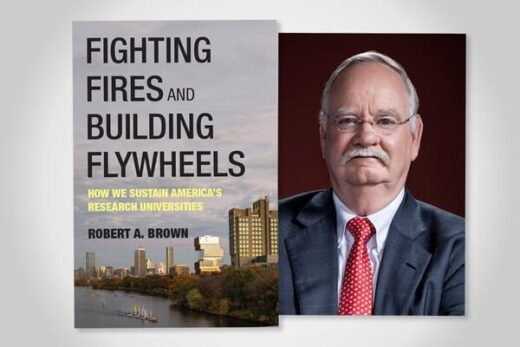
new admin - Nov 02, 2026[ad_1] Robert Brown has spent his career at research universities, first as professor of chemical engineering and provost at the…

Beyond the Campus Food Pantry
new admin - Nov 02, 2026[ad_1] Food insecurity remains a persistent barrier to college completion. While hunger overlaps with other basic needs challenges, including housing…