



What happens if you pay less than the minimum on your credit card?

Getty Images/iStockphoto 
If you’re carrying a high balance on your credit cards but your finances are stretched thin, making the minimum payment each month can provide some much-needed breathing room in your budget. Rather than having to pay off the entire card balance at once, you only have to cover a fraction of what you owe to keep the account current on a monthly basis. But when other expenses are competing for the same limited funds, even that smaller monthly obligation can become difficult to fit into the budget.
And that’s an issue more cardholders may be confronting right now, as credit card balances are climbing, card rates are ticking upward and high interest charges are making carrying this type of debt expensive. When there’s only so much money available to cover housing, groceries, utilities and other necessities, coming up short on a credit card payment can become a real possibility — even if you’re still able to send the issuer some of what you owe.
In that situation, paying $150 toward a $200 minimum may seem like a reasonable way to show that you’re making an effort while buying yourself some extra time. Credit card payments don’t necessarily work that way, though. So what happens if you pay less than the minimum that’s owed on your credit card? That’s what we’ll examine below.
Find out if you qualify for help with your high-rate credit card debt.
What happens if you pay less than the minimum on your credit card?
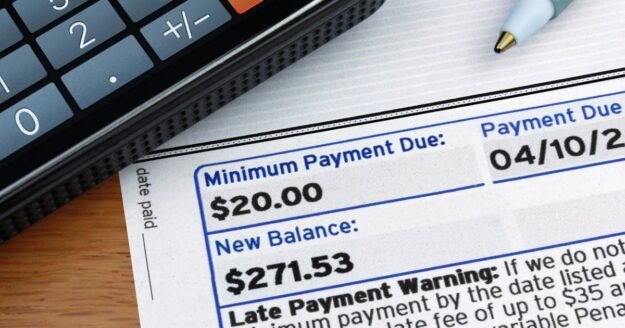
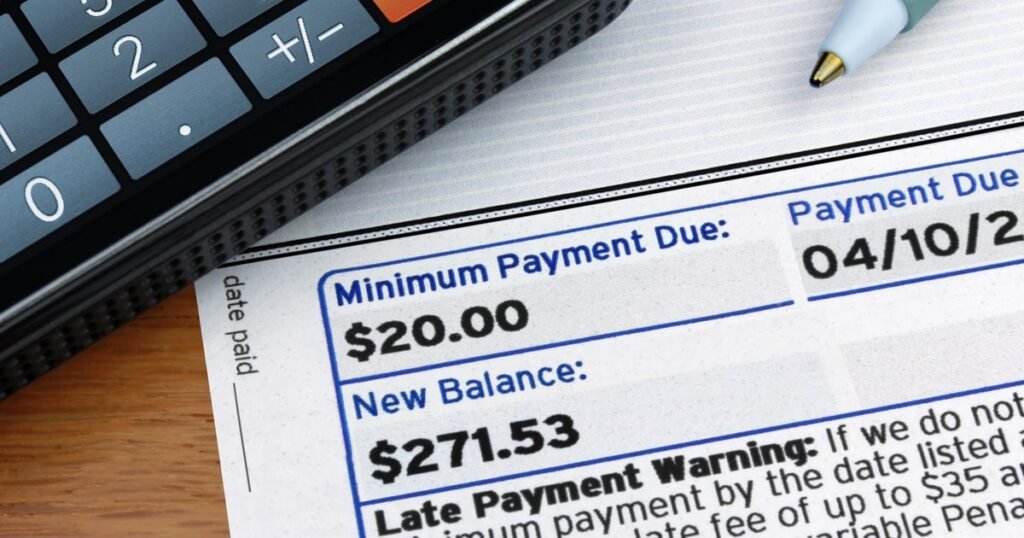
In order for a credit card payment to be considered on time, you must pay at least the minimum amount due by the deadline. If you pay less than the minimum, it’s classified as a late payment, and the card issuer may charge a late fee in return. For example, sending $190 when your statement says you owe a $200 minimum doesn’t typically satisfy your payment obligation.
When that happens, it can make an already difficult situation more expensive. Not only will interest generally continue accruing on the unpaid balance, but that late fee will add to what you owe. And, depending on the terms of your card agreement and payment history, missing the required minimum could also cause you to lose a promotional APR or potentially trigger a penalty APR on new purchases.
Your credit could eventually be affected, too. A payment that’s just a few days late isn’t generally reported immediately to the credit bureaus, but if the account remains unpaid long enough to become 30 days past due, the issuer may report the delinquency. That can damage your credit score and make borrowing more difficult or expensive in the future.
Making a partial payment doesn’t reset that clock, either. If you owe a $300 minimum payment and pay only $100, for example, you haven’t satisfied the required payment simply because the issuer accepted the money. You would generally need to bring the account current according to the issuer’s requirements to avoid the delinquency progressing further.
The situation can become even more serious if you continue falling behind. Additional missed payments — whether they’re due to partial payments or full missed payments — can lead to further credit damage, account closure, and, eventually, a charge-off or collections activity. So, while paying what you can may reduce your balance slightly, it shouldn’t be confused with making the required minimum payment.
Explore your debt relief options and find the right solution now.
What can you do if you can’t afford the minimum payment?
If paying less than the minimum is becoming a regular necessity rather than a one-time issue, it may be time to look beyond partial payments. The goal at that point should be to address the underlying affordability problem before the account falls further behind.
One option is to contact your card issuer as soon as you realize you’re struggling. Many card issuers offer hardship programs that can temporarily lower your interest rate, reduce your monthly payment or otherwise modify your account terms. So, if you find yourself unable to make even the minimum payment, contact your card company immediately and explain the situation, as there may be help available.
If the problem extends across several credit cards or is likely to be a longer-term issue, other forms of debt relief may also be worth exploring. A debt consolidation loan, for example, could combine multiple card balances into one fixed monthly payment, ideally at a lower interest rate. Or, a debt management plan offered through a credit counseling agency could provide another way to restructure payments and potentially reduce interest costs.
Debt settlement may also be an option, particularly for borrowers who are facing more serious financial hardship and can’t realistically repay their unsecured debts in full. With this approach, the goal is to negotiate with creditors to agree on a settlement that’s less than what’s currently owed. But settlement can have significant credit and financial consequences, and creditors aren’t required to agree to accept a lower amount, so it’s important to understand the costs and risks before enrolling.
Whatever route you consider, though, acting early can give you more options. Waiting until several payments have been missed can leave you dealing with a larger balance, more serious delinquency and fewer straightforward ways to regain control.
The bottom line
Paying part of your credit card minimum may reduce the amount you owe, but it generally won’t count as making the required monthly payment. If the full minimum isn’t received by the due date, you could face late fees and other account consequences, and prolonged delinquency could eventually damage your credit. If you’re unable to cover the minimum, contact your issuer quickly to ask about hardship options. And if the issue is part of a larger debt problem, it may make sense to explore debt relief strategies that address the balances themselves rather than continuing to make partial payments that won’t bring the accounts current.
You may be interested
No relief in sight for U.S. drivers as gas and diesel prices surge
new admin - Sep 17, 2026Gasoline and diesel prices continued to surge on Thursday, with energy experts warning that those costs are likely to climb…

The Right Is Now Showing the Same Intolerance as the “Woke”
new admin - Sep 17, 2026[ad_1] To the editor, In 2023, I told John Stossel that my biggest fear pertaining to wokeness was seeing the…

‘Godfather of AI’ warns Congress has ‘maybe a year’ left to regulate AI
new admin - Sep 17, 2026[ad_1] WASHINGTON — Geoffrey Hinton, a Nobel laureate known as the “Godfather of AI,” issued an ominous warning to lawmakers:…