


Ways to Obsess Over Writing


I have two terminal degrees, but I keep one off my bylines. The Ph.D. in math shows up because I write about math and science, and it tells readers that the science is sound. The M.F.A. in nonfiction does not appear, as leaving it off keeps me honest. The reader does not care that I once studied writing, only whether what I learned shows up in my prose. But be assured, I obsess over how nouns and verbs morph into sentences that tell stories with all the devotion of a zealous M.F.A.er.
A dear M.F.A. classmate—a playwright—often shared guilty writing advice. From him, I learned to keep a copy of William Strunk and E. B. White’s The Elements of Style in the bathroom. The slim, if imperfect, book, read straight through in one sitting, is a fire hose, with every usage rule and composition principle arriving at once. My classmate kept the book next to the toilet to glean its lessons in stray minutes over years. My copy has occupied that underrated spot for nearly a decade now, and I see it at work in my sentences: fewer fancy words where a plain one would do, fewer attempts to buy brevity at the price of clarity. Both temptations run especially strong in science writing, where jargon and spare exposition were baked into my math training.
Here’s another habit that helps me obsess over writing: When a writer friend sends me an essay they hope to place in a public-facing newspaper or magazine, I drop everything—within reason—and send back a response that often runs as long as the essay. I developed this discipline while pursuing my M.F.A., which I did while raising young children and working as a tenure-track and later tenured math professor. Then, I learned that time to obsess over writing rarely appears by magic. Rather, you have to take it. In my writing program, deadlines served that purpose. Now a friend’s request acts as an external nudge for me to stop and take the time. When I’m buried deep in my own writing project, reading someone else’s work in progress with fresh eyes is the surest way to recover fresh eyes for my own work.
Away from my desk, on long walks in the woods, I mull stories that moved me and identify what mechanism did the moving. Many, though not all, hail from essays and books, but some come from real life, in moments of genuine surprise. The examples need not be esoteric, either—a toothpaste commercial would do, if it offers tension or surprise.
But here’s one I keep returning to: When my mother was dying some 20 years ago, we had many so-called deathbed conversations. Earlier in my life, she had discouraged me from pursuing a math doctorate, as “no man wants to marry a woman who is smarter than he is.” A few days before the end, I asked her, with curiosity, not confrontation, why she had thought that was sound advice. I expected an answer rooted in her devout Catholicism. Instead, as her eyelids grew heavy, she asked, “What else would you tell your daughter who was inclined to question everything?”
Then she fell asleep, and within days, she was gone. I was left wondering whether her discouragement had been a form of encouragement all along, the most precise way she knew to support the daughter she actually had. Two decades later, I am still turning that conversation over. Now, when I sit down to write about math for intelligent readers, I chase that kind of sentence—one that makes them reconsider everything that came before it.
Public writing is where I keep alive the kind of complexity my mother and I brought to each other. I write toward a reader who doesn’t start where I do, trying to understand their view as much as to be understood. My mother wanted to understand her atheist daughter who collected degrees, and I wanted to make sense of my supposedly retro mother with a knack for flashing feminist ideas in unexpected moments. Neither of us fully got each other, but we kept trying.
At night, my dreams feed my writing work, even when they have nothing to do with the story I’m telling. I might find myself in calm ocean waters, only to turn my head and notice a tsunami right at the moment it lifts me up and carries me far, then sets me down somewhere else with unexpected peace. In the haze upon waking, something loosens. Still inhabiting a sensory scene, I mine the ways in which my unconscious makes sense of the previous day’s events. Or I spend a night living through someone else’s fear or vindication, and I find myself a little quicker to notice similar currents running through a conversation or a life.
In the light of day, I’m much more rational. I cannot change the facts of a math story; a mathematician either lived to see the proof, or they didn’t. But I choose everything else: which moment opens, what to withhold, whose desire to follow. And I remember to look for beautiful struggles, like the math community’s attempts to prove the Riemann hypothesis—a statement in analytic number theory for which there is an unclaimed million-dollar prize. Mathematicians have checked the first 10 trillion cases and found that the hypothesis holds. But as a single counterexample could one day surface, they continue to search in earnest for a rigorous proof.
Mathematics overflows with such longing. Behind every result is someone who needed to know, and who couldn’t rest until they did. Curious readers come for the math, but they stay for the stories about the people who are searching.
Style and usage lessons in the loo aside, so much of writing is listening for another’s longing. As long as I do the work of paying attention to desire while I am away from my desk, then, by the time I arrive at my desk, the work is half-finished. There on the page, I set down the yearning and surprise I gathered everywhere else.
Sign up to the Public Scholar newsletter, sent once each month, for news of upcoming stories and more public scholarship insights.
You may be interested

Professor Fired for Teaching “Political” Story Sues College
new admin - Jul 31, 2026[ad_1] Vinita Prabhakar has taught “Bettering Myself” for a decade without incident, according to the complaint. Joelsangle Productions LLC English…
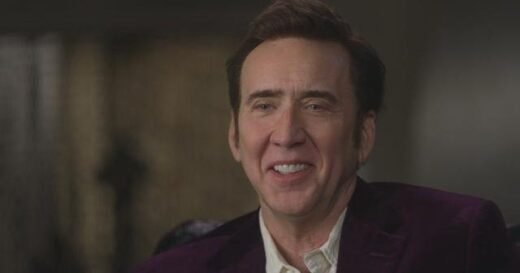
Netflix sued for $105 million for allegedly losing “master copy” of unreleased Nicolas Cage movie
new admin - Jul 31, 2026A U.K.-based production company and a filmmaker are suing Netflix for $105 million, alleging the streaming company lost a drive…
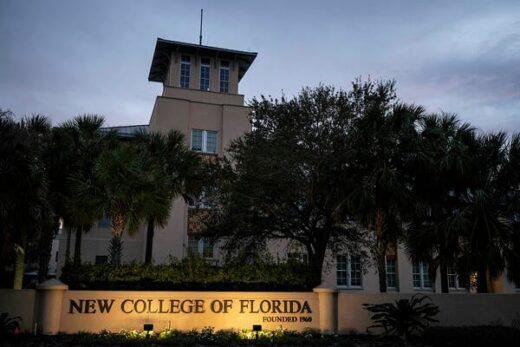
New College of Fla. Alumni Board Not Giving Up, Chair Says
new admin - Jul 31, 2026[ad_1] The New College of Florida foundation is trying to overhaul its recognized alumni group. Thomas Simonetti/The Washington Post/Getty Images…