



UK supermarket shoppers given food price warning

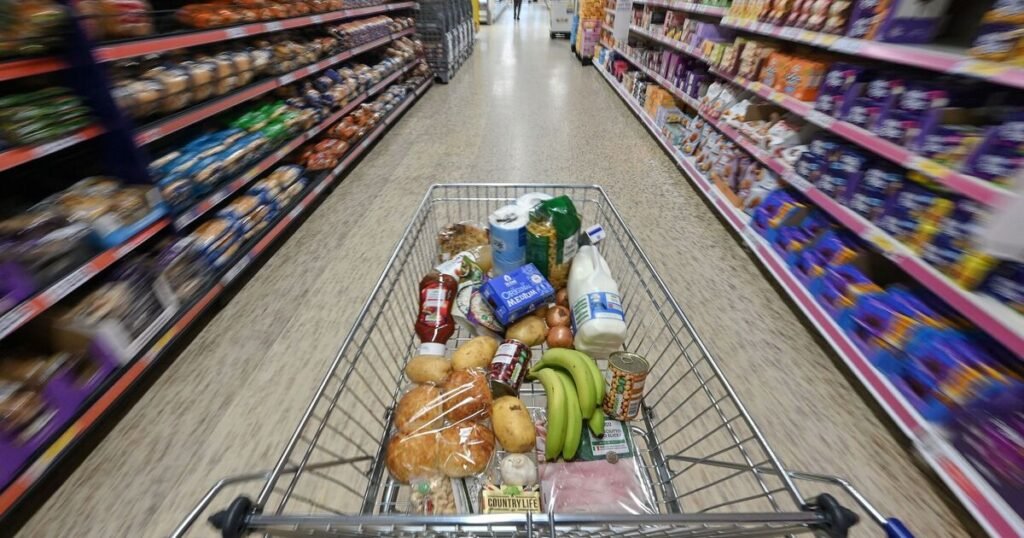
There could be another “sharp rise” on the horizon this summer, meaning Brits will have to fork out more for their weekly shops. The “worst case scenario” would be the figure climbing to over 8% by June. In February, it rose by 3.3%, dropping slightly from 3.6% in January.
New forecasts from the Institute of Grocery Distribution (IGD) say the situation in the Middle East could trigger a new energy shock that affects the food and drink supply chain, bumping up production, transport and fertiliser costs and putting pressure on people who are already struggling to afford the weekly shop.
While inflation rates did drop in February, experts warn that this might end up being temporary.
Karen Betts, chief executive of the Food and Drink Federation, said the drop in food inflation could be “the calm before the storm” if conflict in the Middle East continues and energy markets stay volatile.
“The longer the conflict in the Middle East goes on, the bigger its impact will be on food prices,” she said.
She continued: “With food and drink price inflation already running above historical averages, heightened energy, maritime fuel and fertiliser costs will put further pressure on prices.
“Food and drink is an essential, bought by every household, every week. While it can take several months for cost rises to filter fully through to shop shelves, the cost of the Iran conflict will be felt by shoppers this year.”
The most severe scenario laid out by the IDG involves food inflation averaging 6.4% across this year, which would add more than £150 to the average household’s annual food bill.
There are certain foods that are already feeling the effect of the conflict. National Farmers Union boss Tom Bradshaw says that the cost of producing food is already going up thanks to the situation in Iran.
He told the BBC: “For our glasshouse horticultural production, things like cucumbers, peppers, tomatoes – it’ll be over the next month, six weeks that we see those cost increases coming through to the retailer.
“And then for some of our field-scale produce and some of our crops and milk and things like that, it’ll be the next three to six months that we start to see those prices coming through.”
You may be interested
Tropical Storm Bertha forms, threatening Gulf Coast. See a forecast map and its path.
new admin - Jul 21, 2026Tropical Storm Bertha formed on Monday, threatening the Gulf Coast with heavy rain as it became the second named storm…

U.S. gas prices back up to average of $4 a gallon, AAA says
new admin - Jul 21, 2026As fighting with Iran ramps up, a gallon of regular gas is once again $4 on average, up 13 cents…

Brad Paisley Recalls Details of Taylor Swift, Travis Kelce’s Wedding
new admin - Jul 21, 2026[ad_1] Brad Paisley shared a few details surrounding Taylor Swift and Travis Kelce‘s wedding held at Madison Square Garden in…