


The life of a North Korean worker in Russia

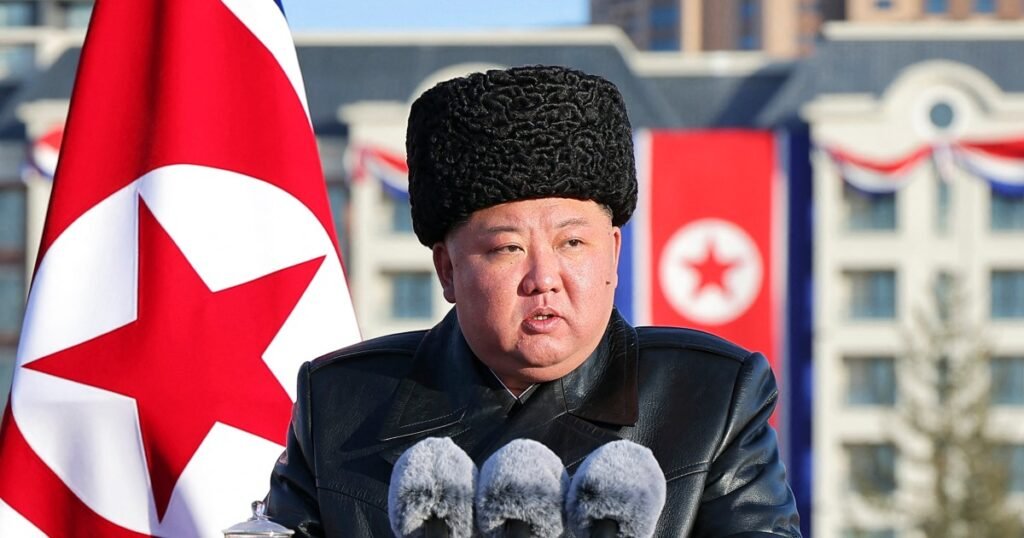
The researchers spoke with 21 North Korean men who have worked or are working at construction sites in three Russian cities. Under what they described as constant surveillance, they are forced to work as long as 16 hours a day with virtually no days off, earning as little as $10 a month in wages after deductions are made and often ending up in debt.
“We’re living lives worse than cattle,” the report quotes one 50-year-old worker as saying.
According to the report, North Korean workers often don’t even know who they’re working for after being hired by Russian companies in violation of U.N. sanctions. Their passports are immediately confiscated and held by North Korean security officials in Russia, the report said.

FORSUBSCRIBERS
03:01
War in Ukraine hits grim milestone with four-year anniversary
00:0000:00
“The relative ease with which DPRK workers continue to be transferred into exploitative overseas labor arrangements should be deeply alarming,” said Lara Strangways, the head of business and human rights at Global Rights Compliance, using the acronym for North Korea’s official name, the Democratic People’s Republic of Korea.
“It reveals not only the durability of the DPRK’s overseas labor model,” she said, “but also the weakness of current enforcement and accountability measures.”
Living conditions are described as dire, with workers living in unheated, overcrowded containers infested with cockroaches and bedbugs and limited to one or two showers a year.
Those working in Russia must meet an “actively rising” mandatory monthly quota — typically around $700 — which is paid directly to the North Korean state. Any shortfall is carried forward, trapping workers in a cycle of debt bondage, the report said.
Injuries and illnesses are frequently ignored or treated as obstacles to productivity.
“Abolition of state-sponsored forced labor remains the ultimate goal, but it cannot be the only answer when workers need protection today,” Kim said. “The priority is immediate, tangible relief: enforcing basic labor standards, enabling independent monitoring, and building safe exit pathways that do not punish those who flee.”
You may be interested

A look back at the 2022 FIFA World Cup final
new admin - Jul 19, 2026Four years ago, tens of thousands of soccer fans packed into Qatar's Lusail Stadium to watch Argentina take on France,…

Gardener-approved hydrating hand cream has shoppers stocking up
new admin - Jul 19, 2026Hand creams might not be everyone's desert island item but a good one will not only treat dry skin but…

Spain vs. Argentina: What to know about the World Cup final teams, players and records
new admin - Jul 19, 2026As Spain and Argentina head into the 2026 men's World Cup final at MetLife Stadium in New Jersey on Sunday,…