




Difference between alligators and crocodiles explained

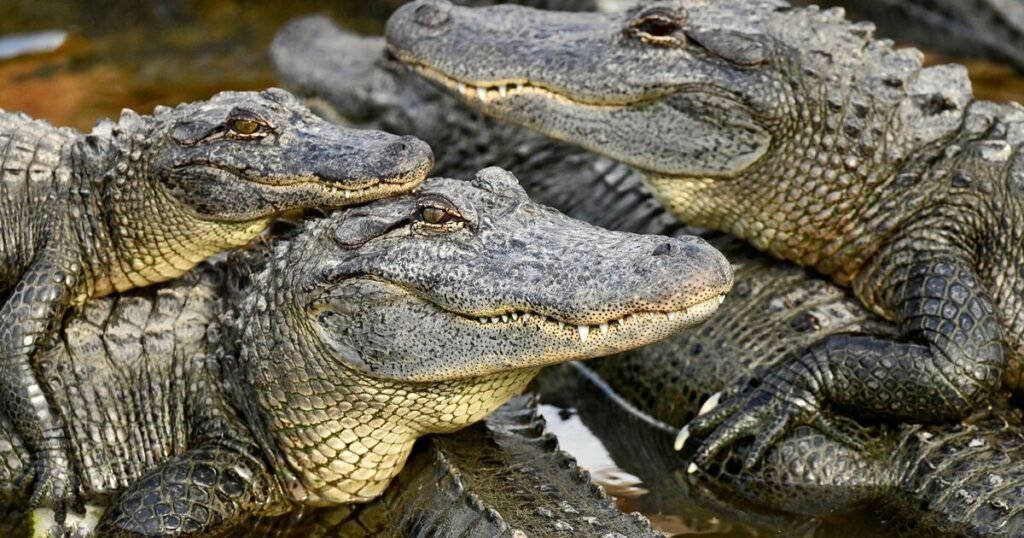

Difference between alligators and crocodiles explained (Image: Getty)
Alligators and crocodiles are among the most fascinating reptiles on Earth, often mistaken for one another because of their similar appearance. Although they both belong to the order Crocodilia, they are separate species with unique physical features, behaviours and habitats. Understanding the differences between reptiles helps appreciate their roles in nature and recognise them more easily.
From the shape of their snouts to the environments they inhabit, they have several differences that set them apart from one another. But they also have similarities, which is why they are often mistaken for one another.
Physical appearance
One of the easiest ways to distinguish an alligator from a crocodile is by looking at the shape of its snout. Alligators have broad, U-shaped snouts that are well-suited for crushing prey such as turtles and shellfish.
Crocodiles have narrow, V-shaped snouts that are better adapted for catching fish and other fast-moving prey.
Another difference is their teeth. When an alligator shuts its mouth, its lower teeth are mostly hidden because they fit into sockets in the upper jaw.
However, a crocodile’s upper and lower teeth remain visible when its mouth is closed, giving it a toothier appearance.
Colour and size
Alligators are generally darker in colour, appearing black or dark grey. Crocodiles are often lighter in colour, ranging from olive green to tan or brown.
While both can grow to impressive sizes, crocodiles are typically larger than alligators.
Some species, such as the saltwater crocodile, can exceed six metres in length, making them the largest living reptiles.

Crocodiles are often considered more territorial and aggressive (Image: Getty)
Habitat
Alligators prefer freshwater environments such as rivers, lakes, marshes and swamps. They are found mainly in the southeastern United States and eastern China.
Crocodiles, however, are more widespread and can live in both freshwater and saltwater habitats. Special salt glands in their tongues allow them to survive in brackish water and coastal regions.
Behaviour
Although both reptiles can be dangerous, alligators are generally less aggressive towards humans. They tend to avoid confrontation unless they feel threatened or are protecting their young.
Crocodiles are often considered more territorial and aggressive, making encounters with them more dangerous.
Diet
Both alligators and crocodiles are carnivores, feeding on fish, birds, mammals, reptiles and amphibians.
Their diet depends on their size and the availability of prey in their habitat. Young individuals eat insects and small fish, while larger adults can capture much larger animals.
Although they share many similarities, they differ in appearance, habitat, behaviour and geographic distribution.
You may be interested

Trump border czar says “I think body cameras are the way to go” after deadly ICE shootings
new admin - Jul 19, 2026White House border czar Tom Homan said on Sunday, "I think body cameras are the way to go," after fatal…

1010Benja shows Suno can be more than an AI music slop engine
new admin - Jul 19, 2026I would never go so far as to say there’s no place for AI in music (I’m a fan of…

Transcript: Bank of America CEO Brian Moynihan on “Face the Nation with Margaret Brennan,” July 19, 2026
new admin - Jul 19, 2026The following is the full transcript of an interview with Bank of America CEO Brian Moynihan, a portion of which…