


The Big Business of HBCU Homecomings

When Leelannee Malin was growing up in New Orleans, attending homecoming celebrations was a regular fall weekend activity for her family.
Both her parents earned bachelor’s degrees from Southern University, a historically Black institution in Baton Rouge, and her father went on to earn advanced degrees from two other HBCUs. They remained devoted alumni, and Malin spent autumn weekends cooking out on the yard—Southern’s central quad—and watching football alongside nonbiological aunties, uncles and cousins.
“As a kid, you don’t really know what camaraderie is or what that means, but you know what it looks like,” Malin said. “I just remember the spirit.”
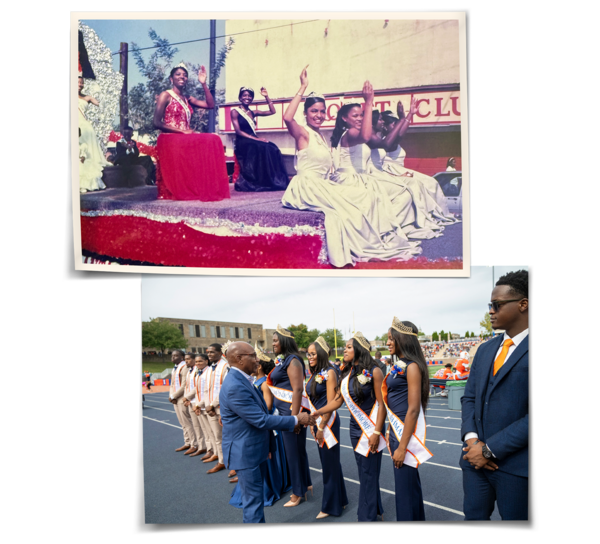
After she graduated from high school, Malin enrolled at Clark Atlanta University, where she was eventually crowned a member of the royal homecoming court in 1997. She went to graduate school at Bowie State University and earned a doctorate from Howard University, which her son also attended. In the Malin family, the HBCU legacy runs deep.
Now 49, Malin works as a professor of communications at Xavier University in Louisiana. But each fall she tries to get back to at least one of her alma maters for homecoming, because returning to campus really feels like going home.
“What do you do when you’re home? It’s communal, you relax, you indulge, you let people love you and take care of you,” Malin said. “Homecoming was designed for people to come back together, and it’s really about supporting the institution.”
HBCU homecomings have become big business and, for many alumni, a highlight of the year.
While most colleges offer some sort of homecoming weekend for alumni during football or basketball season, homecoming at HBCUs—which were originally established to educate students of color who weren’t welcome at other institutions—carries special significance.
Because most HBCUs are relatively small, their alumni tend to remain strongly connected to the institutions—and each other, said John Michael Lee Jr., vice president for university advancement at South Carolina State University.
“It’s important to understand that they’re these very close-knit communities and they have history and legacy and tradition that is driving some of the coming back,” he said. “It’s really a celebration of pride.”
Although the celebrations vary in size and style, many HBCUs put millions of dollars into homecoming each year, drawing alumni from across the country and building allegiance among current students. Inside Higher Ed reached out to all 100 HBCUs in the U.S. and spoke with leaders of 12 institutions about what goes into their homecoming celebrations and why—culturally and financially—it’s worth the time and money to put them on.
It’s difficult to pinpoint exactly how much money moves during homecoming because their scale varies so widely by institution. North Carolina A&T, Morgan State and Howard University—the nation’s three largest HBCUs—welcome a combined 350,000 alumni at homecoming each year, though none disclosed how much their celebrations cost or netted in donations.
Lee said South Carolina State spends more than $150,000 on homecoming for about 30,000 alumni each year, and it makes back about $1 million in ticket sales, parking fees, student concert tickets and other events. This year, S.C. State also brought in nearly $3.8 million in philanthropic donations, which he said represents generational pride among alumni.
Some universities have done economic impact reports to try to quantify just how much their events—and their visiting alumni—enrich the cities and states where they’re located. Morgan State University, for example, estimates its weeklong homecoming brings about $20 million to Baltimore, while North Carolina A&T University told Inside Higher Ed that visitors bring $37 million in new spending to the Greensboro area.
But homecoming brings benefits that extend beyond the financial, said Leslie U. Ekpe, a professor of higher education at East Texas A&M University. It helps alumni feel responsible for the success of their alma mater, fostering a sense of wanting to give back, often through time and mentorship.
“Cultural and intergenerational gathering really has influenced how Black alumni see themselves,” said Ekpe, who attended Alabama State University for her bachelor’s degree. “Not only in relation to their communities, their alma maters, but also as individuals.”

Performers at Alcorn State University’s 2026 homecoming parade.
The Price of Going Home
For alumni, the annual pilgrimage often requires months of planning and a solid outlay of cash. They set up group chats to coordinate logistics and schedule shopping trips and salon appointments. While the experience may be priceless, none of it is free; in addition to paying for travel expenses, accommodations and aesthetics, nearly every event is ticketed.
Travis C. Smith, an Alabama State University alumnus and professor who studies race, gender and class at HBCUs, said he coordinates the annual Thursday-through-Sunday affair for his 20-person friend group. Out-of-towners spend at least $1,500 each for travel and accommodations, he said, and probably much more than that.

Courtney Haywood, a graduate of Norfolk State University, said the investment for many women is substantially higher. For past homecomings, she’s gotten a fresh manicure and eyelash extensions, bought new outfits in her school’s colors, and hired a makeup artist and hair stylist to get her ready on Friday and Saturday.
“People go all out because … it’s almost a level of, ‘Oh I want to show I’m back,’” Haywood said. “It’s almost like you’re showing, ‘Yo, I have progressed.’”
As she’s gotten older, she’s become more inclined to shop her own closet, she said, realizing that “It’s so crowded, nobody’s really paying attention” to what others are wearing.
Even before one homecoming is over, alumni often race to book hotels, vacation rentals, party buses, makeup artists, hair stylists and braiders for the next year’s events.
That’s because the emotional payoff of such reunions is incalculable, said Smith of Alabama State.
“It’s really a time for us to come back out of the real world and to exist in pure Black excellence without having to think about your race,” Smith said. That’s what makes it worth the money and extensive preparations, he said, and it explains why “the economic engine for homecoming alone is ridiculous.”
Growth of HBCU Homecoming
By 2030, most HBCUs will have marked the centennial anniversary of their first homecoming. And while the spirit of the celebrations has remained largely the same, the budgets and events have ballooned.
The traditional pageants and “coronations” of homecoming king and queen have expanded to crown royalty from each dorm and student organization, too. Tailgates have gone from informal cookouts to ticketed, sponsored events that last all day. Some colleges host petting zoos, roller-skating parties, line-dancing classes and movie nights, while others organize community service projects and charitable 5K runs.
The growth of homecoming has, in recent years, coincided with what Walter M. Kimbrough, executive vice president of the United Negro College Fund, calls the “HBCU investment and excitement era.”
This era has been defined by more than $1 billion in philanthropic gifts—much of it from MacKenzie Scott—and the rising stars of notable HBCU alumni, including former Vice President Kamala Harris (and, more recently, Georgia Gov.-elect Keisha Lance Bottoms), as well as attention from celebrities such as Beyoncé, who honored HBCUs in her 2019 documentary Homecoming.
The excitement has contributed to growing interest in and enrollment at some HBCUs, even as many predominantly white institutions struggle to maintain head count. Experts expect the recent Netflix reboot of A Different World, a TV show about HBCUs that premiered in 1987, to fuel even more interest.
Some of the changes HBCU homecomings have undergone are more glamorous than others.
Institutions have always had to consider public safety, mobile bathrooms and parking, but as the crowds and fundraising stakes have increased, so has the planning. Now, colleges rent barricades and emergency lighting, hire extra police officers, and designate space for ambulances or fire trucks, just in case.
Kimberly Reese, interim vice president of institutional advancement at Xavier University of Louisiana, has been planning the university’s homecoming since 2008, when Xavier covered the week’s entire $75,000 bill. Over time, she’s increased ticket prices, upgraded event venues from university auditoriums to hotel banquet halls and begun charging for things that were once free, such as class photos. Now Xavier offers different amenities based on the size of an attendee’s donation or the tier of ticket they buy. In some cases, that means fancy portable restrooms staffed with an attendant, she said.
The upscaling has helped elevate Xavier’s homecoming costs to roughly $200,000, though the investment pays for itself by way of ticket sales and sponsorships, she said. Additionally, the university sees roughly $2 million in alumni donations each year, said Reese, also a Xavier alumna.
Sponsorships can also help; Reese said the institution brings in roughly $200,000 per year by offering opportunities for sponsors to print their logos on homecoming materials, receive social media shout-outs or be invited to special donor events.
“Every room you enter into, there’s a sponsor board,” she said. “We have been building and building … We really needed to find a way to cover our costs.”
In some cases, Xavier invites homecoming sponsors to come back and recruit students for jobs later in the year, Reese said.
Edward Rice II, vice president for student affairs and enrollment management at Alcorn State University in Mississippi, said the biggest difference between when he was a student in the ’90s and now is that people expect more from their experience.
Rice was in school “when we were selling the stadium out,” he said. “You wouldn’t have a person leave that game. We didn’t have much tailgating going on; it was about the football game.”
Back then, the university band and Golden Girls dance team performed at halftime, and a separate battle of the bands took place after the game, he said. Now, fans expect a more premium experience, and Alcorn State spends between $80,000 and $125,000 per year to make it happen.

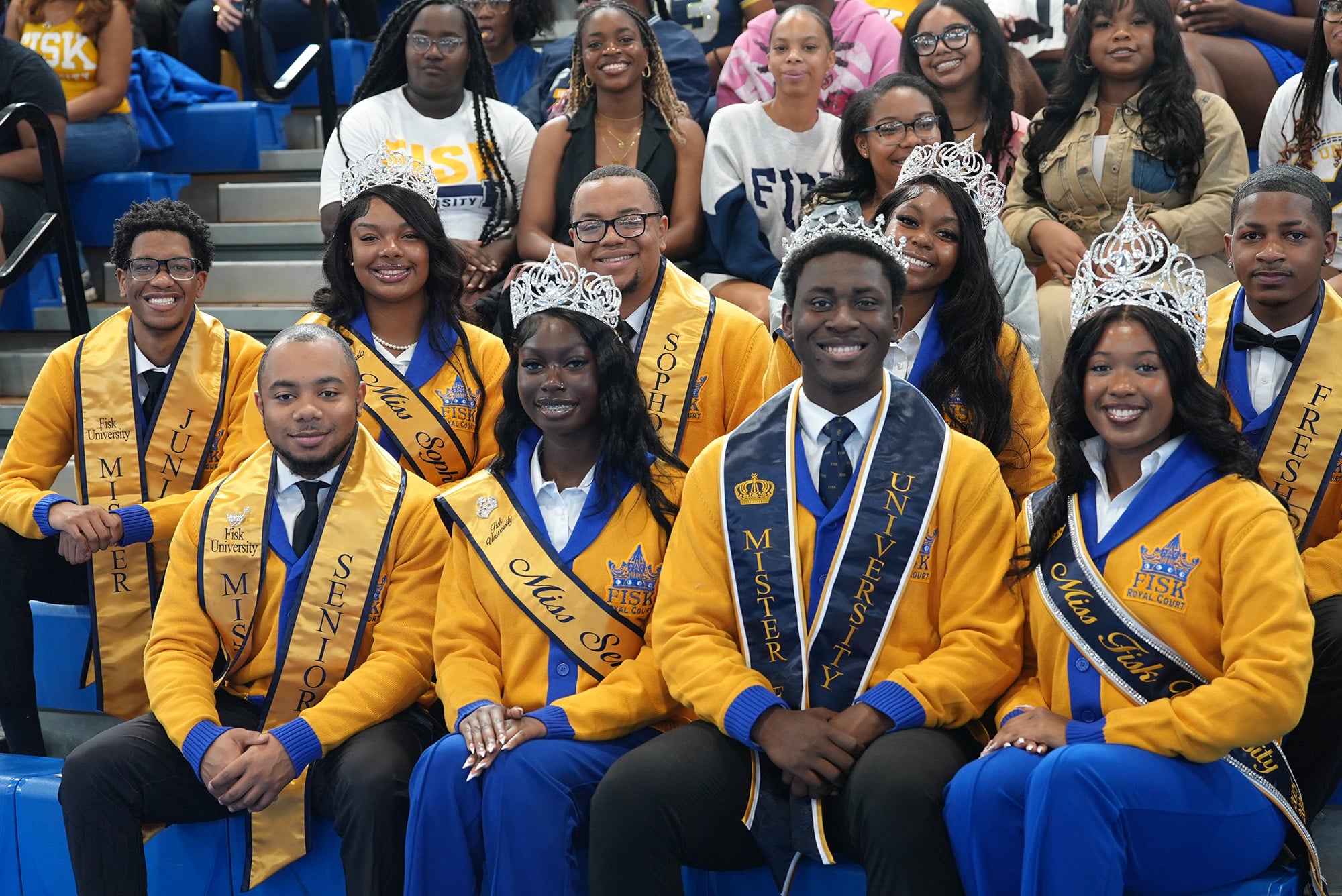
D. Billye Sanders, a 1974 Fisk University graduate, recalls homecoming as a fun-filled week with friends and inspiring alumni. As a student, she attended both basketball and football games during homecoming, deciding which of her campaigning classmates deserved to be crowned “Ms. Fisk.” She enjoyed spending time with faculty and staff in a relaxed setting.
More than 50 years later, Sanders is involved with the planning committee for Fisk’s homecoming. The university now enrolls about 1,000 undergraduates and spends between $30,000 and $50,000 to put on an annual “family reunion”–style homecoming for up to 500 alumni, said Crystal Churchwell Evans, Fisk’s vice president of development and alumni affairs.
Today, homecoming is about both “F-U-N-raising” and fundraising, Sanders said.
Rice agrees.
“This is just fundraising 101: If you want people to write checks, they got to be engaged.”
Alumni Give Back
HBCUs woo alumni with galas, cookouts and opportunities to relive their college years, as well as to give back to current students.
South Carolina State not only hosts classic HBCU homecoming events such as concerts, step shows and a student-run fashion show, Lee said; it also invites alumni to put on lectures for current students about “the three B’s”: banking, budgeting and building better habits with finance.
LaDaniel Gatling II, vice chancellor for advancement at Elizabeth City State University, said he views homecoming as an opportunity for alumni engagement.
Reconnecting alumni with their college roots “drives the passion to want to see the university continue to do what it’s doing and improve. So we really work hard to make the experience a good one,” Gatling said.
Although he doesn’t view homecoming as a fundraiser, alumni receive “soft asks” throughout the week and in a post-homecoming survey. Those celebrating milestone reunions often make substantial donations; during halftime at this year’s football game, the Class of 1976 presented the university with a check for $411,000, Gatling said.
For many alumni, giving back is a no-brainer, said Frederick V. Engram Jr., a graduate of Johnson C. Smith University in Charlotte, N.C.
Engram grew up watching A Different World and dreaming about attending an HBCU. But when he first got to campus, he experienced culture shock and felt like he didn’t fit in.
“And then homecoming happened,” he said. Suddenly the campus transformed into a version of what he’d seen on TV, a montage of artistry, step shows, Greek community and commitment. “It really awakened something in me and connected me, I think, to the core of what the institution is about,” he said.
A year later, he joined Alpha Phi Alpha Inc.—the same fraternity that Martin Luther King Jr., W. E. B. Du Bois and Thurgood Marshall had pledged before him—and began wondering how he could ever measure up to the influential civil rights leaders who went before him.
Now, more than two decades later, Engram is a professor of higher education at Fairleigh Dickinson University in New Jersey. He said Johnson C. Smith “opened doors for every dream that we could ever think of,” and he wants current students to have the same experience.
In 2023, his chapter of Alpha Phi Alpha Inc. created a $100,000 endowed scholarship for students in the social sciences. And a few years ago he began a tradition of returning to North Carolina for homecoming early, visiting his old dorm and making a gift directly to the student who lived in his old room, he said. He challenged his friends and fraternity brothers to do the same.
“Literally gift whoever lives in that room something—groceries, gas money, a gift card, anything to let them know that we’re here and we support them,” Engram said.

Family Tradition
Homecoming is for alumni, but students have a good time, too.
Kimberly Buckner, a freshman at Xavier University of Louisiana, budgeted roughly $450 for outfits, glam and tickets to the concert and other parties this year. Though Buckner is a first-year student, it’s not her first go-around at Xavier’s homecoming: Her mother is Kimberly Reese, the university’s interim vice president of institutional advancement, who has worked at Xavier nearly all Buckner’s life.
Buckner recalls riding around in a golf cart with her mother when she was a child and marching in the homecoming parade with her middle school dance team. Now 18, Buckner said she’s been excitedly planning her outfits for two months.
Reese said thinking about her daughter experiencing homecoming for the first time as a student gives her goose bumps.
“Homecoming, particularly at HBCUs, is a sacred ritual of coming home to the place where you really became who you are,” Reese said. “It’s not about the physicality, it’s about pouring back into the young people.”
This year is extra special for Reese because Buckner is there. But “even without her, there’s a mini-me in someone else’s child,” she said.
“Someone poured into the institution, which allowed the institution to pour into that child and graduate that child,” Reese said. “While it is a grand affair and fun is the name of the game, we have to think about it in that way.”
You may be interested

Trump Media revenue surges on high-speed Truth Social access
new admin - Nov 09, 2026[ad_1] Trump Media and Technology Group on Monday reported that revenue surged 205% in the third quarter, which it says…
Lawmakers return to Capitol Hill for lame-duck session, Democrats to hold leadership elections
new admin - Nov 09, 2026Congressional members are returning to Capitol Hill for the first time since Democrats' sweeping midterm wins. CBS News' Taurean Small…

October CPI report: Inflation likely slowed
new admin - Nov 09, 2026[ad_1] Americans are tired of inflation, as last week’s election results showed, but there may have been some relief last…