



Texas’s Higher Ed Overseer Dismisses Dozens of Complaints

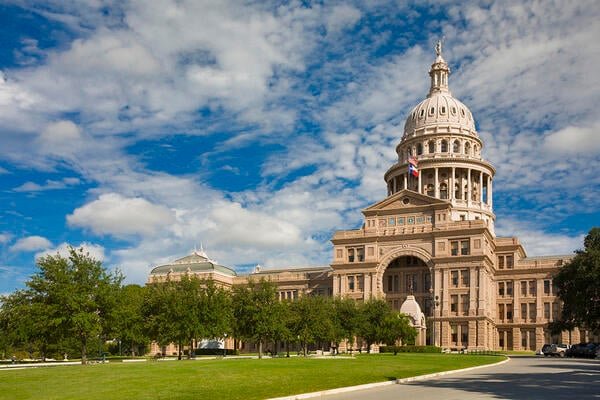
Texas Republican lawmakers created the ombudsman position last year as part of a sweeping state law.
Texas’s new higher ed ombudsman, a position Republicans created to investigate public colleges and universities, has been accepting complaints for roughly five months now.
But his office says that, out of the 69 complaints it received through June 11, it has only opened one probe. It closed 67 other complaints without investigations, while the most recent complaint remains open “pending response from complainant with additional information.”
The ombudsman is tasked with ensuring institutions follow certain parts of a sweeping state law passed last year, Senate Bill 37, including requirements that they regularly review their general education curriculum and that their presidents—not faculty—pick Faculty Senate leaders. The role is also tasked with ensuring universities heed the Legislature’s ban in 2023’s Senate Bill 17 on affirmative action and diversity, equity and inclusion activities.
The ombudsman receives and investigates complaints from students and employees who report violations and can recommend that state lawmakers cut off a university’s ability to spend state funds until it complies. The ombudsman has state subpoena power and will report annually to the governor and lawmakers on complaints, investigations and results.
This past October, Gov. Greg Abbott appointed Brandon Simmons, then a Texas Southern University regent, as ombudsman. Local reporters—watching this new watchman—filed open-records requests regarding the complaints his office has received so far. The records provided show Simmons has dismissed scores of complaints, many of which his office deemed illegitimate.
Information on how this new office operates could inform universities and policymakers in other states. Last week, after Iowa Republican lawmakers unsuccessfully pushed to create an ombudsman position, Iowa Board of Regents members voted unanimously to designate their chief operating officer as their “ombuds coordinator.” While the brief policy is a far cry from the Texas legislation, it does say, “In some situations, the Ombuds Coordinator may need to share information with appropriate administrators when there is a reasonable belief that doing so is in the best interests of the Regents.”
Details about how the Texas ombudsman works may also aid the faculty and academic freedom groups that previously expressed concern about a lack of details regarding how the investigations would be conducted and where they would lead.
The Texas Tribune reported that it “requested the complaint data Feb. 23, but the ombudsman’s office asked the Texas attorney general to let it withhold the records.” The attorney general’s office ruled May 15 that the info must be released, the Tribune reported, and the outlet finally received the records last week.
Simmons didn’t provide Inside Higher Ed with an interview Monday or answer some written questions, but his office did provide the same complaint data and a broad statement from Simmons.
“Texas higher education leaders are all hard at work implementing SB17 and SB37, enhancing public trust in higher education by eliminating divisive practices and unconstitutional discrimination and ensuring accountability for important personnel and curriculum decisions,” the statement said. “The Office of the Ombudsman is their partner and supports them in this important endeavor.”
The Tribune also said Simmons didn’t respond to its questions, beyond sending a statement. A spokesperson for the Texas Higher Education Coordinating Board, where his office is located, told Inside Higher Ed in an email that the office’s employees “operate independently and handle both the complaints and any questions around those.”
The document the ombudsman’s office provided doesn’t name the complainants—they were all labeled students or employees, save for one dubbed “other”—or the institutions they complained about.
The only open investigation, according to the document, is in response to a complaint filed by a student on March 31, alleging a violation of the ban on DEI and affirmative action.
“The [institution of higher education’s] academic assistance program, which is supposed to provide tutoring and academic support, is censoring conservative political speech while encouraging liberal political speech and antisemitic speech,” the document says about the complaint. “Complainant was terminated from his position as Student Instructor after bringing up these concerns to the program supervisors. Complainant alleges the program is being operated as a DEI program in violation of [state law].”
Many of the complaint summaries aren’t even this detailed. Roughly 30 describe the complaint as “harassing” and/or “profane” comments, and/or “obviously fake email/name.” (The many allegedly illegitimate complaints early in the ombudsman’s existence are reminiscent of what happened after Indiana Republicans passed a law in 2024 threatening the employment of faculty who don’t foster “intellectual diversity.” Indiana University reported that, out of 46 complaints it received that year, 37 were “frivolous complaints that were anonymously submitted as a form of protest.”)
The ombudsman wasn’t specifically tasked by lawmakers with reviewing complaints about course content. Next to multiple closed complaints, the document says, “course content is generally an exception to” the state DEI ban. Multiple complaints seemed to be related to universities’ ongoing censorship of topics associated with the left in the red state.
Two dismissed complaints were summarized as being “that SB 37 and Chancellor’s standards undercut academic freedom and free speech.” Another closed complaint alleged an institution “is pressuring faculty into dropping certain courses and classwork that advance gender ideology.” Another alleged a “course was ordered to be removed by the IHE [institution of higher ed], which violates the IHE’s commitments to academic freedom and intellectual inquiry.”
Teresa Klein, president of the Texas state arm of the American Association of University Professors–American Federation of Teachers union, said the ombudsman position is “certainly in the back of everyone’s minds as they’re teaching.”
“This is hanging over a lot of folks that someone could report them,” she said.
You may be interested

Geekbench 7 will push your computer or phone even harder for better benchmarking
new admin - Jul 23, 2026Primate Labs is releasing Geekbench 7, the latest generation of its popular benchmarking tool. Geekbench 7 features new video and…

Ghost Share First Trailer for Mexico City Concert Film ‘2 Big to Rig’
new admin - Jul 23, 2026[ad_1] Out threatrically on Aug. 26, metal band's second concert movie was shot on 16mm film and presents a behind-the-scenes…
Ex-prosecutors say House GOP’s Jack Smith criminal referral fails to show he committed a crime
new admin - Jul 23, 2026Washington — The Justice Department will face an uphill battle if it tries to prosecute former special counsel Jack Smith…