


Texas Professor Suspended for 16 Months Without Recourse

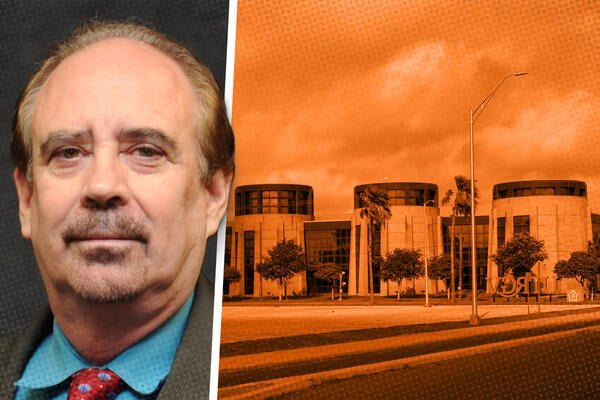
For the past 16 months, University of Texas Rio Grande Valley political science professor Clyde Barrow has been barred from his classroom, office and campus.
To this day, he has yet to learn why exactly the university placed him on what he considers an “indefinite suspension,” though he believes it has to do with his vocal and frequent criticism of campus leadership, he said. The American Association of University Professors and the Foundation for Individual Rights and Expression have also asked the university for answers on Barrow’s case and received little to no response.
Barrow was placed on paid administrative leave May 15, 2025, while the university investigated “allegations of possible [rules] violations” and “inappropriate conduct,” according to the email notice from College of Liberal Arts Dean José Dávila-Montes, which Barrow shared with Inside Higher Ed.
In the email, Dávila-Montes noted the “action is not disciplinary in nature” and didn’t include any details about rules Barrow was accused of having violated or what “inappropriate conduct” might have referred to. When Barrow followed up, Dávila-Montes declined to answer his questions and directed him to human resources, Barrow said.
“They’re calling it a paid investigative leave, but it’s actually an indefinite suspension,” he said. “One of the things I’ve asked many, many times—and my attorney has asked many, many times—is have any complaints been filed against me? And up to this point, there has not been a single complaint filed by a student, a staff member or a faculty member.”
Over the next several months, Barrow participated in a couple of interviews related to the investigation, and in September 2025, he received a report that detailed dozens of email exchanges in which Barrow was critical of department leadership or policy. In emails and during meetings, Barrow spoke openly against a new policy that he said increased faculty workloads and was implemented without adequate faculty input. He also criticized the provost’s “unilateral” installment of new evaluation standards, as well as the appointment of Dongkyu Kim as then-interim director of the School of Political Science, Public Affairs, Legal and Security Studies. Faculty favored an external search, but the provost chose Kim, who was leading what was then the political science department.
Barrow was critical of Kim. For example, in one April 2025 email to Kim and two others, Barrow wrote that he had “heard many faculty complaints about department meetings” from colleagues, including that the meetings had become “unfocused, undisciplined, and disorderly” under Kim’s leadership and that they did not follow Robert’s Rules of Order, as dictated by the department’s bylaws.
“It is also widely recognized that university policies are routinely violated and shared governance is replaced by a dictatorial style, which ignores the sound advice of faculty,” Barrow wrote in the email to Kim. “The complaints about Department meetings are about the poor quality of leadership and meeting management … The complaints, Mr. Kim, are about YOU.”
Kim did not respond to Inside Higher Ed’s request for comment Wednesday. In a statement, UT Rio Grande Valley spokespeople said the university “is following its established policies and processes regarding this personnel matter. Because the matter remains ongoing, the university will not comment further.”
University officials told Barrow his emails amounted to “inappropriate behavior” and “professional misconduct,” and that by criticizing Kim and the new policies, he had “challenged the dean,” Barrow said. After receiving the report, he asked for a decision on his case.
“I said, ‘OK, the investigation is over. You’ve issued your report. The dean is now obligated to make a decision, and you have three options under your own policies: You reinstate me and find that there’s nothing here, you issue a sanction less than termination or you start termination proceedings,’” Barrow said. “But the response was ‘The investigation is still underway.’”
Barrow is uncertain as to why he was singled out for suspension—his opinions of the new policies and college leadership are shared by colleagues, he said. College of Liberal Arts faculty members—in groups and then as a whole—wrote at least three letters to Dean Dávila-Montes over the past year with their concerns about the workload and evaluation policies, according to emails Barrow shared with Inside Higher Ed. In August, the UT Rio Grande Valley AAUP chapter sent a letter to Interim Provost Can Saygin, stating that “major academic decisions are too often being made without meaningful faculty consultation while simultaneously increasing the administrative and instructional burdens placed upon faculty members.”
“They think I’m a ringleader or something,” Barrow said of administrators. “I think [my suspension] is also to send the message: If we can take him out without any due process and without any legitimate charge against him, we can do this to any of you.”
Barrow said he hasn’t heard anything more from university officials since October. In the meantime, he’s been working with an attorney paid for by FIRE’s Faculty Legal Defense Fund. A couple of weeks ago, his lawyer reached out to the University of Texas system office for an update.
“Once again, crickets. Dead silence. No response at all,” Barrow said. It was the system office’s nonresponse that prompted him to go public with his case.
The Texas American Association of University Professors, as well as the AAUP national office, has been advocating for Barrow since last summer. In July 2025, the AAUP wrote to UT Rio Grande Valley President Guy Bailey to “urge that the administration immediately rescind the suspension imposed upon Professor Barrow” until he is afforded a hearing before faculty, which has not yet happened, Barrow said. That same month, in a letter to Dávila-Montes, then–President of the Texas AAUP Brian Evans wrote to “convey our concern” about the treatment of Barrow and called on the university for more information about the allegations against him.
Barrow assumes university officials are hoping he’ll give up. But he plans to keep fighting, he said.
“I’m not a slacker. I’m not dead wood. I’ve got 13 books published—in fact, I’ve published three books while I’ve been on suspension,” he said. “It’s a policy of intimidation and threats to quiet faculty, because the … issues with evaluation standards, workload, appointments—that’s going on across the whole campus.”
You may be interested

See Anthrax’s New ‘Cursum Perficio’ Video
new admin - Sep 17, 2026[ad_1] Rhythm section ace literally tries to break the chains that bind him in clip for title song on thrashers'…
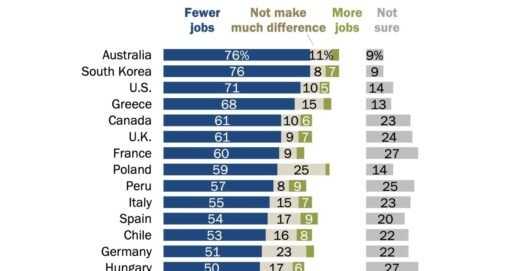
AI is feared globally as the destroyer of jobs
new admin - Sep 17, 2026Pew Research has published a new global survey that sheds light on how people view AI, including its impact on…

How to Build Strong Career Connections
new admin - Sep 17, 2026[ad_1] IE 11 is not supported. For an optimal experience visit our site on another browser.Now PlayingWhy Networking is the…