

Many HBCUs Thrive as Others Struggle to Enroll Students

Concerns about enrollment plague college leaders across the country, who fear what will happen to their institutions as fewer 18-year-olds graduate from high school and fading faith in higher education deters others. But even as many predominantly white, regional and private colleges struggle to fill seats, some historically Black colleges and universities are seeing heightened—in some cases record—interest, applications and enrollment.
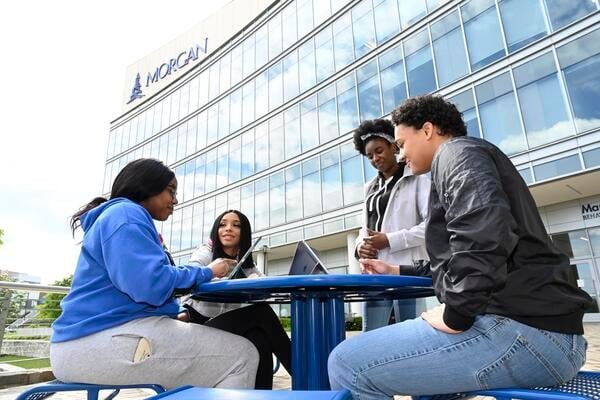
As one expert put it, the increased interest in HBCUs can be explained by a long-standing message on a digital billboard on a Baltimore campus: “Morgan State University, where Black lives have always mattered.”
Across the country, 42 of 101 HBCUs grew their enrollment between 2019 and 2024, according to federal data. Many increased head count significantly in that period: Howard University grew by 50 percent, Morgan State by 42 percent, Virginia State University by 27 percent and Elizabeth City State University by 23 percent. Since then, enrollment has continued to climb, according to several colleges that provided enrollment figures to Inside Higher Ed. (Some predominantly white institutions have also seen unexpected enrollment gains.)
Not all HBCUs have been so lucky. A few have maintained relatively stable enrollment, while others faced major enrollment declines and, in the case of St. Augustine’s University in North Carolina, serious financial trouble and bankruptcy.
But among those seeing an upswing, experts said a combination of factors is driving the interest. For one thing, students are growing more aware of HBCUs—thanks to high-profile HBCU alumni such as former Vice President Kamala Harris and the ever-growing use of social media to document campus life. At the same time, students may be deterred from predominantly white institutions for a number of reasons, including acts of racist violence like the 2020 murder of George Floyd, the Supreme Court’s ban on the consideration of race in admissions and the Trump administration’s campaign against all things diversity, equity and inclusion.
“Seeing this on display really calls us to understand what we call ‘home’ and where we are thriving—in environments that were created for us and that are foundational to our identities,” said Leslie U. Ekpe, a professor of higher education at East Texas A&M University. “We talk about belonging in higher education and how critical it is to one’s well-being and success, and I think HBCUs have paved the way to show that Black students are welcome, they’re celebrated.”
Ekpe, who researches minority-serving institutions, said heightened interest in HBCUs serves as a reminder that “we should have never been looking at HBCUs through a deficit lens.”

Howard University’s student body grew by 50 percent between 2019 and 2024, federal data shows.
Michael A. McCoy for The Washington Post/Getty Images
More Students, More Challenges
But more students means more pressure on HBCUs to accommodate them. Jorge Burmicky, a professor of higher education leadership and policy studies at Howard University, said that as enrollment grows, HBCU leaders must consider the demand on faculty and staff to meet students’ needs.
Students need to be connected with advising and tutoring, gain entry to required classes, get help from financial aid officers when necessary, and access mental health services in a timely manner, Burmicky said. As part of a separate research project, Burmicky recently interviewed faculty and staff from six HBCUs, many of whom reported struggling to meet student demand as enrollment at their institutions grew.
“It’s fine for us to celebrate growing enrollment—for a lot of HBCUs that’s been a blessing. But equally as important is making sure that we are investing in the capacity so that we’re not so stretched thin,” Burmicky said. “Because the reality is that it doesn’t just hurt faculty and staff, it also hurts the student experience.”
Kara Turner, senior vice president of enrollment management and student success at Morgan State, said the university’s enrollment growth can be attributed not just to the growing interest in HBCUs in general, but also to her institution’s concerted recruiting effort.
During the pandemic, university officials realized they could reach more students using virtual recruitment sessions and campus tours, she said. Eventually they hired a recruiter based in the Midwest to expand the university’s geographical reach.
The effort paid off: Enrollment exploded from 7,151 students in 2019 to 12,477 in 2026. But that rapid growth has created new challenges.
In the last few years, the university has built three new residence halls (two of which are open now) and remodeled several others. To fill the gaps, the university leased units from nearby apartment complexes so that students could still get their housing through Morgan; others are being temporarily housed in hotels until the new residence halls open, Turner said.
“Of course there are growing pains when you grow and you grow fast. But the university has been nimble,” Turner said. “We wanted the students. The students were interested and we wanted them and so we said, ‘All right, we’re going to figure this out.’”
North Carolina A&T University, which grew from 13,300 students in 2021 to 15,713 this fall, also put students up in hotels as a new residence hall was under construction.
Beyond housing, university leaders have had to consider how their swelling student body can get their financial aid and register for classes on time, said Dawn M. Nail, the university’s interim associate vice provost for enrollment management. The university moved the treasurer, registrar and financial aid offices into one building to make the process more efficient.
The pressure on HBCUs has manifested in different ways. Howard University disenrolled 502 students over the summer and then re-enrolled about 200, after officials said the students hadn’t met their payment deadline. Keyana Scales, Howard University’s senior vice president for enrollment management, told WJLA News 7 that it was a matter of reduced resources. A spokesperson from Howard declined to answer questions about enrollment growth for this article.
At some HBCUs, the enrollment figures do not necessarily reflect the extent of their increased popularity. For example, Spelman College in Atlanta has seen such a rise in applications that the admissions rate went from 51 percent to 19 percent in the last five years, largely because leaders have chosen to keep enrollment relatively stable.
“There’s a real energy to it. A more geographically diverse and competitive applicant pool means more perspectives in the classroom, even as we stay intentional about our size,” Chelsea Holley, Spelman’s director of admissions, said in an email.
Holley said the college is building two residence halls because they want to accommodate all the Spelman undergraduates who choose to live on campus for all four years.
“Our goal isn’t to become huge,” Holley said. “We’re a small liberal arts college, and we want to expand the resources that support students throughout their time here, not the number of seats.”
You may be interested
See Anthrax’s New ‘Cursum Perficio’ Video
new admin - Sep 17, 2026[ad_1] Rhythm section ace literally tries to break the chains that bind him in clip for title song on thrashers'…
AI is feared globally as the destroyer of jobs
new admin - Sep 17, 2026Pew Research has published a new global survey that sheds light on how people view AI, including its impact on…
How to Build Strong Career Connections
new admin - Sep 17, 2026[ad_1] IE 11 is not supported. For an optimal experience visit our site on another browser.Now PlayingWhy Networking is the…