


Tesla Cybertruck’s faulty door handles caused woman’s death, lawsuit alleges

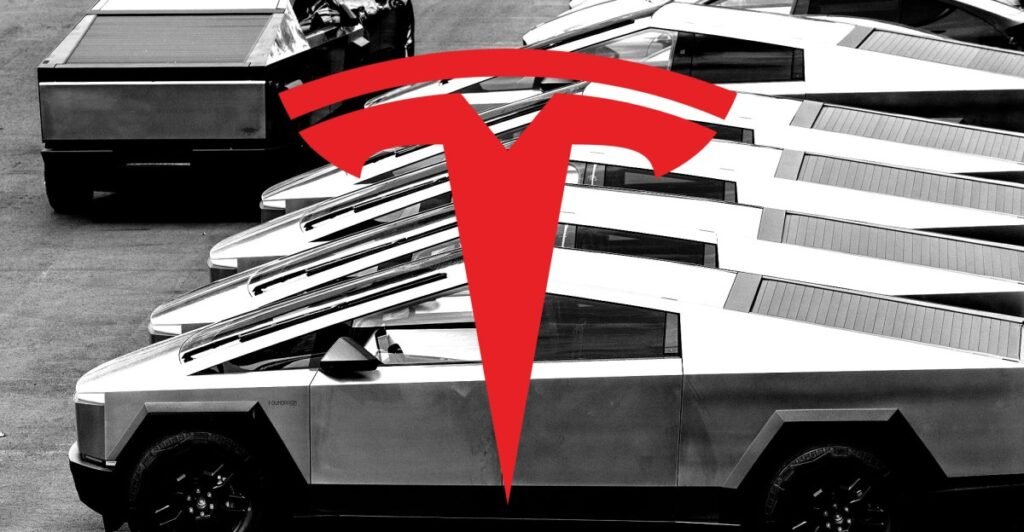
The family of 19-year-old Krysta Tsukahara has filed a wrongful death lawsuit against Tesla, alleging its “dangerously defective” Cybertruck door handle design trapped her inside a burning vehicle, as first reported by The New York Times. The lawsuit, filed in a California court on Thursday, claims Tesla continued to sell its vehicles despite “repeated and direct notice” that its electronic door handles posed a serious risk of entrapment.
In November 2024, the driver of a Cybertruck carrying three passengers hit a tree in Piedmont, California. The crash killed the driver, 19-year-old Soren Dixon, and one of the passengers, 20-year-old Jack Nelson. The lawsuit alleges Tsukahara survived the initial accident and was left with “minor injuries” while in the rear passenger seat. However, the Cybertruck caught fire “for an unknown reason,” and its electronic door system failed due to a loss of power, according to the lawsuit. Tsukahara’s family claims Tsukahara was unable to escape the burning vehicle, causing her to die from smoke inhalation and burns. A fourth passenger survived the accident.
Concerns about Tesla’s electronic door handles have grown in recent months, with a recent report from Bloomberg highlighting several incidents in which the company’s vehicles lost power and trapped passengers inside. The National Highway Traffic Safety Administration (NHTSA) has since opened an investigation into the door handles. During an interview with Bloomberg, Tesla design chief Franz von Holzhausen said the company is working on a redesign that would combine the electronic and manual door handle into one button, potentially making it easier for passengers to escape in a “panic situation.”
The Cybertruck doesn’t have traditional door handles. Instead, drivers must press a release button on the vehicle’s door pillar while holding a key for it to open. When inside the vehicle, drivers and passengers have to press a button and push the door open to exit. There’s also a manual release cable, but Tsukahara’s family argues that its location beneath a rubber mat on the bottom of the rear door’s map pocket isn’t easy to find.
“A passenger would have to remove the liner, locate the loop, and pull it forward — an obscure and impractical maneuver in an emergency,” the lawsuit claims. “These design choices created a highly foreseeable risk that rear-seat occupants who survived a crash would nevertheless remain trapped when the vehicle caught fire.”
You may be interested

How NYU Can Fix Its Free Speech Crisis
new admin - Oct 14, 2026[ad_1] New York University was recently named the worst university in America for free speech by the Foundation for Individual…

Wyoming grad student allegedly poisoned her colleague, tried to flee U.S.: “Student’s life is in jeopardy”
new admin - Oct 14, 2026A Wyoming microbiology graduate student from China has been arrested on accusations she poisoned the tea of a colleague who…

Next issues urgent recall for pairs of shoes as customers told 'stop using'
new admin - Oct 14, 2026[ad_1] The fashion store has recalled the shoes over an injury risk. [ad_2] Source link