



Sun exposure left a woman in “insufferable pain” — until a clinical trial changed everything

Emily Pearson was 8 years old when the attacks started. Just minutes in the sun would leave her hands and feet hurting. Her extremities “felt like they were in a hot oven” while being poked “with pins and needles.” A short while outdoors could leave her in pain for days. Worst of all, no one knew why.
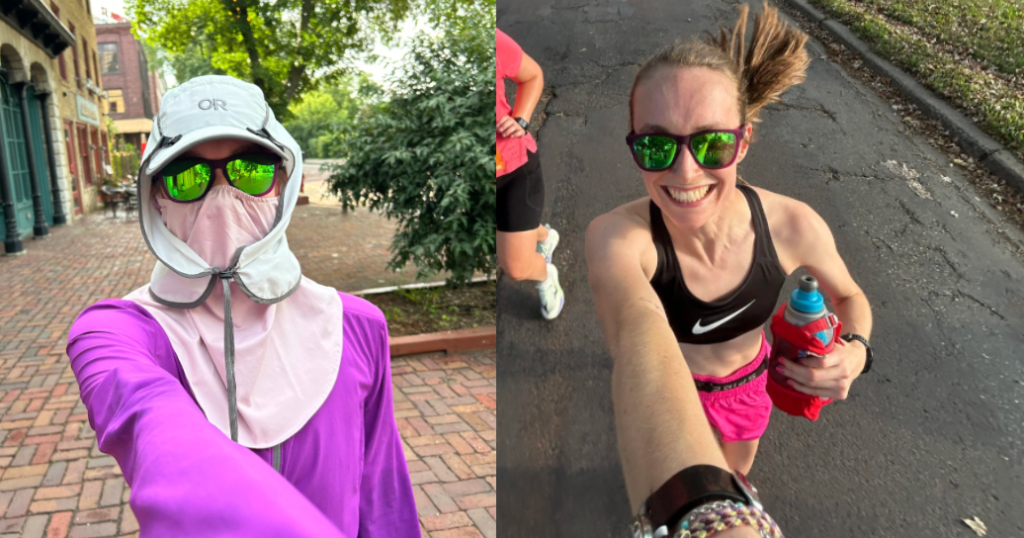
Over the next decade, Pearson’s parents tried to identify the cause of her reactions. Sunblock didn’t help. She started wearing protective clothing and staying indoors as much as possible. Vacations at her family’s Minnesota cabin became an endurance test. If she slipped up and found herself in the sun for too long, her hands, feet and face paid the price.
“It was just insufferable pain. I would never wish that pain upon anyone, because it’s so horrible,” said Pearson, who lives in Minneapolis.
When she was 17, a doctor at the Mayo Clinic in Rochester, Minnesota, made the diagnosis of erythropoietic protoporphyria, a rare skin disorder that means a person is essentially allergic to the sun. Having an answer was a relief, Pearson said — but it also meant she had to grapple with not being able to do much about her condition.
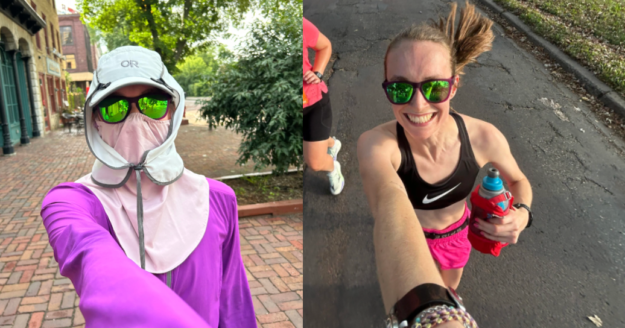
One form of comfort was running. Pearson had been a competitive swimmer for 12 years, then transitioned into running half-marathons out of high school. She had to either layer up or run in the dark, at sunrise or at sunset, to avoid having a reaction. But the difficulties were worth the joy it brought her, she said.
Pearson dreamed of running a marathon, but believed her condition made that impossible. Throughout college, braving the sun for a few hours of fun without protective gear would leave her “in severe pain” later.
Emily Pearson 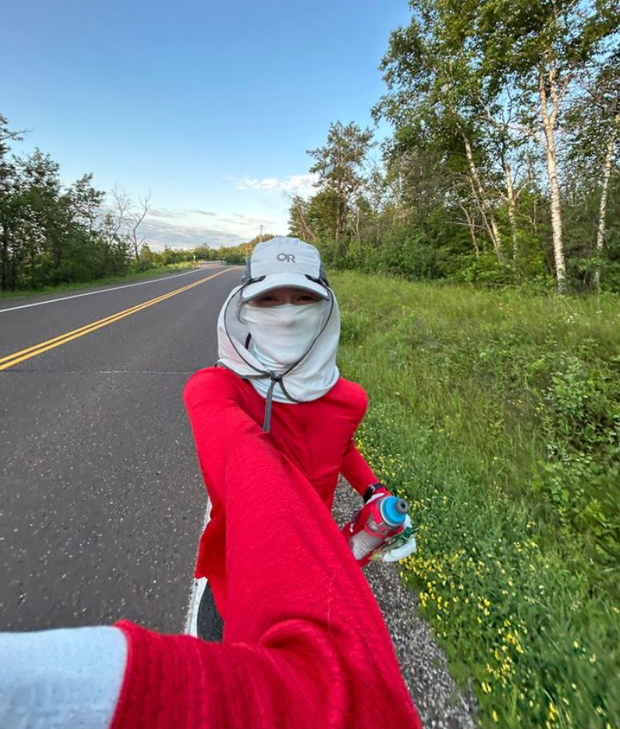
“Going to the grocery store, going to get gas, going for any kind of car ride or working outside, you constantly have to think about what you’re doing and how it’s going to affect your health, and dealing with those consequences after,” Pearson, now 25, said. “It was really hard, and it was really, really stressful. It was a big mental load, and it was never-ending.”
In 2025, Pearson volunteered at Sun Escape, a weekend camp for kids with EPP and similar conditions. There, she learned about a clinical trial for a drug called bitopertin. She was intrigued and searched for more information.
“I was very wary of it, like, ‘Does it really work? I know it works for other people, but will it work for me?'” Pearson remembered. “There was that anxiety of the unknown.”
“I can’t believe I’m hearing this”
Bitopertin works by targeting protoporphyrin IX, a naturally occurring molecule in the skin that is activated when people are exposed to sunlight, said Dr. Sioban Keel, a porphyria expert at the University of Washington who is involved in the clinical trial.
In patients with EPP and similar conditions, mutations mean the body creates too much protoporphyrin IX, resulting in painful reactions. Bitopertin, taken as a once-daily pill, lowers the amount of protoporphyrin IX in those patients, Keel explained.
Emily Pearson 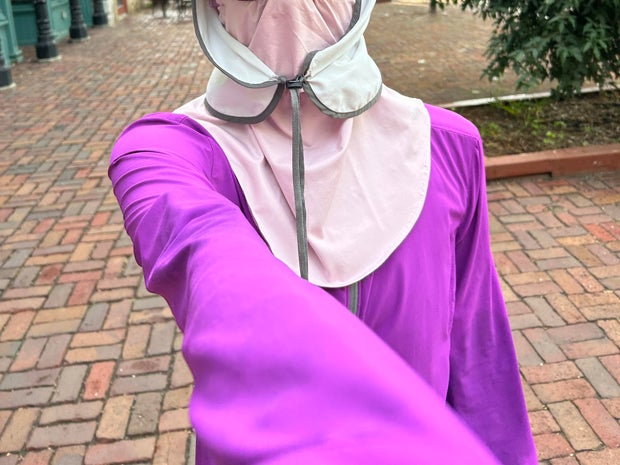
Pearson was part of the trial’s second phase. Clinical trials in the U.S. have four phases, as defined by the U.S. Food and Drug Administration. The first stage involves a small group of participants and determines if a drug is safe and sets its dosage. In the second phase, up to several hundred people are studied for months or years. This is the stage that determines how effective a drug is, as well as what side effects it may have. The third and fourth stages expand that to an even larger population for longer periods. After the process is complete, the FDA reviews the data and decides whether or not to approve the medication for use in the general public.
As a participant in the trial’s second stage, Pearson began taking bitopertin regularly in July 2025. She had regular appointments with physicians in Boston to follow her progress. Within weeks, she began to do “really, really well,” and her tolerance to the sun started to increase. Keel, who did not treat Pearson, said she’s heard similar stories from other patients involved in the trial.
“The impact I’ve seen it have on my patients has been a game changer. Patients that previously could never go out in the sun are able to go out in the sun … You’re like, ‘I can’t believe I’m hearing this,'” Keel said.
Clinical trial data published by Disc Medicine in April said the use of the medication “significantly reduced protoporphyrin-IX levels” and led to “improved measures of sunlight tolerance” for EPP patients, with “no notable safety concerns.”
“My life has literally changed so much”
Bitopertin is now in Phase 3 clinical trials, with 183 patients enrolled and data expected in the final quarter of 2026. The FDA has declined to review bitopertin for expedited approval, citing a desire to see more data proving its impact on patients, according to a written statement from Disc Medicine. The company said it believes the Phase 3 data will show the information the FDA has requested.
Pearson remains on the medication through an open-label extension, an optional phase of clinical trials where enrolled patients are given the choice to stay on the drug. Her tolerance to the sun has increased. In October 2025, she was able to realize a long-held dream and run her first marathon.
Emily Pearson 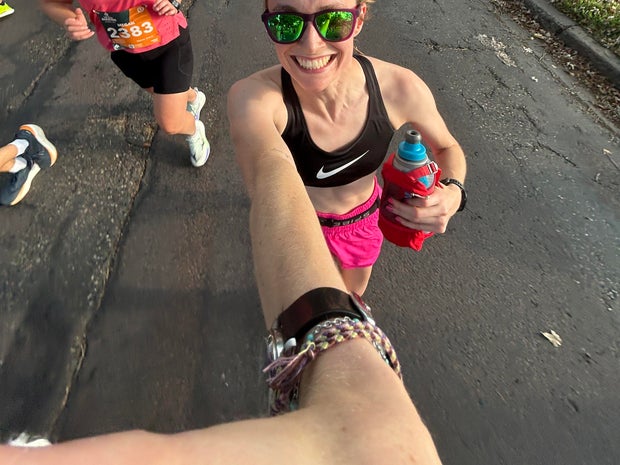
“I was outside the whole day, running and having fun,” Pearson said. “I just got to wear shorts and a T-shirt. And everyone running around you doesn’t know what you’re going through, but I was really proud of myself.”
The race encouraged Pearson to keep pushing her limits. She trained for another marathon this spring, then ran the race in June. In July, she spent a week at her family’s cabin. Unlike past years, she spent the whole trip “outside every day, sunup to sundown, no reactions.” She noted that sometimes she experiences minor reactions after spending lots of time outdoors, but said the pain is far less and her tolerance is much higher.
“It’s unimaginable. I cannot explain how big of a difference it makes, because the cabin and going outside used to be such a source of anxiety for me. Now, I had the best week ever,” Pearson said.
She plans on taking it easy for the next few months, but plans to run another marathon in June 2027. She also wants to expand her horizons and try a triathlon, combining her love of running with her history as a competitive swimmer. Now that she no longer has to “pick and choose how to” spend time outdoors, the future feels full of possibility.
“I’m able to feel free and live without all the worry and anxiety that I was before,” Pearson said. “I’m 20 times happier. I’m more energetic. My life has literally changed so much.”
Emily Pearson 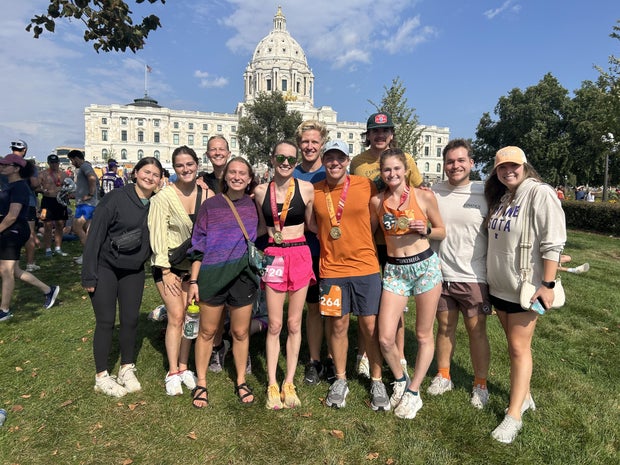
You may be interested

Alice Cooper on the evolution of his alter ego
new admin - Oct 03, 2026Alice Cooper brings Anthony Mason backstage to one of his shows to talk about how he created his unforgettable alter…

Seahawks RB Jadarian Price ‘Re-Aggravated’ Injury, Ruled Out Week 4
new admin - Oct 03, 2026[ad_1] NEWYou can now listen to Fox News articles! The Seattle Seahawks' running back depth chart continues to thin out. On…

Kennedy Center Honors 2026 Moving to Washington, D.C. Arena
new admin - Oct 03, 2026[ad_1] 2026 show will take place at Capital One Arena, home of basketball and hockey teams, while the performing arts…