



Professors Say Vanderbilt Report Misrepresents Their Work

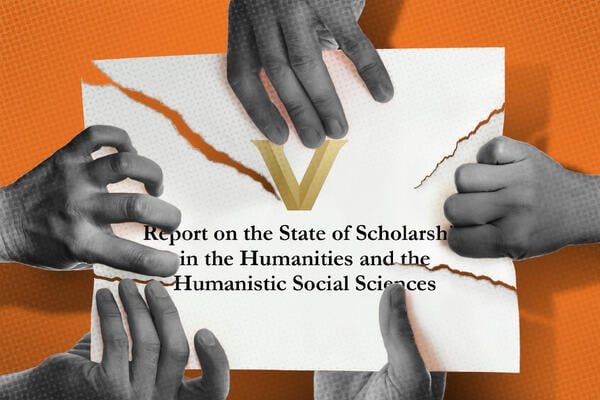
A new report on the state of humanities scholarship made waves in higher ed circles when it was released Friday, and has since drawn criticism from professors across the humanities.
Commissioned by Vanderbilt University chancellor Daniel Diermeier and Washington University in St. Louis chancellor Andrew Martin, the “State of Scholarship” report finds fault with disciplines including anthropology, philosophy and history—not for their content but for the quality of their scholarship, which the report’s authors argue is too often driven by political ideology rather than the pursuit of truth and knowledge.
In an email to Inside Higher Ed, Diermeier said that “the focus of the report is to provide an assessment, not to offer solutions to address the challenges.”
Critiques of the report are broad and varied. National Association of Scholars research director David Randall said the authors rehash decades-old arguments against relativism and don’t go far enough in their recommendations to reform the humanities. “If they’re actually serious about academic reform, they will act rather than sponsor more faculty gab-fests,” he wrote of Diermeier and Martin. Pennsylvania State University communications professor Bradford Vivian wrote on Bluesky that “a better title for the Vanderbilt report on the humanities would be [William F. Buckley Jr.’s] ‘God and Man at Yale Part II.’” Others, including the American Anthropological Association, slammed the report for exemplifying the ivory tower and criticized the authors for failing to truly engage with the professors in the fields they target. Several of the scholars cited in the report said it represents the poor scholarship it claims to seek to correct.
Diermeier and Martin asked Paul Boghossian, a philosophy professor at New York University, to examine “the state of scholarly work” in humanities disciplines to determine whether recent criticisms of the fields are justified. These include allegations that humanists misuse natural science, that some philosophers have embraced “problematic philosophical views” concerning truth, and that humanists have allowed “background ideological values” to distort their pursuit of truth.
The resulting report—dubbed the “Vanderbilt report”—is addressed to “university chancellors and presidents who are concerned about the state of academic scholarship in the humanities and the social sciences and who may wish, within their purview, to promote excellent scholarship in these vital fields,” according to its preface. The authors reject the common criticisms of the humanities in their broad form, but agree with some of the more particular points. Taken together, the issues the authors identify reflect “a distinctive form of politicization in which the scholarly enterprise is taken to be subordinate to, or in the service of, political (social or moral) goals beyond the advancement of knowledge and understanding,” they wrote.
Boghossian selected nine other scholars to work with him—three from NYU, two from Princeton University, and one each from Harvard University, the University of Chicago and Northwestern University. Eight of the report’s authors are men and two are women. NYU philosophy professor Kwame Anthony Appiah was the only person of color on the committee. Only one of the report authors—sociologist Ashley Rubin—works at a public institution, the University of Hawaii.
This is a problem, said Asheesh Kapur Siddique, an associate professor of history at the University of Massachusetts, Amherst. Siddique had many criticisms of the Vanderbilt report—on Bluesky, he called it “diabolically evil”—but the makeup of the committee that put it together was a primary concern.
“It would be far easier for [the report’s] recommendations to be imposed by a state legislature on a public university” and much harder to impose them on a private institution, Siddique told Inside Higher Ed. “The places where all of these people work will not necessarily have to deal with the recommendations. I think that’s a very telling thing. I actually doubt that many of these scholars would want to work at an institution that would be subject to” political interference inspired by the report.
As soon as the report was released, American Anthropological Association president Carolyn Rouse started hearing from members. Some of them were “incensed,” she said.
“I’ve heard words like ‘unhinged’” to describe the report, she told Inside Higher Ed. “It’s so badly done—I kept wanting to do ‘track changes’ in it, as if I were grading it like a paper—and yet it has all of this power because of who these [authors] are.”
The report will hurt anthropology departments that are already fighting to prove their value to administrators, Rouse said.
“AAA has been working to help departments find strategies to shore up majors by being really articulate about the way in which the major can benefit you if you become a doctor, if you become a lawyer,” Rouse said. For administrators critical of the humanities, “this is just confirmation that they were right, and they will close their anthropology departments.”
The reaction to the Vanderbilt report doesn’t surprise Martin because it addresses “questions that have been actively debated within higher education for decades,” he told Inside Higher Ed via email.
“The response reflects the importance of the issues the report raises. Many scholars have engaged thoughtfully with its findings, while others disagree with some aspects of its analysis. That’s healthy,” Martin said. “We expected strong reactions because the humanities and humanistic social sciences are core to how our institutions pursue knowledge and educate students.”
‘Lazy Scholarship’
The authors single out more than a dozen humanities scholars in the report and use their work to highlight what they consider problematic scholarship. Inside Higher Ed reached five of them, all of whom said it was the first time they’d heard about the report. Several also said that their work was misrepresented or taken out of context.
Christopher Loperena, an associate professor of anthropology at the City University of New York Graduate Center, said the report mischaracterizes his work and the broader field of anthropology. He told Inside Higher Ed he disagrees with “the suggestion that public-facing and politically engaged research is at odds with serious scholarly inquiry in the humanities and humanistic social sciences.”
University of California Los Angeles sociocultural anthropologist Akhil Gupta said the authors made the “cardinal academic error” of misquoting his paper.
“Frankly, the charge to this committee was itself an invitation to bash interpretive disciplines. This is not surprising. The first ‘culture wars’ over the Western canon were fought during the Reagan years, and we can expect attacks on scholars of color and disciplines that are critical of current configurations of power in the Trump years,” Gupta wrote in an email. “I wish people would not waste their time on producing this kind of material whose sole purpose seems to be to stir up controversy and to justify budget cuts to the humanities.”
The authors write that Khiara Bridges, an anthropologist and professor at the University of California, Berkeley, School of Law, “endorses a radical perspectivalism about truth,” and include a quote from her book “Critical Race Theory: A Primer.” Bridges said this misrepresents her work.
“In the quote from the book that is mentioned in the report, I am not describing my personal views: I am describing postmodernism,” Bridges told Inside Higher Ed via email. “It is irresponsible for the report to represent my description of a claim as my endorsement of a claim. Moreover, it is lazy—an example of the type of scholarship and analysis that I instruct my students not to produce. … The authors of the report owe me an apology.”
Bridges sent a letter to Boghossian on Wednesday, asking him to correct the “misdescription” of her scholarship. Boghossian replied Wednesday afternoon and cc’d Inside Higher Ed, as well as his coauthors, Diermeier and Martin. In the email, he said he was grateful that Bridges reached out and “eager to correct any misrepresentation of your views that our report may contain.” He also shared several other passages from Bridges’ book to explain “why we read the passage as we did,” he wrote.
“If we have misread you, namely, if you in fact reject the view that truth is perspectival and hold that there are objective truths, truths that do not depend on the perspective of the truth seeker, then I would welcome that clarification, and we would be glad to note it publicly and to adjust the discussion of your work accordingly,” Boghossian wrote. “Equally, if your position is that the perspectivalism in question is more qualified than the report’s phrase ‘a radical perspectivalism about truth’ suggests, I would genuinely like to understand the qualification, and we would consider amending the quotation to include more of the surrounding context if you thought that would help.”
Boghossian did not respond to Inside Higher Ed’s questions Wednesday.
The authors cite Fernando Villanea, an anthropology professor at the University of Colorado at Boulder, twice. The second time is a passage from an American Anthropologist essay he wrote titled “Defense Against Dark Anthropology.” It reads, “The core academic value of anthropology is not the pursuit of truth, because all truth is subjective. Conversely, there are millions of people who are adversely affected by the subjective version of truth we choose to tell. That is the objective reality, and so our core value should instead be to serve their interests.”
Boghossian and his coauthors call the excerpt “incoherent.” They go on to write that “taken more charitably, it is the still bizarre claim that while there are no objective truths about the subtle descriptive matters with which anthropology is concerned, there are objective truths about values and morals—about who is adversely affected by a given position, and about what anthropologists should take as their core values.”
Villanea said the passage was taken out of context; his essay was about how anthropology should serve Global South communities.
“To condense [my arguments] into a claim that I ‘explicitly repudiate the idea that scholarship aims at knowledge’ is not just incorrect, but lazy scholarship,” Villanea said. “Ultimately, the report displays the ivory tower in high form by presenting arguments that are isolated from many current academic conversations.”
Charles Hale, the dean of social sciences at the University of California Santa Barbara, who is also cited in the Vanderbilt report, told Inside Higher Ed that the report “condemns a large swath of scholars” with the broad term relativist—something he said has never accurately represented his work. While he ultimately sympathizes with the authors’ stated intentions, he said “their tack is ultimately wrongheaded and would leave us further weakened and vulnerable.”
“Their arguments for clear and accessible language, judicious deployment of data and evidence, careful consideration of contrary views, rigorous analysis, etc. are all salutary and can be readily confirmed,” Hale wrote in an email. “Their call for a return to ‘disinterested scholarship’ reads, quite frankly, like the authors are asking us to scamper back to the privileged bubble of the ivory tower, keep our heads down, and hope that the onslaught passes us by.”
You may be interested
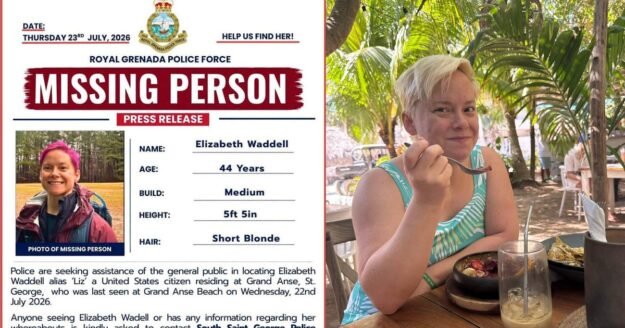
Husband of North Carolina woman missing in Grenada doesn’t suspect foul play
new admin - Jul 30, 2026The husband of a North Carolina woman who went missing last week while visiting the Caribbean island of Grenada said…

Former BYU football player Curtis Brown’s son dies in pool drowning
new admin - Jul 30, 2026[ad_1] NEWYou can now listen to Fox News articles! Former BYU Cougars football player Curtis Brown and his family, including…

Latest on Iran war after Saudi forces join U.S. strikes
new admin - Jul 30, 2026Latest on Iran war after Saudi forces join U.S. strikes - CBS News Watch CBS News Iran on Wednesday launched…