


Oregon Institution Says No Funds to End Animal Testing

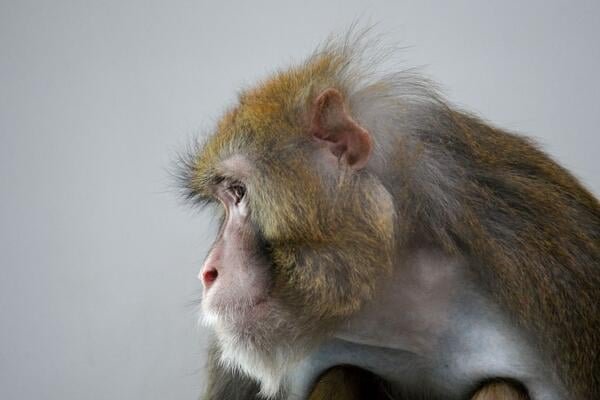
It looked like another nail in the coffin for animal testing.
In February, Oregon Health and Science University’s Board of Directors voted to start discussions with the National Institutes of Health to explore turning the university’s Oregon National Primate Research Center into a nonresearch sanctuary. As of last fall, the center reported housing more than 5,500 nonhuman primates: macaques, baboons and squirrel monkeys.
But on Monday, the university board unanimously passed a new resolution supporting continued animal testing there.
“The costs to run the center do not disappear when the science stops, and that is the major reason that, ultimately, a sanctuary was not possible,” university President Shereef Elnahal said at Monday’s meeting, before the vote. He added a nonfinancial reason: “We could, ultimately, not justify weakening the nation’s scientific footprint with a plan that ended all nonhuman primate research at OHSU.”
Still, Elnahal defended exploring the possibility. He pointed out, among other things, that the State Legislature last year wrote a budget note asking the university to plan for the center’s closure if the NIH cut its funding or state funding were required.
His university sent lawmakers a Huron Consulting Group–developed response in January—before his board voted to start discussions with NIH—saying a sanctuary conversion, specifically, would cost between $220 million and $291 million over the first eight years, with costs continuing after that. The consultancy’s report said it would not be “expected to significantly reduce the current overall operating costs.”
Oregon Health and Science University operates one of seven NIH-funded National Primate Research Centers—six of which are directly affiliated with universities. The struggle over shutting down the OHSU center exemplifies what institutions and researchers performing animal research are facing amid state, federal and international political pressure to end the practice, which many scientists say is still required to ensure the safety of drugs, treatments and chemicals before they’re tested on or used by humans.
Momentum to end animal testing predated the Trump administration. In 2015, for example, during the Obama administration, the NIH announced it was specifically ending chimpanzee research.
But it’s become a cause of the Make America Healthy Again movement. Federal agencies are publicly supporting technological alternatives to animal testing, including artificial intelligence, and Science reported in November that a Centers for Disease Control and Prevention official told in-house scientists to phase out all research on macaques—though Science reported last month that plans to send the primates to a sanctuary have run into obstacles.
Still, it remains unclear whether the Trump administration is willing to fund the cost of giving primates and other animals a life free from research use as science reduces its reliance on them. The president has sought to slash funding for the NIH and other federal research funding agencies—efforts that Congress has so far largely rejected. Oregon Health and Science University said the NIH would not fully fund the transition of its primate research center into a sanctuary; NIH didn’t return Inside Higher Ed’s request for comment on the matter.
Not Ready to Move On
Don Ingber’s lab pioneered the development of “human organ chips,” which simulate structures of human tissues, organs and their functions, and he formed a company called Emulate that produces the chips. The Trump administration has said the technology could reduce reliance on animal testing.
“Everyone knows and has known for years that the animal models are suboptimal” scientifically, Ingber said, in addition to being ethically problematic.
But “we do not have the ability to completely leave animal testing now,” he said. “It needs to be a progressive process.” A complete stop would be “jumping the gun,” he added, and “there are certain models that are behavioral, psychological, pregnancy—things that we’re not going to be ready to fully replace [for] a long time.”
Ingber, who’s also founding director of Harvard University’s Wyss Institute and a chaired professor at Harvard, said the administration supported animal testing alternatives in ways that are “more significant than money.” For instance, he said a Food and Drug Administration announcement “gave a message to the pharmaceutical and biotechnology industries that this is for real,” while the NIH has started requiring researchers applying for grants that would use only animal testing to explain why there are no alternatives.
“They’re moving in the right direction, but it’s not like they’re flowing huge amounts of money into it,” he said.
Oregon Health and Science University’s resolution to continue animal testing says it intends to reduce the number of primates at the center and “anticipates removal of the center’s federal designation as a National Primate Research Center” and ending its role “as a national supplier of primates for research nationwide.”
Amy Meyer of People for the Ethical Treatment of Animals said during Monday’s meeting that “it’s a significant step towards closure,” though she called for the center to fully end animal testing.
The board’s resolution further calls for the center to focus on conducting research not done at the other National Primate Research Centers and on validating animal testing alternatives (called new approach methodologies, or NAMs). But one advocate for ethical animal research says she sees political posturing in this.
“We’ve been doing it [studying NAMs] way before the acronym was here,” said Rachael Wolters, a veterinarian and assistant professor at OHSU’s primate research center whose lab focuses on pediatric infectious diseases. (She said she wasn’t speaking on the center’s or university’s behalf, but for a group called Oregon Voices for Biomedical Research, of which she’s chief executive officer.)
“We are always actively in search of any way that we can replace an animal with something that is able to answer those same important biological questions,” Wolters said, adding that it’s frustrating that the resolution language “suggests that we’re transitioning to something, but we’ve already been doing it.”
Still, she said she’s glad the university has refused “capitulating to these external political pressures.”
Lynne Swarbrick, president of Research Workers United, an AFSCME-affiliated union representing research workers at the primate research center, said the center has been working on NAMs for over a decade. But currently there’s “no way you can figure out how an organism, like a complete system, works” without using animals, she said.
Swarbrick expressed cautious optimism about the resolution, despite concerns with some language.
“I think what we have experienced up to now is not being consulted before plans are made,” she said. The university didn’t respond to Inside Higher Ed’s requests for interviews or answers to written questions beyond providing a video of Monday’s board meeting.
Union representatives and researchers at the center also criticized the resolution’s statements that “maintaining historical levels of genetic diversity within the colony shall no longer serve as a primary institutional objective,” and said the new plan the university comes up with for its future will include “substantially” reducing the number of primates there.
Amber Lockridge, science policy director for the National Association for Biomedical Research, said that’s “pre-emptive,” and what’s needed for science should determine the colony size. She said the center “is uniquely valuable for their work in fetal development, infectious diseases, aging and dementia,” adding that the consequences of reducing the colony size too much “could take years to reverse.”
You may be interested

The £1 kitchen staple that could help prevent mould around windows
new admin - Aug 22, 2026There's a simple cleaning trick that could help keep your bathroom window clearer. Source link
A teen found “a sense of control” as she fought cancer. Then, it came back: “I knew it was cancer again.”
new admin - Aug 22, 2026Alayna Riozzi-Bodine had expected the summer before her senior year of high school to be tiring. She was a lifeguard…

Two great new repairable gadgets
new admin - Aug 22, 2026Hi, friends! Welcome to Installer No. 141, your guide to the best and Verge-iest stuff in the world. (If you’re…