



Play-by-Play on Congress’s Effort to Regulate College Sports

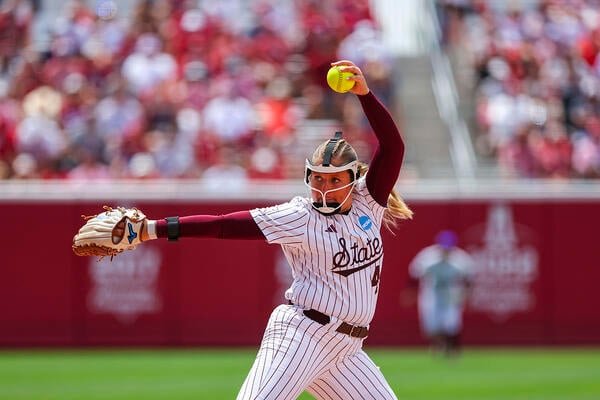
For nearly a year, House lawmakers in Washington have been trying to tame the unwieldy landscape of revenue-sharing between colleges and student athletes. Now the Senate is taking a crack at it: Late last week members introduced a bipartisan bill to address the matter. But many experts remain highly skeptical that any legislation designed to overhaul America’s college athletics system will pass before the end of the year.
Trying to establish a uniform national framework for the college athletics market is a complex challenge that has bred contention not only between political parties, but also among various college conferences and athletes.
Since a pivotal Supreme Court ruling was handed down in 2021, student athletes have been able to profit off their name, image and likeness through contracts with third-party groups. Then, in June 2025, a federal court ruled that colleges could pay student athletes directly. Combined, the two developments created a new, unregulated frontier, sparking both opportunities and concerns.
The majority of colleges, which were given about 30 days to decide whether they’d opt in to the revenue-sharing model, decided to give it a go for fear of losing recruiting power if they declined. But many quickly found the venture to be more costly than they imagined, and antitrust laws made it hard to regulate. That prompted some institutions—particularly smaller, less resourced ones—to press Congress to tackle the issue.
The House quickly introduced a bill in July known as the Student Compensation and Opportunity through Rights and Endorsements—or SCORE—Act, which would pre-empt existing state NIL rules, exempt the NCAA from certain antitrust laws and prohibit student athletes from being recognized as university employees, all in an attempt to give institutions more control and make paying athletes more manageable. Days later, the White House threw its hat in the ring, issuing an executive order that outlined its own thoughts on how best to rein in the market, though the president’s proposal carried minimal power.
Since then, Republican House Speaker Mike Johnson has tried—and failed—three separate times to win support for the SCORE Act.
To some, the Senate bill, known as the Protect College Sports Act, signifies renewed hope for a legislative solution. Its approach is broader, touching on a number of intricate details that the House bill does not address while omitting other major components in a way that could be key to gaining Democratic support. But knowing that not enough Democrats in the Senate are on board yet, House leaders are already vocalizing disapproval, and with election season looming, most legal experts remain doubtful the bill will pass.
“Given that there have already been more than 40 bills introduced over the last six years, many with similar fanfare to what we’re seeing with the [Protect College Sports Act], and none advancing … there’s skepticism that anything—regardless of the merits—will advance this time,” said Michael McCann, director of the University of New Hampshire’s Sports and Entertainment Law Institute.
Even if the Senate bill does reach the president’s desk, McCann added, it doesn’t guarantee that college athletics will suddenly have an effective governing body to enforce the new rules.
“The big crisis for college sports is not what the rules are per se, but actually following the rules,” he said. “That strikes me as the bigger hurdle for college sports.”
‘A Morass of Confusion’
Unlike the House’s SCORE Act, which was predominantly Republican-sponsored and saw opposition from both within and outside the party, the Senate version is bipartisan, which is key, as the Republicans have a narrow majority in both chambers. Co-sponsors in the Senate include Ted Cruz, a Texas Republican; Maria Cantwell, a Washington Democrat; Eric Schmitt, a Missouri Republican; and Chris Coons, a Delaware Democrat.
The Senate bill also includes some new provisions and omits others from the House’s version. Most notably, experts say, the Senate’s version would amend an existing law to permit athletic conferences to collectively negotiate their media rights as long as 75 percent agree to do so—a move that would likely allow each college in the conference to make more money than they could on their own and better afford to pay their athletes as a result.
In addition, the Senate bill remains silent on whether student athletes can be considered employees, which was one of the most contentious topics in the House. Republicans argue it’s needed to keep athletics affordable, while Democrats worry it denies athletes’ rights.
Knowing that Senate leaders are willing to make concessions in the name of compromise is encouraging, experts agree. But it’s still unclear if they have enough time to reach consensus and get the bill across the floor before the 119th Congress ends in January.
“I would say there’s a 10 to 15 percent chance of some bill passing. So it’s not zero, but it’s not very high,” said Karen Weaver, an adjunct assistant professor of education at the University of Pennsylvania and director of the university’s collegiate athletics certificate program.
Even if they muster enough support to pass a bill, Weaver added, Congress may need to take more time refining it to ensure it can hold up in court.
“It could still be another three years even if they agree now,” she said. “There will be attorneys waiting on the outside for a way to poke their finger through and create holes.”
If Congress doesn’t find a way to tame the unregulated market, it will be up to colleges, conferences and state legislatures to come up with a plan B, Weaver and others said.
Mit Winter, a former college athlete and attorney at Kennyhertz Perry LLC, said one option would be for individual conferences to establish their own rules, breaking up control in a way that wouldn’t spark antitrust violations the way NCAA actions could. But he thinks it’s more likely that colleges consider allowing some student athletes to become employees.
“The hope is that they can get to a model with collective bargaining as the way to get to enforceable rules” and make NIL and revenue-sharing more manageable, he said.
McCann from New Hampshire said state governments can step up and fill the gap in some instances. And Weaver suggested that major sports leagues, along with the U.S. Olympic Committee, which depend on colleges as a pipeline for athletes, need to help solve the problem by investing in college athletics.
Others, however, including Brian Socolow, co-founder of the sports practice at Loeb and Loeb LLP, remain optimistic that some form of legislation will pass.
“There is currently a morass of confusion, a lack of clarity and lack of rules that motivates the need for legislation,” he said. “Given all the problems and complaints from all corners, plus the president’s support, I think it is likely something is going to happen. People care too much to let this continue.”
You may be interested

7/22: CBS Evening News – CBS News
new admin - Jul 23, 20267/22: CBS Evening News - CBS News Watch CBS News Florida police spray bullets at homicide suspect's vehicle following car…

Secret Service warns of sharp rise in threat levels ahead of rescheduled White House Correspondents’ Dinner
new admin - Jul 23, 2026Days ahead of the rescheduled White House Correspondents' Dinner, Secret Service officials warned nationwide threats have reached an unprecedented level…
Raffensperger reacts to improper noncitizen voter registrations in New Jersey, DHS claims
new admin - Jul 23, 2026New Jersey Gov. Mikie Sherrill said on Tuesday that, three years ago, a computer glitch resulted in some 6,600 noncitizens…