

Pandemic-Era Students Are Now Our Colleagues (opinion)

At the new faculty orientation I led this fall, a first-year assistant professor approached me after a session on building collegial relationships and asked, with real earnestness, “How do I know who I’m supposed to talk to?” A beat later, another person from her table added the question underneath it: “And how do I know if they even want to talk to me?”
I have run versions of this orientation for years, and I had never been asked those questions before. Not because the answers are obvious (they aren’t), but because most new faculty arrive already knowing, somewhere beneath conscious thought, that a scholarly career is built on relationships and that the work of starting a conversation belongs to them. This group did not arrive knowing that. And the longer I listened over those two days, the clearer it became that this was not an isolated gap.
When we turned to the promotion and tenure timeline, usually the portion of orientation that produces the most anxious note-taking, I noticed that our research-track hires were remarkably untroubled by the scholarship itself. What drew them, visibly, was teaching. Offered a choice between a concurrent session on building a research program and one on teaching, the newest scholars in the room (people we had recruited on the strength of their research) chose the teaching option, again and again.
It took me a while to see what those two things had in common, and then it seemed unmistakable. This is the first cohort of faculty to have spent a substantial part of their own formation (as undergraduates, and in graduate school) inside the pandemic. We have spent five years talking about these people without imagining them on this side of the table.
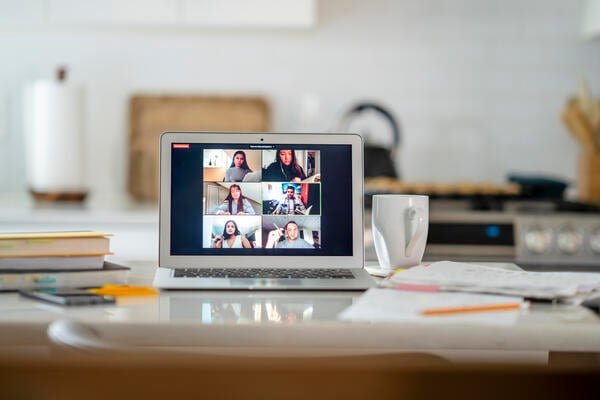
We know the discourse well by now: the learning loss, the missing lab skills, the frayed attention, the social development that stalled somewhere in a Brady Bunch grid of muted squares. We prepared a great deal for them as undergraduates—we built orientation programs, bridge courses and advising models—but prepared nothing for them as colleagues. We did not account for the fact that some of them went on to earn doctorates and are now carrying into their professional lives the very formation we once treated as a problem to be remediated.
Graduate school is where a scholar is socialized into the profession, and not only through coursework and the dissertation—the parts we can add to an advising checklist. It is where you absorb the hidden curriculum of the professoriate: the tacit knowledge that a research career is relational to its core, that networking is not schmoozing but the working infrastructure of scholarship, that the people you meet at a conference reception may one day co-author with you, invite your talk or write the external letter that decides your tenure case. None of that is in the program handbook. It is learned by osmosis in hallways, at receptions, in a mentor’s offhand introduction and above all from the cohort a year or two ahead of you, who have just survived the stage you are about to enter. Scholars of learning have a name for this kind of formation. Jean Lave and Etienne Wenger called it legitimate peripheral participation, the process by which a newcomer becomes a full member of a community of practice not by being taught its rules but by lingering at its edges until those rules become second nature. Graduate school, at its best, is legitimate peripheral participation in the life of the professoriate.
That is precisely the channel the pandemic severed. You cannot absorb a hidden curriculum over Zoom. Consequently, the two things I noticed at orientation are not separate from one another: the shrug at research and the bafflement at networking are both the mark of a scholarly identity that was never socialized into its own relational nature. The pull toward teaching makes sense as the one part of this work that feels concrete, contained and possible to begin without a network—and, for a generation whose own classrooms went dark and pixelated overnight, the part they most want to get right.
Many of these young colleagues will be gifted teachers, but I worry that they are missing a key aspect of scholarly formation. I know what they lost because I remember what I was given. I am reminded of two memories from graduate school that have stayed with me.
Early in my doctoral program, a more senior colleague, Liz Ahl, invited me to a Thanksgiving potluck. Liz had taken on a wildly overcomplicated pumpkin mousse pie, the kind that demands a candy thermometer, which, for reasons I can no longer reconstruct, I happened to own. She left for a faculty position two years before I finished my degree. And yet every year since, we have found our way back to each other—sometimes over scholarship, but without fail over some joke about a ridiculous Thanksgiving pie. A borrowed candy thermometer became the thread of a relationship that has now run through both our careers.
The second memory is from my dissertation year, when procrastination set in the way it does for nearly everyone. Procrastination is usually a solitary vice; mine took the form of an unlikely devotion to televised dog competitions. One Thursday evening (when my department’s graduate students gathered each week for a drink at a local bar), a dog show happened to be playing on the television, and I heard myself announce, “That’s Les. He’s the No. 1 Pekingese in the world.” Everyone laughed. But the next day, two of them quietly organized a spontaneous weekend writing group and folded me into it. No one asked whether I was stuck. They had simply seen enough of me, in enough unguarded moments, to know that I was. It is the kind of care that only a strong community can offer.
I have told these stories for years as charming trivia. Only now am I beginning to understand what they were actually evidence of. Neither the Thanksgiving potluck nor the Thursday night at the bar was a professional event. Neither had an agenda. The candy thermometer and the Pekingese are almost aggressively unimportant, and that is the point. The relationship that outlasted institutions and the intervention that rescued my dissertation both grew out of unstructured, in-person, low-stakes time that no one had scheduled and that nothing was riding on.
This is the part of graduate formation the pandemic quietly deleted. Zoom preserved everything that was purposeful: the seminars, the committee meetings, the defenses. It erased everything that was ambient: the potlucks, the bar nights, the borrowed tools, the offhand confession that lets a friend notice you are drowning. It turns out the ambient layer was doing load-bearing work. You cannot schedule a candy-thermometer joke. You cannot assign someone the friends who will read a Westminster habit for the distress signal it is.
Which is why “talk to more of your colleagues” is not advice our newest faculty can act on. The talking was not the mechanism. The mechanism was years of ambient proximity that made the talking feel natural. That is what this cohort never got.
The good news is that we are not starting from nothing. We already have a rich scholarly literature on how professional communities form and how networks carry a scholar through a career. More than 20 years ago, Monica Higgins and Kathy Kram reframed mentoring itself as a developmental network, a constellation of relationships rather than a single wise elder, and a generation of research since has confirmed that what junior faculty need is precisely such a constellation, one that shifts as their careers do. Susan de Janasz and Sherry Sullivan mapped how academics in particular go about developing that professional network. Kerry Ann Rockquemore, writing in Inside Higher Ed, turned the research into plain counsel, calling on senior faculty to abandon the lone-guru model for something closer to a web of support.
We can no longer assume new faculty arrive already living inside such a web. Our task is to make it explicit, and to build, on purpose, what a generation of us absorbed by accident.
Three steps follow from that.
First, we should draft our senior colleagues as translators of the tacit. The faculty who built their careers before 2020 carry exactly the knowledge this cohort is missing, but they carry it the way I carried the lesson of Liz’s potluck: as lived experience they have never had to put into words. We should ask them to do the putting into words: to reconstruct how they actually built their own communities and their own external reputations, and to teach it plainly rather than trust that it will transfer by proximity. This is not the old guru model of one mentor assigned to one protégé. It is asking the people who hold the hidden curriculum to stop keeping it hidden.
Second, we should write community into policy. In faculty affairs we are entirely comfortable spelling out expectations for research and for teaching, while we typically leave the third pillar, professional community, unstated. Departmental and institutional guidelines can name the building of professional relationships as a real expectation of the early-career years, not a soft nicety to be fit in around the “real” work.
Third, we should teach new faculty to build an external profile in their first year, and tell them plainly what it is for. In this year’s faculty orientation, we spent real time on a distinction that visibly startled some of our newest faculty: The relationships that matter most at tenure are not the ones with your collaborators. A research career runs on three different kinds of professional relationship, and they are not interchangeable. There are collaborators, your co-authors, the people you build the work with—and precisely the people disqualified from judging it. There are mentors, the colleagues, internal and external, who guide you. And there is a third kind: the objective external examiner, the respected scholar at another institution who knows your work well enough to evaluate it but has never worked with you. Those are the hardest relationships to build deliberately, the slowest to mature, and all but invisible in the daily life of an assistant professor. They are also the ones most dependent on exactly the ambient professional life the pandemic curtailed: the conference panel, the seminar circuit, the sharp question from the back of the room that makes a senior scholar remember your name. You cannot manufacture these relationships in year five when the dossier is due. They have to be seeded in year one, which means we have to name them in year one.
Ultimately, the stakes here are not just about tenure files and external letters, real and looming as those are. The stakes are the thing my friends understood when they watched me lose an evening to the No. 1 Pekingese in the world before quietly building me a writing group the next morning. A scholarly community is not a professional amenity. It is the difference between a career you survive alone and one in which other people help you succeed. Some of our newest colleagues arrived without one, through no fault of their own. The least we can do is stop pretending they should have known how to find it and start, on purpose, building it back.
You may be interested

Second Harvard Union Goes on Strike
new admin - Nov 11, 2026[ad_1] Harvard Academic Workers remain at odds with administrators over wages; childcare and family benefits; and discrimination, harassment and bullying…

After the Election, a Chance to Correct Our Course (opinion)
new admin - Nov 11, 2026[ad_1] When Texas A&M University’s spring semester began in January, a philosophy professor was told to remove passages from Plato’s…

Meghan Markle's father back in custody after allegedly cutting off his ankle monitor
new admin - Nov 11, 2026Meghan Markle's father, Thomas Markle, who is facing charges for possessing child sexual abuse material, is back in custody after…