




OSU College of Medicine Discriminated, DOJ Claims

OSU is the 10th institution the DOJ claims discriminated in its medical or law school admissions.
Megan Jelinger/AFP via Getty Images
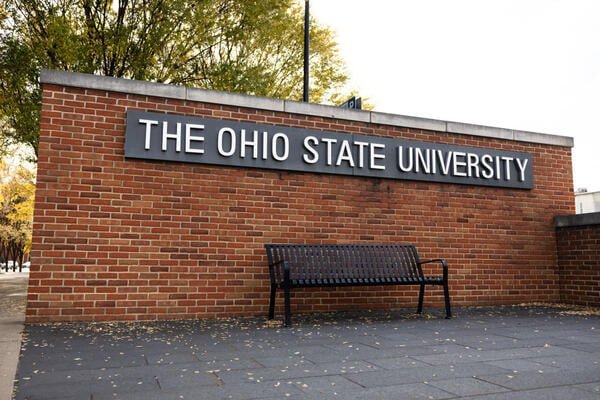
The Ohio State University College of Medicine discriminated in its admissions process, giving preference to Black and Hispanic applicants over white and Asian applicants, the Justice Department announced Wednesday. It’s the 10th time this year the administration has found that a medical or law school discriminated, while 20 such investigations remain open.
In its letter to the university, the department cites various parts of the medical school’s admissions policy as evidence that the institution intentionally discriminated. One piece of evidence is the college’s use of “super screeners,” which the letter describes as screeners whose official job is to “prevent wide deviations in scoring” by re-reviewing randomly selected applications, but who the department argues are helping the department to discriminate because they—unlike preliminary screeners—can view an applicant’s race.
“The Department infers from the use of non-blinded screeners in a process that results in substantial racial disparities that the racial disparity was intentional,” the letter read.
“Ohio State strongly disagrees with the findings,” a spokesperson wrote in a statement to Inside Higher Ed. “The university is in full compliance with the Supreme Court’s ruling and all federal and state laws and regulations regarding admissions. The College of Medicine does not consider race, ethnicity or any other protected class during the admissions process. Ohio State follows the law and will contest these findings.”
The DOJ letter also says OSU used a socioeconomic scale developed at UC Davis’s medical school, which the department considers a “race proxy.” The DOJ claims that UC Davis had discriminated in its medical school admissions, citing the same scale. According to the DOJ’s letter to Davis, that scale includes metrics like parental education level and coming from an “underserved area.”
The department also noted disparities in MCAT scores between admitted Black and Hispanic students and admitted Asian students: In 2025, the median MCAT score for admitted Black students was 514 (83rd percentile) and 515 (88th percentile) for admitted Hispanic applicants, while admitted Asian students had a median score of 517 (94th percentile). Nationwide, the average MCAT score in 2025 was between 500 and 501, while the average score among those who then matriculated into medical school was just over 512.
The Ohio State investigation was one of the first three the DOJ announced back in March.
Critics of the administration’s crusade against alleged discrimination in medical school admissions say that the investigations aren’t thorough and that the statistical evidence they cite isn’t enough to prove discrimination. They’ve also argued that the findings often misinterpret the Supreme Court’s affirmative action ban, which allowed for the use of socioeconomic factors in admissions and permitted colleges to aspire to enroll a diverse student body, as long as they do so without using race as an admissions factor.
(This story has been updated to add a statement from Ohio State.)
You may be interested

The Atari VCS saga will come to an end next year when its software store closes
new admin - Oct 22, 2026With a design loosely inspired by the original Atari 2600 — minus a cartridge slot — the VCS was a…

Immigration Historians Compile Syllabus for Faculty
new admin - Oct 22, 2026[ad_1] The idea for an immigration syllabus arose during the lead-up to the 2016 presidential election, when then-candidate Donald Trump…

Fighter jets intercept plane over Clemson, South Carolina during Trump rally
new admin - Oct 22, 2026Fighter jets intercepted a plane that was flying through restricted airspace Wednesday over Clemson, South Carolina, military officials said. The…