


Oil price drop slows after Hegseth warns of intense strikes


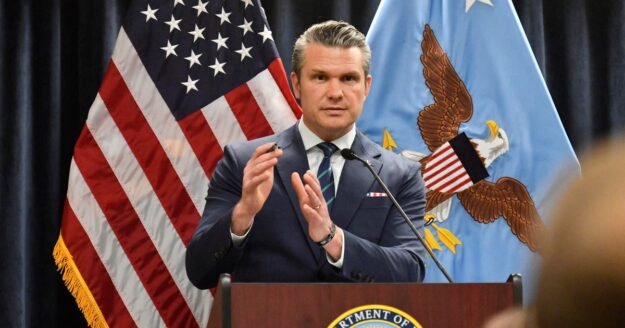
A sharp drop in oil prices slowed Tuesday morning, after Defense Secretary Pete Hegseth said the day would see America’s “most intense day of strikes inside Iran.”
U.S. crude oil, which was down more than 10% overnight Monday, was down less than 4%. International Brent crude remained lower by 5% after trading in a similar pattern overnight.
The S&P 500 dropped 0.2% in early trading, while the Nasdaq Composite was down 0.1% and the Dow Jones Industrial Average slid 275 points. Futures for all three had earlier indicated they would open solidly in positive territory.
Also Tuesday morning, Abu Dhabi said that authorities were dealing with a fire that broke out at its Ruwais Industrial Complex, “caused by a drone strike.” Ruwais is the location of one of the largest refineries in the United Arab Emirates, and can process more than 900,000 barrels of oil per day. It is now reportedly halted.
Energy ministers from leading industrialized nations met Tuesday morning to discuss options to respond to rising crude oil prices, but they did not announce a strategic release of petroleum reserves afterward, which was widely viewed as a front-line response in the effort to calm global markets.
After the G7 meeting, France’s finance minister Roland Lescure, who also oversees energy policy, said officials had asked the International Energy Agency to “look into details that we could have at hand, were we to decide to use” international oil reserves to calm markets.
“Everyone’s willing to stabilize the market, and everyone’s willing to explore any ways to do so,” Lescure added, noting that the United States and France were aligned on the issue.
Alluding to the absence of any news about a release, Lescure said, “The … potential release of inventories is not the only way forward. And as you know, the best way to solve the problem is to reopen the Strait of Hormuz.”
In a separate statement, IEA Executive Director Fatih Birol said there would be a meeting of member governments later Tuesday, “to assess the current security of supply and market conditions to inform a subsequent decision on whether to make emergency stocks of IEA countries available to the market.”

A U.S. official told NBC News on Monday that President Donald Trump was reviewing a number of other options to drive down prices, including restricting U.S. exports, intervening in the futures market and lifting some requirements of the Jones Act, which requires that domestic fuel be carried only on U.S.-flagged ships.
The White House has also repeatedly said that the spike in energy prices was only “short-term” and would drop after the objectives of the war were met.
It’s unclear if any policy fix can fully ease oil prices though.
“Policy measures may have limited impact on oil prices unless safe passage through the Strait of Hormuz is assured,” said JPMorgan Chase commodities analysts on Tuesday morning.
The Strait normally carries ships responsible for more than 20% of the world’s oil supply to the global market.
So far, since the war started, retail gas prices have risen 50 cents, a visible reminder to consumers about the impact the war is having already.
“The only truly durable and comprehensive solution would be to secure the Strait of Hormuz,” they added.
You may be interested

UK households urged to make swap before April 7 to avoid £2.50 fee | UK | News
new admin - Mar 10, 2026Anyone with old stamps lying around should double-check before putting them on letters and cards. If these stamps have been…

‘Masterpiece’ movie with rare Rotten Tomatoes score streaming for free | Films | Entertainment
new admin - Mar 10, 2026The film received a slew of awards (Image: SONY)Film enthusiasts searching for their next compelling viewing should explore one title…

Nvidia’s DLSS 4.5 with 6x Frame Generation is rolling out at the end of March
new admin - Mar 10, 2026Nvidia’s DLSS 4.5 with 6x Multi Frame Generation will be available starting March 31st for users with RTX 50-series GPUs,…