





New York’s first microdrama film festival searches for its audience

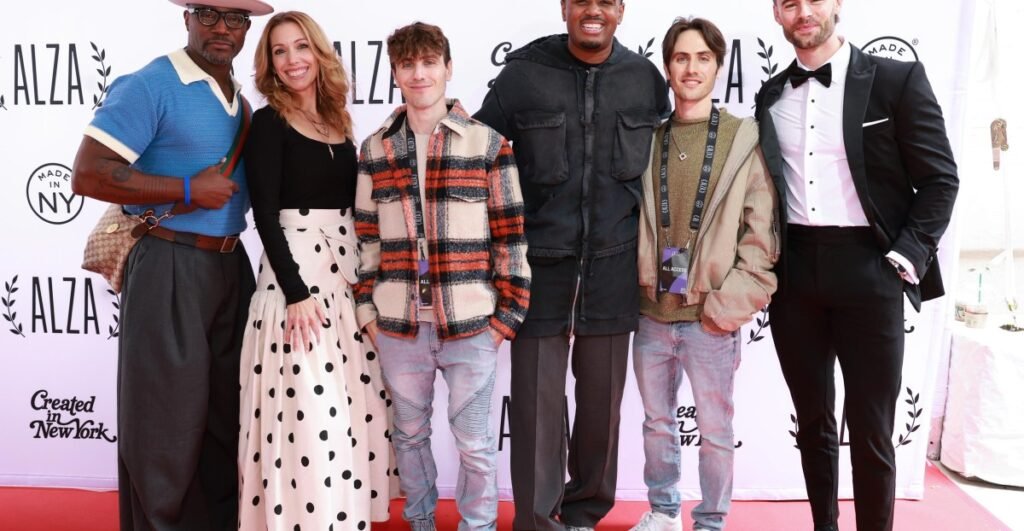
It remains to be seen if people really want to watch vertical content on horizontal TV screens, but many filmmakers and creators were confident that their latest projects would play well at Alza — New York City’s first microdrama film festival. Founded by former Tribeca Festival chief operating officer Pete Torres, Alza, which took place October 16th through 18th, was billed as a showcase for the “the creativity, innovation, and growing cultural impact of stories made for the vertical screen.” The festival featured a selection of microdrama and film premieres as well as industry-focused panels with executives who all seemed to genuinely believe that vertical entertainment is going to be an integral part of the future.
That proposition felt rather dubious as I sat down in an AMC theater in Manhattan for screenings of director Jerry Bradford’s vertical adaptation of Pride and Prejudice and the original Billionaire’s Broken Vow starring Eric Roberts. Though both of those projects were full-length features, they were filled with jarring jump cuts and abrupt soundtrack changes that reminded me how the films are cut up into short “episodes” for microdrama apps. That wasn’t as much of an issue with shorter series like the romantasy horror Blood Surfer or collections of videos like disability rights activist Lachi Music’s “Glam Struts.” But it was still very strange to see content that was clearly meant to be watched on phones being projected in the center of massive screens in the same theater that’s currently showing Resident Evil, The Social Reckoning, and You Can See Everything.
Most fans of vertical videos and microdramas consume them through their mobile devices, but platforms like Instagram and Vurt have been rolling out dedicated smart TV apps that are designed to keep vertical video viewers glued to their couches. The popularity of YouTube — which you can access in so many different ways — has spooked major streaming services like Disney Plus, Netflix, and HBO Max into experimenting with feeds of vertical clips. Alza was filled with people who were confident that they were leading the charge to legitimize vertical content as an art form that’s going to revolutionize the entertainment industry. There’s no denying that some microdramas have been wildly successful, but Alza’s programming left me doubtful that the future is vertical.

As odd as I personally found much of what was playing at Alza, it did seem to entertain some of the festival’s other attendees, many of whom were middle-aged women. None of the screenings were packed, but while watching a few steamy, romance-forward dramas, I was surprised to hear peals of laughter and gasps coming from the front of the theater, where festival staffers encouraged people to sit in order to have the best viewing experience.
“We’re making content that speaks to mainstream women who are part of this mobile-first movement.”
Appealing to female viewers has been one of the primary goals of GammaTime, the microdrama platform founded by former Miramax CEO Bill Block. When I spoke with Block and GammaTime’s head of development, Amy Sullivan, they told me the platform’s library of content has been designed to appeal to viewers and their general moods at different points throughout the entire day.
“We’re making content that speaks to mainstream women who are part of this mobile-first movement, who are on their phones in the mornings, the afternoons, at night,” Sullivan explained. “We have easy watches, we have rom-coms, and we have stuff that’s a little spicier — but not too salacious — for perhaps later at night. We’re trying to meet everyone where they are at every time of day.”
Block pointed to daytime TV watchers as one demographic that GammaTime has been especially interested in bringing into the fold. Though soap operas are still very popular in the US, their overall ratings have been declining in recent years as people’s attention has been pulled elsewhere. Block insisted that rather than disappearing, traditional daytime TV viewers have been migrating to other sources of entertainment, like on-demand streaming services and social media platforms.
“They’re still here, but they’re watching this while they’re pretending to work a little bit at the office,” Block said, referring to people who fire up microdrama apps for a quick hit of fun. “They’re at home, too, but this is the new daytime, the new 5–6PM, and the new 10PM plus.”
Block and Sullivan noted how, even when overall production costs are kept low, operating as a successful studio is still very expensive. It takes a lot of money to reach different demographics of potential viewers while maintaining various ad partnerships, which is why GammaTime has outsourced much of its marketing efforts overseas.
“We’ve got an edge in Tel Aviv, and I would honestly say the brains of the operation is our partner Slava Mudrykh and his customer acquisition, AI, and marketing teams,” Block said. “Because this is all Instagram and TikTok — that’s where you’re acquiring [new users.]”
“There’s so much nebulosity in this space, and it just seems like a lot of times, nobody actually watches the stuff they’re making.”
Microdramas are often characterized by AI-generated special effects and melodramatic soap opera energy, and I saw plenty of both from many of the projects I screened during Alza. As more companies try to build a presence for microdramas in the West, it is still somewhat hard to imagine this kind of content taking off the way it has in China. Even though Salvador Paskowitz — who cowrote The Age of Adaline — won Alza’s best director award with his 90-minute comedy Layover, he expressed some skepticism about verticals / microdramas’ potential to be a lifeline for filmmakers and actors who have been struggling to find production work in Los Angeles. In Paskowitz’s view, this kind of entertainment has stopped being a viable way for production workers to build careers because of the sudden influx of generative AI.
“Companies like ReelShort and DramaBox were kind of the first wave of these newer verticals, but because they’ve gone so crazy with AI, I think of them like cruise ships that have run themselves aground,” Paskowitz told me. “Now there are a lot of American companies that smell an opportunity, but there’s so much nebulosity in this space, and it just seems like a lot of times, nobody actually watches the stuff they’re making.”
Paskowitz believes that filmmakers owe it to their audiences and the brands that they work with to put out projects that actually look good. He also thinks that because studios that want to become the “HBO of verticals” now have an “AI slop button to press,” they’re losing sight of what people really want to watch. Paskowitz was adamant that using gen AI in any capacity for film production is a slippery slope that can quickly lead to the erasure of the human element. That, he said, is why Layover was produced traditionally.

Image: Andru Marino
“I’m even against doing hybrid productions because it’s easy to start cutting corners, and the public is going to see,” Paskowitz explained. “That idea sends chills through my body because it starts with ‘Let’s replace that tree, let’s replace all these buildings, let’s replace all the background work.’ And then at some point, it’s ‘Look, we’ve come so far. Let’s just replace all the actors.”
Something that struck me as the festival continued was how — while some projects featured AI elements — the vast majority of them starred human actors who all seemed very proud of their work and excited to share it with the public. These microdramas might not win any awards outside of Alza, but there are real people making them. That might also be why I was so surprised to hear Block jokingly say that the rise of vertical content “is all part of the decline of the West.”
After our interview, Block and Sullivan repeatedly stressed that he wasn’t being serious, which may be true given the line of work they’re in. But even if Block was just kidding, his words stuck with me because it feels like there may be some truth to the idea of decline. Verticals / microdrama production has become a multibillion-dollar industry because we live in a society that encourages us to engage with almost every aspect of our lives through the tiny screens that stay in our pockets. It’s no surprise that Hollywood sees vertical microdramas as the next big thing. But their cheesiness, lackluster production values, and formulaic stories don’t exactly make them feel ready for the red carpet treatment.
Additional reporting by Andru Marino.
You may be interested

Meta says it would’ve made over $22 billion if it didn’t have to pay a child safety settlement
new admin - Oct 21, 2026Meta had to shell out $9.89 billion to pay for a chunk of the child safety settlement it reached with…

DOJ’s inspector general declines to investigate prosecutors who falsely charged Olympian David Hearn in Reflecting Pool case
new admin - Oct 21, 2026The Justice Department's inspector general has declined to investigate allegations of misconduct against the prosecutors who brought an indictment against…

Meta to create a new class of shares to fund AI push
new admin - Oct 21, 2026Meta says it’s issuing a new class of shares to fund its AI initiatives. As part of its third-quarter earnings…