


New PSLF Rules Break Promise to Borrowers (opinion)

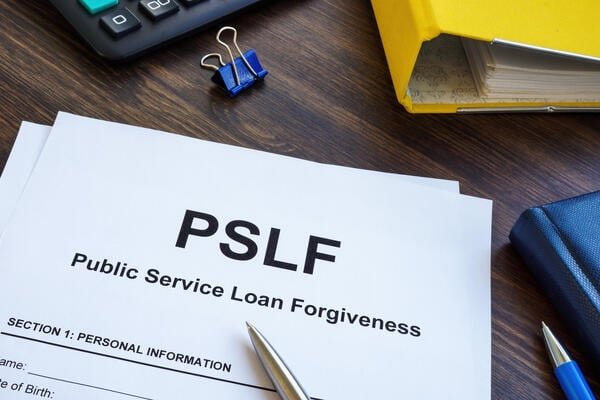
The Trump administration has asserted that it should serve as the final authority on eligibility for Public Service Loan Forgiveness, a change set to take effect July 1. This centralization of authority raises significant concerns, as no administration should have unilateral power to redefine eligibility for a statutory program created by Congress. Recent congressional efforts to overturn these new rules have already failed, as Republicans did not support a resolution that would have reversed the Trump administration’s changes.
To understand the implications of these new rules, it is helpful to briefly review the program’s origins. PSLF was established in 2007 under President George W. Bush through the College Cost Reduction and Access Act to encourage college-educated workers to enter public service professions such as teaching, policing, social work and nonprofit health care. Although straightforward in concept, the law lacked clarity, and misinformation from the federal government and loan servicers led to widespread confusion about eligibility and the forgiveness process. Early outcomes reflected these flaws, with denial rates reaching as high as 99 percent.
In response, Congress created the Temporary Expanded Public Service Loan Forgiveness program in 2018 to address these failures. This policy allowed borrowers to have their payment histories reassessed, particularly when they had been placed on ineligible repayment plans. Many borrowers held incorrect loan types, such as FFEL loans, or were enrolled in nonqualifying plans—often due to misinformation. In 2021, the Biden administration expanded these efforts, allowing borrowers to get credit for certain past payments that would not otherwise qualify toward PSLF. Together, these changes reduced borrower uncertainty and signaled that PSLF was finally beginning to function as intended.
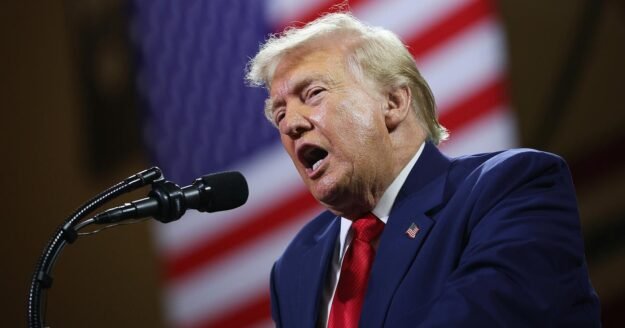
Enter the Trump administration. In March 2025, President Trump issued an executive order titled “Restoring Public Service Loan Forgiveness.” Framed as a measure to protect taxpayers and national security, the order asserts federal authority to restrict eligibility for PSLF by excluding individuals employed by organizations engaged in activities deemed to “have a substantial illegal purpose.” The order signaled a shift away from broad access toward a more selective approach tied to the government’s interpretation of organizational conduct.
The accompanying final rule introduced a framework allowing the secretary of education to disqualify employers under a “preponderance of the evidence” standard. Under the rule, organizations whose employees could be found ineligible for PSLF would include those deemed to have been engaged in “aiding and abetting violations of Federal immigration laws” or having “a pattern of aiding and abetting illegal discrimination,” as well as entities involved with providing gender-affirming health care to transgender youth. Recent actions show that the Trump administration is already targeting universities and high school districts with disputed “discrimination” claims, raising concerns about how broadly these standards could be applied.
Simply stated, this framework grants the secretary of education broad discretion to determine whether a previously eligible organization has engaged in a “substantial illegal purpose.” Once such a determination is made, affected organizations lose PSLF eligibility and can regain it only by altering their practices to the satisfaction of the administration under the terms of a corrective action plan or by waiting 10 years. In practice, eligibility could also shift with changes in administration, depending on whether future policymakers uphold or reverse prior determinations.
Within this framework, external oversight is near nonexistent. Borrowers themselves cannot appeal ineligibility decisions, and the rule offers few details about an appeals process for employers. This concentration of authority represents a significant expansion of executive discretion over PSLF eligibility, with few procedural guardrails to protect nonprofit institutions from shifting political interpretations of compliance.
Moreover, eligibility determinations could extend beyond individual organizations to broader jurisdictions, including employees of entire cities where local policies conflict with federal priorities. In such cases, PSLF eligibility could become entangled in political disputes between federal and local governments. For example, changing federal interpretations of municipal actions in cities like Chicago or St. Paul could jeopardize eligibility for public employees who have long relied on settled expectations.
These potential outcomes raise concerns that access to forgiveness could depend not only on a borrower’s employment, but on shifting administrative judgments about legality and compliance at the organizational or municipal level, rather than on statutory criteria established by Congress or determinations made by courts. Such authority could place substantial financial pressure on nonprofit organizations perceived as misaligned with an administration’s priorities.
Under this framework, eligibility could vary dramatically across administrations. One administration might target organizations such as Planned Parenthood or particular cities, while another could apply the same authority to different entities. This variability underscores the risk of transforming PSLF from a rules-based program into one subject to political discretion, with serious consequences for borrowers who have made long-term career decisions based on program stability.
Beyond institutional impacts, PSLF recipients are once again left navigating profound uncertainty. My research shows that uncertainty is a powerful driver of borrower psychological distress, including suicidal ideation. Recent interviews with participants reinforce this finding: Many fear that years of progress toward forgiveness could be abruptly suspended, not due to any failure on their part, but because of administrative determinations with no meaningful avenue for appeal.
Currently, the administration is facing ongoing lawsuits challenging the rule. However, these are unlikely to prevent the administration from attempting to implement these changes, as prior behavior suggests a willingness to proceed with contested policies despite legal uncertainty. This pattern reinforces concerns that, absent meaningful checks, the administration may continue to act unilaterally even while its authority is in dispute.
These new rules are not merely administrative; they destabilize lives built around a promise made by Congress. Shifting PSLF from a statutory-based benefit to a discretionary, politically contingent determination transfers substantial and uncontrollable risk onto borrowers. Given the Trump administration’s history of abrupt policy reversals, uneven implementation and governance shaped by emotional and cultural conflict, vesting this expansive authority over PSLF in the executive branch is especially concerning. No administration, this one or any future one, should have unilateral power to disrupt nonprofit organizations it disagrees with or to derail the lives of borrowers who planned their careers and futures around the promise of Public Service Loan Forgiveness.
You may be interested
7/22: The Takeout with Major Garrett
new admin - Jul 23, 20267/22: The Takeout with Major Garrett - CBS News Watch CBS News Trump and Iran trade threats to attack energy…
Bill takes aim at Chinese AI companies accused of U.S. tech
new admin - Jul 23, 2026[ad_1] A bipartisan group of lawmakers said they were introducing legislation Thursday aimed at protecting American artificial intelligence companies like…

7/22: CBS Evening News – CBS News
new admin - Jul 23, 20267/22: CBS Evening News - CBS News Watch CBS News Florida police spray bullets at homicide suspect's vehicle following car…