



New Blues Album, Action-Movie Dreams

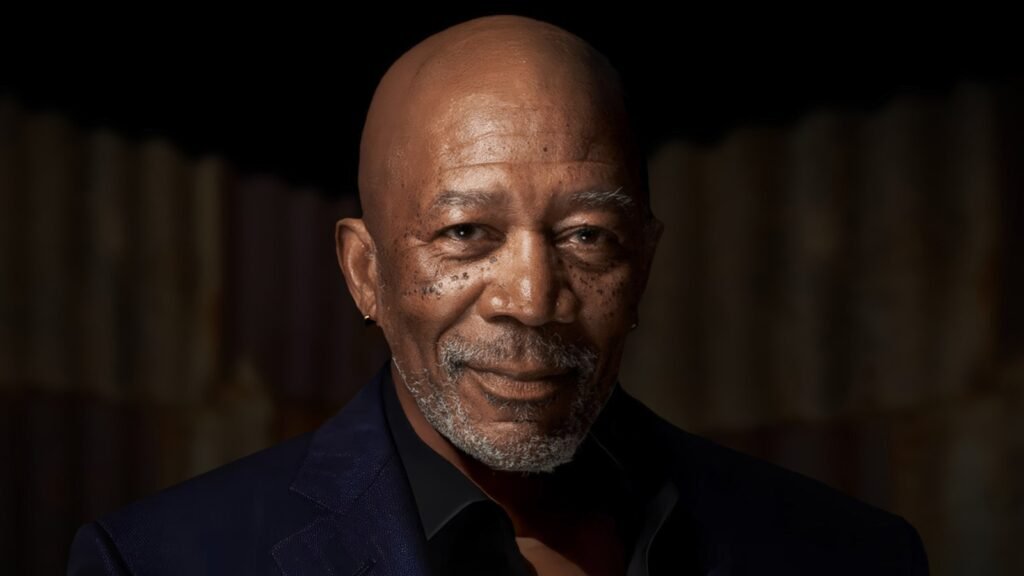
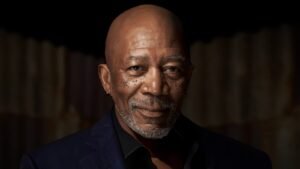
Morgan Freeman has spent the last five decades playing Batman’s Bat-Tech supplier, the president of the United States (multiple times), Nelson Mandela, and God himself, but since 2001, he’s also been the proprietor of his very own juke joint. He co-founded Ground Zero Blues Club in Clarksdale, Mississippi — a state where he spent part of his childhood — after realizing that visitors to the site of Robert Johnson‘s crossroads had no place to hear the blues.
The latest offshoot of that venture is the just-released album Morgan Freeman’s Symphonic Blues Experience, which does just what the title promises, adding tasteful orchestral arrangements by London’s Chineke! Orchestra to new takes on blues standards. Taj Mahal covers Son House’s “Death Letter Blues,” Keb’ Mo’ revs up Albert King’s “Cadillac Assembly Line,” and Shemekia Copeland reclaims Johnson’s “Traveling Riverside Blues,” nodding to Led Zeppelin’s reinvention of it along the way. The album, which also includes historical narration by Freeman, benefits the Ground Zero Arts Foundation, the club’s charitable arm. It grew out of a touring live show of the same name featuring local orchestras alongside Ground Zero regulars, with Freeman’s filmed narration.
The 89-year-old Freeman (resplendent at home in a dashiki) and Ground Zero co-owner and CEO Eric Meier joined Rolling Stone on a Zoom call to talk about Freeman’s own musical history, why he’s jealous of Denzel Washington, his thoughts on retirement, and more.
Morgan, you heard the blues on a porch in Mississippi as a very young child. What do you remember about it?
Morgan Freeman: I remember moonshine in a Mason jar. I remember fried fish. I remember going with my grandmother to a pond or a creek somewhere and fishing with a cane pole. Those are snatches, just like this guy with gold teeth on my grandmother’s porch. He’s drinking moonshine out of a Mason jar and he’s got a guitar and he’s, yeah, music-ing. I was three or four years old.
Were you drawn to it at that point, or was it just part of the atmosphere?
Freeman: No, not particularly. It was just music. By the time I was five it was Glenn Miller. And “Tuxedo Junction,” “Five O’Clock in the Afternoon.” And a little bit of Count Basie. Not drawn to it, it’s just that was the music in the air. People would have their Philco radios turned up. You’re not old enough to remember that.
And you moved to Chicago in the 1940s, and you missed the Chicago blues — that wasn’t part of your experience growing up.
Freeman: Not at all. Yeah. South side of Chicago was a jungle. You had to thread your way through that carefully. Yeah, growing up, hoodlum-ism was one of the easier choices to make.
Did you ever have any interest in becoming a musician yourself?
Freeman: In high school, I was in music. I sang with the glee club — tenor, then bass because the bass guys couldn’t handle it. And in the band I blew the alto saxophone. But at 16, I suffered pneumonia and pleurisy. Got an abscess on my lung for that, for my pleurisy. And the doctor said, “No more horn. You won’t be able to do it. You won’t be able to get into the Air Force either.” I got into the Air Force and I didn’t have a mark on my lung.
So you could’ve kept playing the horn, maybe.
Freeman: I could’ve.
I heard that Shawshank Redemption director Frank Darabont wanted you to play a harmonica at the end of that movie — the one that Tim Robbins’ character gave you — and you turned that down, so we didn’t get a chance to see that either.
Freeman: Yeah, to me, that was a “Yes, boss man” moment. It didn’t make sense to me.
That was one of the greatest endings of all time, so whatever decisions you made clearly worked out.
Freeman: Yeah. I loved it. I like the whole movie, actually.
When did your actual interest in the blues begin, and how did it develop?
Freeman: We were in Mississippi working and we saw a couple of young people, and they said, “Where can we hear some blues?” That was it. There was no answer. We didn’t know. There was no place.
So you made it.
Freeman: We bought the building. Turned it into a juke joint. That was Ground Zero.
Meier: With this project, there’s a hip-hop band I’d seen perform in Australia called the Hilltop Hoods. They’re these two high school buddies that have a really fun hip-hop thing, and they had done some symphony crossover. I talked to them and said, “OK, I like this kind of idea. Let’s try this for the blues.”… Normally, you do an album and then you go tour. We did the reverse here. We realized we had something and with the response we’ve received, we thought we want to memorialize it with a project like this.
Morgan, how much have you gotten into going back and listening to the blues, in your spare time, for pleasure?
Freeman: It’s not specifically the blues. I’m a great fan of Frank Sinatra’s music and Al Green. Otherwise I’m not a blues specialist or aficionado. This is a necessity. This is something where we found what is needed, and we did it. It’s not my passion for music that did it.
There’s an artist named Kingfish, who’s a young Black man who plays the blues. He told me he had white fans surprised that he was singing the blues, because there’s been this divorce of this music from its roots in a way that is unfortunate. In this project there’s some reconnection there and a reminder of the real history.
Meier: Kingfish is a hometown person. He’s from Clarksdale. We can count on him for New Year’s every year. He’s usually onstage with Morgan, [co-owner Howard Stovall], myself, and others, and he loves coming home, and he loves this project, so we’ve had a lot of conversations. And I think when he first heard about it, he’s like, “Damn, this is cool.”
As far as doing the narration for this project and getting involved with it — what did you enjoy about it, Morgan?
Freeman: Everything. It’s just like you’re on a road and at every curve there was something useful or delightful that you encounter. We see this, we’re on this trip… One thing I wanted to point out about what we are doing — I think we are helping symphony orchestras also. People who like to go to the symphony have another reason to go, and it’s a little pick-me-up for orchestras.
Meier: In some ways you feel like you have a responsibility to do this. You can’t always get to Clarksdale. So we just said, “Look, let’s come to you.” It’s getting out there and exposing it to new audiences.
Morgan, when you’re narrating as yourself, how is that different from narrating as a character? How do you approach it differently, or do you really not have to think about it at all?
Freeman: You got a script that calls for a character — narration, I don’t know. You just step into it as a role. I’m not aware actually that I use a different approach as a character if there is a narration involved.
Morgan, you’re keeping very busy. You have some new acting projects coming out, you have this album. You seem so busy at 88 — is retirement something you’ll never do?
Freeman: 89.
Right, sorry!
Freeman: It’s all right. I don’t wanna lose a year, though [laughs]. And doesn’t look to me that I see stopping ahead of me.
Yeah, it doesn’t seem like it.
Freeman: No, I don’t see any point in that. Clint Eastwood’s mantra I borrowed: “Don’t let the old man in.” Just keep moving.
Morgan, I was curious — I asked Christopher Walken this not long ago; he’s a little bit of a youngster compared to you. You’ve gotten to play so many things. Is there one kind of role as an actor that you’re still hoping might open up for you, something you’ve never gotten to do
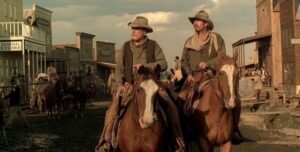
Freeman: Too old for what I would hope to do. I got so many things wrong body-wise that I couldn’t do the kind of action stuff that would be required.
So looking back, you wish you’d done a little more action?
Freeman: Yeah. See, my career started around my age of 50 — that’s when it took off. Before that, I was working different venues a lot. Twenty years on the Broadway stage. Who I envy is Denzel. Denzel Washington is doing what I wanted to do. I took the jobs that were offered and I thought I was doing well, and I was. But not those action flicks. I was a child of the movies. I grew up in the movies. When I was a kid and when there was no school, I was in the movies every day. So that’s what I wanted to do.
You may be interested

Videos capture the moment a 7.4-magnitude earthquake strikes Colombia
new admin - Aug 10, 2026IE 11 is not supported. For an optimal experience visit our site on another browser.Death toll in earthquake surpasses 100,…

Trump to sign executive order to reevaluate childhood vaccines
new admin - Aug 10, 2026Washington — President Trump is scheduled to sign an executive order on Monday laying out new recommendations for childhood vaccinations,…

How much interest can $200,000 earn over the next year? 4 savings account options to know
new admin - Aug 10, 2026The interest-earning capacity of a $200,000 deposit will vary based on the account it's placed in. Javier Ghersi/Getty Images If…