


Navigating the Postdoc’s Hidden Curriculum (opinion)


As early-career scholars who are neither students nor long-term employees, postdocs face particular challenges when it comes to navigating the hidden curriculum and the opaque expectations that can shroud higher ed. Even at institutions where postdocs have strong support resources, a postdoc’s experience is heavily dependent on the support they receive from their faculty mentor and as such can vary widely. As two former postdocs and current postdoc supporters, we want to add to the wonderful discourse at “Carpe Careers” about the amazing work of postdocs and offer ideas for drawing back the curtain of the hidden curriculum to enable postdocs to flourish.
Goals and Trajectory
A postdoc role should enable you to not only gain further knowledge and skills but to explore career options, build your network and enhance your ability to transition into your next role successfully. It is essential to start with self-reflection on skills, experiences and values to craft goals for your postdoc and career exploration. Creating an individual development plan using tools like Imagine PhD or myIDP is an effective strategy (and not just for postdocs!).
Such tools invite you to reflect:
- What values are important to you? (On this note, see also Stanford University’s Meaningful Work Kit.)
- How have you developed your expertise?
- How have you developed skills in communication, collaboration, research, teaching and leadership/mentorship?
- What do you hope to accomplish during your postdoc?
- What would you need to accomplish those goals?
- What ideas do you have for your next career step?
This last prompt on career discernment is important. Even if you are at an exploratory stage (perhaps you’re even doing a postdoc in order to explore), starting to articulate the kinds of career paths you are aware of is imperative. This, paired with reflecting on your priorities and preferences, will help you focus your potential job options and cultivate the experiences, networks and skills needed to effectively get and start that next job. As part of this initial career discernment endeavor, take time to consider:
- What kinds of environments do you thrive in (collaborative, independent, fast-paced, measured-paced)? What opportunities do you need to grow?
- What personal priorities are important to you (geographic location, family/friends, etc.)?
- How can you learn about diverse career options in your discipline (academia, industry, nonprofits, etc.)?
During your postdoc, your view may evolve. You may realize that you love teaching and dislike research or that you prefer the fast-paced environment of a start-up. Building in time for reflection will enable you to pivot effectively if your priorities change and if the job climate changes. Indeed, given the general downward trend in the number of faculty roles paired with additional factors (e.g., repercussions of the COVID-19 pandemic and federal policy changes), identifying multiple options for next career steps is absolutely critical. To understand what the kinds of jobs you’re exploring would entail, conduct informational interviews to understand others’ trajectories and the values and priorities that informed their career moves.
Mentorship and Networking
During your Ph.D., you may have had only one or two mentors. As you enter your postdoctoral phase, expand your mentoring team to include a wider range of individuals who can give you advice on your progress in your postdoc and various aspects of your career. You may have a mentor in industry who can give you insight into what that career choice looks like, another mentor in academic administration who can share their day-to-day activities with you and a senior colleague/peer who can help you with your writing, presenting or analysis, and so on. Your mentors can recommend skills that you should acquire, courses to take, conferences to attend and other individuals to connect with. Some mentors may push you outside your comfort zone, and that’s a good thing. You are growing your research and professional community through your mentoring team.
Another excellent way to grow your community is through networking. While networking sounds difficult or annoying, it is more about making connections with people you meet around the university or at a conference. You may have a conversation with an individual at a booth at a conference—that conversation could lead to other opportunities. Networking does not have to be forced, but you have to get a little bit out of your comfort zone and think about expanding your professional community. You may think this isn’t that important, but 70 to 85 percent of today’s jobs are secured through someone in your network.
Research and Skills Development
Grant writing is an essential skill for many postdocs to secure funding for their own fellowships or to assist their mentor with research proposals. You should familiarize yourself with funding opportunities at the university level as well as the federal level (National Science Foundation/National Institutes of Health). While these funding opportunities are highly competitive, you can use the opportunity to refine your research ideas and get grant-writing practice. Getting a rejection for a grant and incorporating reviewer feedback into a resubmission is an essential skill to learn whether you continue in academia or not.
You can also use your postdoc as an opportunity to learn skills that you may not have had a chance to develop during your graduate studies. You may want to learn discipline-specific skills that are in demand in the labor market or skills related to data analysis and visualization, public speaking and presentation, leadership and research group management. Or you might like to get a taste for academic administration by serving your postdoctoral association. This is the time to try new things and reflect on your career path. While many postdocs may want to be a faculty member at an R-1, there are many other types of universities, as well as industry positions and jobs in academic administration that you may be well suited for. Talk to people in your network and your mentors to figure out whether some other options are right for you.
Teaching and Mentoring Experience
While you have a lot of research experience and expertise, you may not have had an opportunity to teach an entire course by yourself during your Ph.D. The academic job market is highly competitive, and having a few top-tier publications and teaching assistant experience for a few courses may not be sufficient anymore. Gaining experience as the sole instructor for a course will help you decide if you like teaching—and, furthermore, will help you stand out from other applicants who may not have that teaching experience. Demonstrating your teaching experience can also make you a more competitive applicant for teaching-oriented positions at universities outside the R-1 university ecosystem.
Teaching an entire course by yourself is very time-consuming, and a future hiring committee will want to know whether you can manage balancing teaching and research when you become a faculty member. If you do not have the opportunity to teach at your university, look for a university nearby and apply to teach a course as an adjunct (though first be sure to check in with your postdoc office about whether teaching a course is allowable within university policies and those of your funding sources).
Finally, we want to make a strong plug for the Center for Teaching and Learning at your university. Reach out to them before you start teaching your first course. You can get exceptional, high-quality help ranging from small tips to more comprehensive advice on course design and pedagogical practices. Additionally, if teaching a course is not an option, work with your CTL and engage in other kinds of teaching (guest lectures, running a program for your postdoc association, etc.). These experiences still increase your experience and demonstrate your teaching interest.
During your postdoc, you can also gain vital experience with mentoring undergraduate and graduate students. Keep in mind that with their different career stages, undergrads and grad students will have their own interests, time constraints and priorities. Working with a variety of students can help you understand how to motivate others and how to move a project forward effectively; these experiences can be rewarding and help you orient yourself for your next career step (and interview effectively for it!).
Institutional Awareness and Self-Advocacy
Finally, we want to emphasize again that being successful in your postdoc role should not be an individual endeavor; you should engage with the resources at your disposal for support and gain diverse perspectives on your experience and your development. Your institution may have specific, formal postdoctoral supports, such as a postdoc office or postdoc association, which can guide you to resources. But if your institution does not have this level of formal support, you may need to reach out to more general offices like human resources or your school’s dean to understand what is available. Additionally, the National Postdoctoral Association has a multitude of resources, guidance and opportunities to connect with fellow postdocs.
We have shared a variety of ideas to help you think about how to engage, what to prioritize and whom to seek out during your postdoc. Our goal is to underscore the importance of approaching your postdoc with intentionality, beginning with reflection and goal setting. Exploring different opportunities with the input of a mentoring team can give you the perspective and feedback you need to make your next career step an effective and happy one.
You may be interested
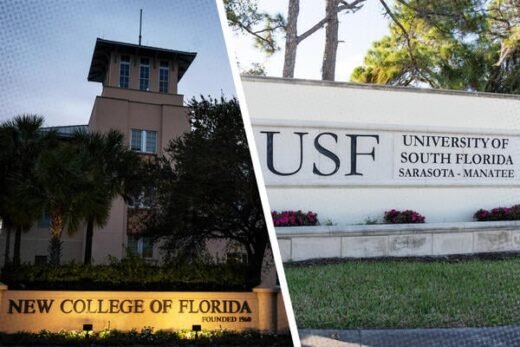
New College of Florida Absorbs a USF Campus. Sort Of.
new admin - Jul 17, 2026[ad_1] The University of South Florida Sarasota-Manatee campus now belongs to New College of Florida. Kind of. Tentatively. It’s complicated.…

Brandon Flowers Releases ‘Paradise’ Single From ‘Thrasher’ Solo Album
new admin - Jul 17, 2026[ad_1] Close to a month since announcing his new solo country record, Killers frontman Brandon Flowers is releasing the single,…

Trump is selling high-speed access to his market-moving social posts
new admin - Jul 17, 2026Trump Media, the company behind Truth Social, is selling Wall Street faster access to the “most market-moving” posts on the…