




Mamdani Unveils New Model for Tech Transfer

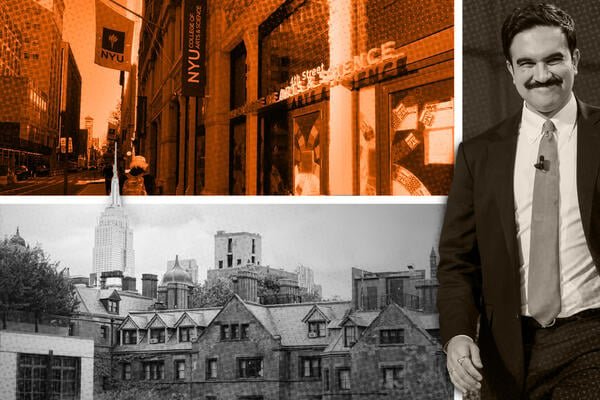
In October, New York Mayor Zohran Mamdani and the New York City Economic Development Corporation (NYCEDC) awarded New York University $29.2 million to help establish a 23,000-square-foot quantum lab near the institution’s Washington Square campus. NYU will invest an additional $255 million to establish the Quantum Fabrication Facility—known as QFab—where researchers, students, start-ups and businesses can turn quantum research into commercially viable technologies.
Representatives from the city will be on QFab’s executive board, and the city will share in revenues from the new technologies that emerge from the space. “This first-of-its-kind agreement will give the city board seats to shape the future of the quantum industry and a stake in the new technologies that emerge from the lab, making sure that all New Yorkers see the profits and progress from quantum technology, not just the wealthy few,” Mamdani said in a statement about the investment. “We are building a city where economic justice doesn’t come at the expense of innovation.”
Last week at the New York Times DealBook Summit, Mamdani and NYCEDC announced a second investment: a $15.8 million capital commitment to Vanderbilt University to establish two advanced engineering research laboratories on its new campus in Manhattan.
Vanderbilt will match the city’s investment to establish the Visualization and Testing Environment for Medical Devices (VISE-MED) and the Vanderbilt Center for Intelligent Mobility (V-CITY), which will focus on transportation and energy technologies. The deal also includes a revenue share for any IP developed by V-CITY and VISE-MED during the 10-year period of the agreement.
Public investment in research and innovation ecosystems—Boston’s Kendall Square, Raleigh-Durham’s Research Triangle Park and even NYCEDC’s Roosevelt Island project are all examples—is a hallmark of the country’s research might. Still, most collaborations center on tax incentives or real estate deals, not the possibility of returns on the research itself. And while revenue sharing is common in university partnerships with philanthropies, private donors or state-backed agencies, such as the Cancer Prevention and Research Institute of Texas, this is the first time, several innovation experts say, they’ve seen a city strike such a deal.
New York City’s model represents a new frontier for public-private partnerships, where cities have more say in how academic research is conducted within their municipalities and how it brings economic value to their communities.
“This is absolutely a new model and a creative one in a lot of ways, because they’re putting significant money into the buildout of these spaces,” Daniel Goetzel, a practitioner in residence at the Harvard Kennedy School and the former director of strategic partnerships for the National Science Foundation’s Technology, Innovation and Partnerships Directorate, told Inside Higher Ed. “Historically, all that value was captured through retention of companies or additional tax revenue for the city, but there wasn’t anything captured from the actual companies that were created.”
The arrangement puts the taxpayer in a new role.
“A city asking for a direct financial return treats the public as an investor rather than a donor,” Jeffrey Schell, a patent lawyer and managing partner at Whiteford, said in an email to Inside Higher Ed. “Cities also control land use and local capital dollars, which research universities in dense markets increasingly need, and that gives a city leverage a philanthropy does not have.”
Both projects were selected through an open request-for-proposal process. NYU was selected out of 25 applications “based on its demonstrated leadership in quantum, its ability to leverage significant public and private funding and its partnerships with CUNY and NYC Public Schools,” an NYCEDC spokesperson wrote in an email to Inside Higher Ed.
The Vanderbilt investment is tied to “specific capabilities and public needs and their track record of success and leadership teams,” the spokesperson added. The labs will focus on advancements in surgical robotics, wearable technology, urban transit optimization and clean energy.
Small Slice of the Pie
Although the revenue-sharing proposition is novel, the deals aren’t likely to add much to the city’s bottom line, and if they do, it will be far into the future. That’s because any revenue will come from each university’s central administration cut of profit, the smallest slice of the tech-transfer pie, typically between 10 and 15 percent. Most proceeds from successful research commercialization go toward patent costs, the inventor’s share and school and department shares.
New York will receive 50 percent of Vanderbilt’s central administration share on the first $100,000 of annual revenue from any intellectual property created at VISE-MED and V-CITY, the NYCEDC spokesperson said. On any revenue over $100,000, the city will receive 27 percent, along with a portion of school and department proceeds.
When intellectual property is created at NYU’s QFab, scheduled to open in 2030, the city will receive 15 percent of the central administration’s proceeds. NYCEDC said it intends to work closely with City Hall to determine uses for any money it earns.
“I would describe the revenue share as a low-cost option for the city and a statement of principle, not a budget line,” Schell said. “Quantum hardware licensing revenue at any scale is likely many years out.”
The history of tech transfer also shows that the odds of a windfall from any new discovery are low.
“Let’s call a spade a spade: The actual dollar that will flow from this almost certainly will not be astronomical,” said Scott Andes, a senior adviser of economic development and a professor of practice at Carnegie Mellon University. “Most tech transfers don’t reap a lot of benefit. If you look at the distribution of revenue from universities through the commercialization process, it’s incredible around a few blockbuster wins.”
The real promise of the partnerships lies in decision-making authority via seats on the QFab advisory board, Andes said. “The mayor’s office, to the extent that they stay active and engaged with those board seats and others—that is different. Normally, it’s ‘We’re going to build you the building and then see you never,’” he said.
Three of the 20 seats will go to NYCEDC and the City University of New York, while the rest of the board will consist of representatives from NYU, industry partners, start-ups, venture capital firms and community partners.
“I would use those board seats and the agenda-setting authority that this structure allows the mayor to put on steroids the connective tissue between what’s happening in the quantum facility and the Vanderbilt facility and the massive global funders in New York,” Andes said. “Then you get that flywheel effect.”
Regardless of whether tech-transfer revenue materializes, the city hopes the deals lead to job opportunities and capital investments in new industries soon. “The city’s goal is to build an emerging industry in New York while creating jobs, supporting companies and providing workforce pathways for New Yorkers,” the NYCEDC spokesperson said.
NYU projects QFab will incubate nearly 50 companies as well as support 50 new start-ups. It expects to reach 5,000 students over the next 10 years through undergraduate and graduate school programs, summer boot camps for K–12 students, internship programs, and a new certificate program at some CUNY institutions. The city said the Vanderbilt labs will support more than 75 start-ups and small businesses, create more than 200 jobs, and upskill nearly 3,000 workers.
The “stickiness” of the labs—if the researchers and start-up founders stay in the city to work and do business—will bring more immediate economic value to the city, Andes said.
But if New York’s model is successful, it could herald a new chapter for public-private partnerships in higher ed, according to Andes.
“There’s just such a desperate need for experimentation in this space and to try different models,” he said. “When you look at universities and their role in a community or a city, it really is dependent on the strengths and the nature of the university and the strengths and the nature of the place, but we tend to do it the exact same everywhere—which is just bananas.”
The pace of the announcements—the Vanderbilt agreement coming a month after the NYU deal— told Schell the city intends to make these new deals standard practice.
“Other cities and universities will be watching,” he said.
You may be interested

Has vibe coding made open source the new normal for synths?
new admin - Nov 25, 2026The emergence of powerful vibe-coding agents and tools like Reverse Engineer Anything has caused chaos in the music gear world,…

Some AI-powered toys could offer up inappropriate, sexually explicit content to kids
new admin - Nov 25, 2026Some of the hottest toys this holiday season are cute, cuddly and filled with AI. Mark Strassmann reports on how…

How to Get the Lowest Possible Prices
new admin - Nov 25, 2026[ad_1] IE 11 is not supported. For an optimal experience visit our site on another browser.Now PlayingBlack Friday Shopping Strategy:…