



Justice Department to Investigate ED’s Civil Rights Cases

The Trump administration has taken its latest step in dismantling the Department of Education, announcing Tuesday that it will outsource the work of investigating some civil rights complaints to the Department of Justice.
Department officials say the shift of duties will reduce federal bureaucracy and improve student equity, but several civil rights advocates and former staffers at the Office for Civil Rights expressed concern that the sharing of responsibilities could create more barriers for students.
“The irony here is that every action that [ED] says they’re taking to reduce fraud, waste, and abuse is creating more chaos and confusion,” said Beth Gellman-Beer, a former OCR attorney. “No one understands how this is going to operationalize, and at face value, it really does feel like it’s going to create more levels of review and more barriers. It’s just going to make an already difficult situation worse.”
The Trump administration has been working for months to dismantle the Education Department by outsourcing dozens of programs and responsibilities to other federal agencies via a series of interagency agreements. That effort started with the relocation of smaller offices and programs, such as career and technical education, which moved to the Labor Department. But the fate of some of the agencies’ most significant responsibilities—enforcing civil rights laws, overseeing special education services and managing a $1.7 trillion student loan portfolio—remained up in the air for months. (Ultimately, the president wants to shut down ED, but only Congress can do that.)
In March, ED said the Treasury would assume some debt-collection roles, leaving mainly responsibilities related to civil rights and special education for officials to shift elsewhere.
Other agreements announced Tuesday will send student privacy as well as training and advisory services to Justice, and the Office of Special Education and Rehabilitative Services to the Department of Health and Human Services.
Trump officials stressed that the enforcement of federal civil rights laws will continue without interruption, asserting that partnering with Justice builds on two decades of existing agreements and coordination between the agencies and will deepen “partnerships to ensure equal [educational] access to students and employees across the nation.”
It was unclear Tuesday how much of OCR’s current caseload DOJ will assume or how many complaints the agency will investigate. Officials couldn’t say whether they were planning to hire more lawyers, noting that those details were still being worked out.
Several congressional Democrats sharply criticized the new agreements as illegal, while Republicans generally praised the move as a solution to a long-standing weakness in the federal system.
Kenneth Marcus, who ran the Office for Civil Rights during two Republican presidencies and now serves as chairman of the Louis D. Brandeis Center for Human Rights, added that while “much will depend on implementation,” this could be a key step forward.
“If done right, this partnership could mark a critical step forward for students whose rights have too often gone unprotected on campuses across the country, including Jewish students facing antisemitic discrimination and harassment,” he said.
How the Partnership Will Work
As with the other interagency agreements, the Education Department will still receive funding from Congress for its operations, hire employees and retain the final say over policies and other responsibilities. (ED will reimburse the DOJ for any expenses released to investigative activities, according to a copy of the agreement obtained by Inside Higher Ed.)
Under this latest agreement, ED will still receive and resolve civil rights complaints but can refer cases to the Justice Department for investigation. Justice can also request that ED refer some complaints to them. If a complaint is referred to the DOJ, the complainant and institution will be notified.
Still, the Education Department will make final determinations on the investigations, including whether to refer that complaint back to the DOJ for judicial enforcement. The agreement does allow Justice to “facilitate the mediation or negotiate the settlement” if both agencies agree.
Trump administration officials maintained during a press call Tuesday that “this partnership will not impact students, parents or families who believe they have experienced discrimination.” Students, parents, advocates and anyone who believes discrimination has occurred in an education program can still submit a complaint to the Education Department.
“ED-OCR enforcement staff remain available to answer questions regarding the status of any filed complaints,” a department spokesperson added.
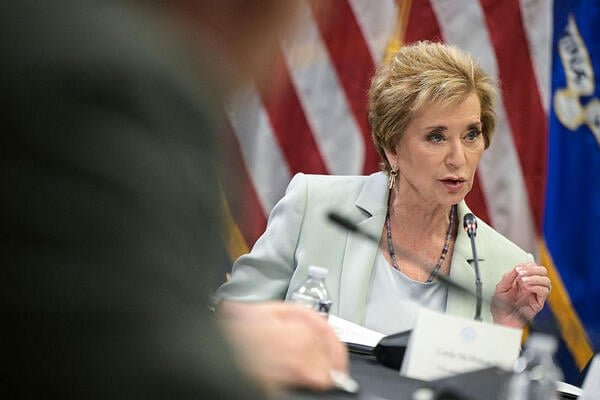
Education Secretary Linda McMahon wrote in a letter Tuesday to parents of students with disabilities that partnering with the DOJ would “provide more responsive and coordinated enforcement of our nation’s civil rights laws.”
How DOJ’s Approach Could Differ
But civil rights advocates and several former department attorneys stressed that the Departments of Education and Justice have historically taken different approaches to enforcing civil rights law. With this partnership, they fear certain types of students and complaints will fall through the cracks, while others will gain political priority.
By law, the Education Department’s civil rights office is mandated to evaluate every complaint they receive. Whether it concerns allegations of rampant racial discrimination or antisemitism or one student seeking special needs accommodations, OCR must review the complaint. If the agency finds that a student’s rights have been violated, it can seek a resolution agreement that outlines how the institution will comply with the law and make amends.
The Department of Justice, on the other hand, can pick and choose which complaints it pursues, legal experts say. Under the second Trump administration, Justice has stepped up its role in investigating higher education cases. The agency has accused several institutions of failing to sufficiently respond to reports of antisemitism, opened more than a dozen investigations into colleges’ admissions policies and sought settlements with universities over alleged civil rights violations.
“The Department of Justice’s primary vehicle is litigation, and it’s an important vehicle because they make big points through big cases that other schools pay attention to. They change their practices based on those big cases,” explained former OCR attorney Gellman-Beer, who now works as an education consultant. But “the Department of Education is not a litigation agency.”
The Trump administration has already prioritized cases within the Education Department that advance the crackdown on what it considers illegal diversity, equity and inclusion practices or that deal with the rights of transgender athletes.
Now, Gellman-Beer and others fear this partnership could lead OCR to become more like the DOJ, picking and choosing which cases it will address based on political priorities. They worry that change could leave some students behind, especially since many complaints come from students with disabilities or their advocates.
Left-leaning civil rights advocates say they’ve already noticed this shift. In 2025, the Education Department resolved only 112 cases—none of which pertained to sexual harassment, sexual violence or racial harassment, according to a report released earlier this spring.
“If the work of federal enforcement of civil rights is narrowed to the tiny question ‘which rights is the government interested in, and which people is the government interested to protect,’ that is a scary diminution of the equal justice under law that we have been guaranteed by bipartisan congresses for six decades,” said Catherine Lhamon, who led OCR during the Obama and Biden administrations.
These concerns come on top of what she described as “an astonishing, unprecedented low“ in the number of OCR cases resolved. (OCR lost half its staff during a dramatic reduction in force in March 2025, but the administration rescinded those layoffs by the end of the year and has worked recently to hire more lawyers.)
Lhamon worries that, taken together, the DOJ civil rights interagency agreement and the lack of staff will add more confusion and layers of bureaucracy for students to work through.
“It will mean that the federal government will become a parking lot for people’s rights claims,” she said. “What we see in this agreement is that there are dollars that will flow from one agency to another, but there will be justice flowing to no one as a result.”
You may be interested

The Jayhawks’ Gary Louris Talks New Album, Canada, Love and Marriage
new admin - Jul 22, 2026[ad_1] When I call Gary Louris to discuss the Jayhawks’ 12th studio album, Sanctuary Park, his wife answers. It appears…

U.S. reaches deal with Saudis for nuclear energy commercial agreements
new admin - Jul 22, 2026Washington — The U.S. and Saudi Arabia have reached a commercial agreement for U.S. companies to run nuclear power for…

Samsung’s Galaxy Z Fold 8 is a fun new shape for foldables
new admin - Jul 22, 2026A year after overhauling its Z Fold phone with a radically thinner design, Samsung has changed things up again, this…