


Judge Blocks Controversial International Student Restrictions

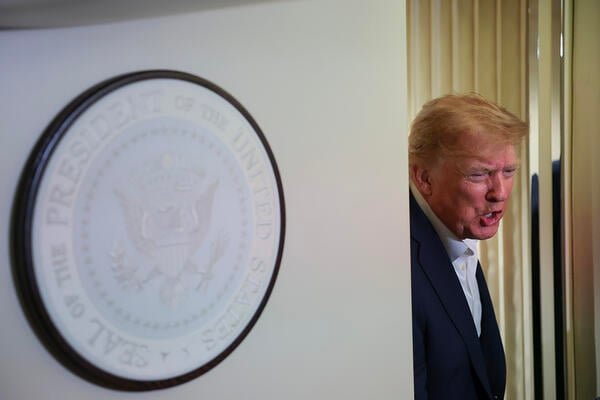
“The government’s contention that the rule is necessary to safeguard national security borders on the absurd,” the judge wrote.
Anna Moneymaker/Getty Images
The Department of Homeland Security’s widely criticized rule limiting how long international students can stay in the country won’t take effect Sept. 15 after a federal judge granted a preliminary injunction in a lawsuit challenging the policy.
Judge F. Dennis Saylor IV of the U.S. District Court for the District of Massachusetts wrote in a 48-page order that Trump officials didn’t respond adequately to public comments on the rule or consider alternative options, among other violations of the Administrative Procedure Act, which governs how departments create regulations. The department also failed to show a rational connection between the rule and its purported national security objectives.
“The government’s contention that the rule is necessary to safeguard national security borders on the absurd,” Saylor wrote in the memorandum released Monday night. “It is based almost entirely on a small handful of anecdotes, each of which involved incidents that the new rule would do nothing to prevent or even mitigate.”
Finalized in July, the rule ends a nearly 50-year policy allowing international students in good academic standing to stay in the U.S. until they complete their studies, and instead limits them to four years. At that point, students could request an extension to stay, but it’s unclear how that process will work.
The lawsuit, filed weeks ago by eight organizations that primarily represent the higher education sector, seeks to vacate the rule. The rule also applied to those with J-1 visas, which covers a range of cultural exchange programs, such as Fulbright scholars and foreign journalists who report in the U.S.
DHS has said the goal of the regulation is to improve national security and lower the number of students who stay in the country too long. The first Trump administration also attempted to make the same policy change, but it was never finalized.
Both international education advocates and institutions have raised the alarm about the regulation, which sparked 22,000 public comments—most of which opposed the rule. They’ve argued that the regulation will negatively impact a variety of students who need longer than four years to complete their programs, especially Ph.D. students, whose programs often take five or more years, in most cases. They also raised concerns that the regulation will make a U.S. education less appealing to international students, which will have ricochet effects on enrollment and revenue.
A group of more than a dozen institutions filed declarations explaining how the regulation was causing irreparable harm before it had even begun in hopes that the judge would stop the ruling from taking effect on Sept. 15.
Saylor wrote multiple times that DHS had no response to the plaintiffs’ arguments. He also referred to the regulation as “misguided,” “ill-advised,” “questionable,” and damaging to the United States, but noted that the injunction is not based on those judgements: “The role of the judiciary is not to ensure that the executive branch does not make unwise decisions.”
Miriam Feldblum, president and CEO of the Presidents’ Alliance on Higher Education and Immigration, one of the plaintiffs, told Inside Higher Ed in an email that she is grateful the decision “recognizes the serious and irreparable harm this rule would cause” and “preserves the longstanding system that enables our colleges and universities—and our country—to attract, educate and retain global talent.”
The preliminary injunction does not vacate the rule, but it will prevent it from going into effect tomorrow for colleges and universities nationwide as proceedings continue. A status conference will be held Oct. 2.
You may be interested
Sen. Mitch McConnell returns to Congress after 3-month absence
new admin - Sep 14, 2026Sen. Mitch McConnell returns to Congress after 3-month absence - CBS News Watch CBS News Republican Sen. Mitch McConnell of…

Is Big Tech’s AI slowdown a safety pact or a cartel?
new admin - Sep 14, 2026When OpenAI CEO Sam Altman, Anthropic CEO Dario Amodei, Google DeepMind cofounder Demis Hassabis, and SpaceX head Elon Musk loosely…
Blanche says more 9/11 documents will be released
new admin - Sep 14, 2026Attorney General Todd Blanche told CBS News' Nicole Sganga that the federal government will continue releasing records related to the…