
IU Biologist’s Lab Reopened but Research Is Set Back


During the shutdown, Innes joined federal inspectors to sort through and identify materials in his lab and determine whether the permits for them were up-to-date.
Peter W. Stevenson/The Washington Post/Getty Images
Indiana University Bloomington biology professor Roger Innes’s lab is back up and running nearly two weeks after federal officials ordered the university to lock it down.
Innes said he still hasn’t received a clear explanation for why the United States Department of Agriculture told the university to close the lab, but he suspects it is retaliation for his speaking in defense of Youhuang Xiang, his former postdoc, and other Chinese researchers in the United States who have been investigated and deported in recent months.
“The timing is just suspicious,” Innes said. “I spoke out broadly to the press after my postdoc had been sentenced [in April] and was safely back in China … And basically two weeks after that, I got this retraction on my compliance notification.”
U.S. officials started investigating Xiang in November after flagging a “suspicious shipment” he received from China. The investigation prompted a search of Innes’s lab in January, after which the USDA notified him and said his lab was in compliance with U.S. laws and regulations. But the agency retracted the notice shortly before the recent closure, telling him it had been sent in error.
“[They said] there was some sort of automated system and they didn’t realize the compliance notification had gone out,” Innes said. “Honestly, that’s very hard to believe.”
Asked to comment on the reopening, a university spokesperson directed Inside Higher Ed to a Tuesday email from vice president of research Russell Mumper, who told biology faculty that USDA officials “completed their work earlier than planned” and that access to the closed lab space was being restored. Spokespeople from the USDA did not respond to a request for comment.
Innes said the lockout set his research back by several months. He studies the immune system of plants with the goal of creating disease-resistant crop varieties that would minimize the necessity of fungicides and pesticides. Most of his experiments are performed on plants between five and six weeks old. But because the lockout caused Innes and his postdocs to miss this crucial growth window, they’ll have to start over with new seedlings, he said. Two journal articles they had hoped to submit in the next month will also be delayed.
“That’s really unfortunate for two of my postdocs who are going out on the job market this fall,” he said. “Our postdocs really, really wanted to have another high-profile publication published by September so that it could be on their job applications, and now that’s going to be very difficult for them.”
During the shutdown, Innes joined federal inspectors to sort through and identify materials in his lab and determine whether the permits for them were up-to-date. To do his work, he needs plant pathogens that he can study and test. The pathogens are not high-risk—they’re classified as “biosafety level one,” he explained—but he still needs a permit to keep them in the lab.
The permitting process for the materials is more complicated than it should be, Innes said. The USDA’s Animal and Plant Health Inspection Service delegates permitting to two offices—one which grants permits for non-genetically modified pathogen strains, and another that handles genetically modified pathogen strains. Innes’s lab uses both, and ensuring that the two offices talk to each other is not guaranteed, he said.
Ultimately, several pathogen strains that lacked required or up-to-date permits had to be autoclaved, or destroyed. Innes said the most devastating loss, however, was the researchers’ cherished houseplants. Inspectors were concerned that they could harbor escaped plant pathogens, which is highly unlikely because the pathogens are host-specific, Innes said.
“It sounds almost laughable, but these are plants that have been in the lab for like 20 years,” he said. “They have strong sentimental value and will pass on from one student to another.”
You may be interested
Trump’s personnel agency says it will remove some identifying info as it sweeps up medical records
new admin - Jul 22, 2026The Trump administration is forging ahead with a controversial plan to collect the medical records of millions of federal workers…
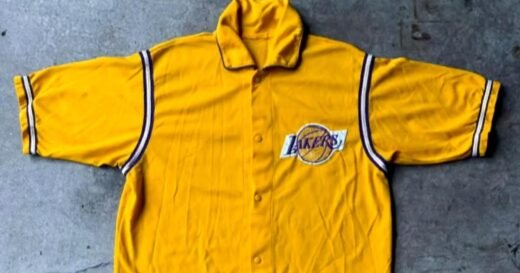
Teen makes close to $100k after finding Lakers jacket from 1972 NBA Finals at Goodwill
new admin - Jul 22, 2026Quinn Brown, a 19-year-old with a passion for selling items online, hit the jackpot when he purchased an original 1972…
Takeaways from Hegseth’s Senate hearing over Iran war funding
new admin - Jul 22, 2026Takeaways from Hegseth's Senate hearing over Iran war funding - CBS News Watch CBS News Defense Secretary Pete Hegseth and…