How the World Learned to Embrace Tupac Shakur

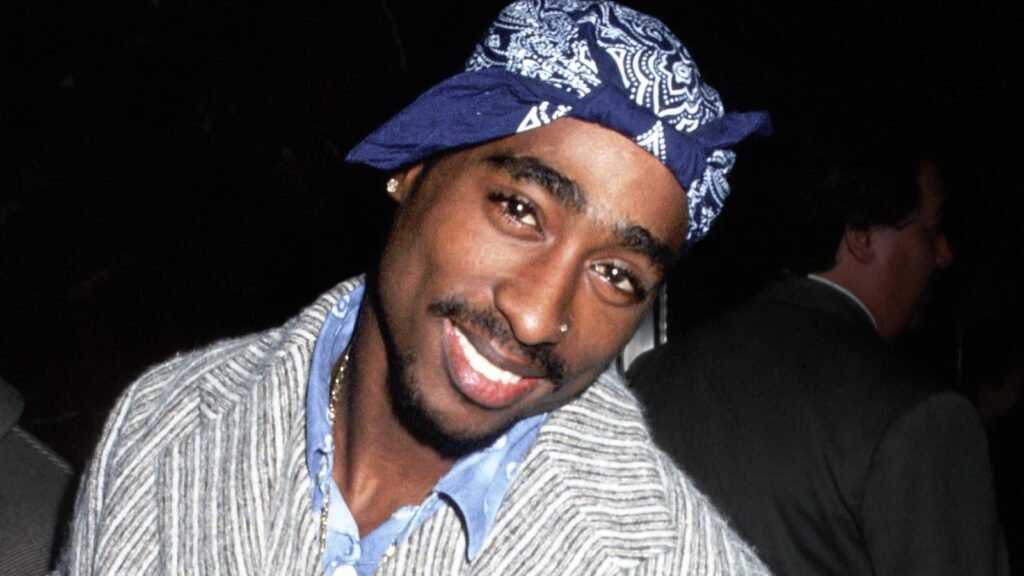
When Tupac Shakur was shot by assailants on the night of Sept. 7, 1996, in Las Vegas while riding alongside Death Row CEO Marion “Suge” Knight, resulting in his death six days later, the collective response from media outlets vacillated between paternalistic concern and outright mockery. “What goes ‘round …” blared a Time magazine article. “Blood on the Record Biz,” read a similar headline in Newsweek. People magazine called it “Living Dangerously.” Perhaps most unkindly, conservative outlet The American Spectator summarized Shakur as a “Bozo in the Hood.” As pundits moralized, photos of a mural in New York painted by Andre P. Charles and titled “Live by the Gun, Die by the Gun” flickered across the media for months.
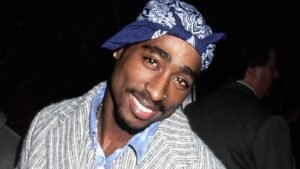
It’s been three decades since Shakur’s death at the tragically young age of 25. Yet despite having been dead longer than his short, turbulent life, he remains a magnetic presence in absentia. That much became clear when the just-concluded trial and conviction of Duane “Keffe D” Davis for orchestrating Shakur’s murder reignited international discussion of his legacy. Today, he’s a universally acknowledged rap icon and, since 2017, a Rock & Roll Hall of Fame inductee. Accordingly, the tone of the coverage this time around felt far less dismissive than decades ago. When photos of his dead body were displayed during the trial (which was livestreamed), it was hard not to recall the Nineties conspiracy theory that Shakur was “still alive” and secretly thriving triumphantly somewhere like Cuba, only to confront the unavoidable sight of another broken Black body cut down by violence. “Tupac Shakur Was at His Cultural Peak When He Was Killed,” read an August 2026 headline in The New York Times. The Guardian, for its part, blamed the long wait for justice on “U.S. policing forces,” viewing the trial through a decidedly political lens.
It all suggests an evolving appreciation of Shakur as a human being with strengths and flaws, not an ornery “rebel for the hell of it” (to quote the title of a disparaging 1997 biography by conservative gadfly Armond White) nor the gangsta-rap martyr hung on a cross on the cover of his first posthumous album, 1996’s Don Killuminati: The 7 Day Theory, released under the name Makaveli. Even Time magazine concluded as much during the 20th anniversary of his death in 2016, concluding that Shakur was a “symbol of possibility.”
Back in 1996, P. Frank Williams watched Shakur’s mother, former Black Panther activist and political prisoner Afeni Shakur, as well as his family and friends, hold vigil at a Las Vegas hospital. Williams later wrote about the scene for the Los Angeles Times and penned The Source’s November 1996 cover story about Tupac Shakur’s life. “I remember one of my co-workers basically said he’s a thug and a gangsta, so this is what you get for living that life,” remembers Williams, who went on to become an Emmy-winning director and producer of documentaries such as Freaknik: The Wildest Story Never Told for Hulu and Who Shot Biggie and Tupac for Fox. “I think now, if we look at it, there’s been a much more revisionist history where people can understand the layers of his message. The guy who could write ‘Dear Mama’ and ‘Keep Your Head Up’ could also write ‘Wonda Why They Call U Bytch.’ That’s just the paradox of Shakur. But at the time, I don’t think they understood his gift and who he was.”
As a rap vocalist and, less consistently, an actor with credits in film and television, perhaps most memorably as Bishop in the 1992 movie Juice, Shakur conveyed the power, anguish, and resilience of modern Black life through the eyes of a child of the Black Panther movement. Casual listeners often attempt to compare his early, “conscious” fare, like 1991’s 2Pacalypse Now and 1995’s Me Against the World, with lascivious G-funk epics like 1996’s All Eyez on Me. But even the latter has “Only God Can Judge Me” and “I Ain’t Mad at Cha,” where he bravely reckons with his personal choices. On the Makaveli album, he offers the self-explanatory “White Man’z World” alongside scorched-earth attacks on rivals like “Bomb First (My Second Reply).” Meanwhile, 2Pacalypse Now has plenty of blood-soaked moments like “Soulja’s Story,” which depicts a failed prison break reminiscent of Black revolutionary George Jackson’s 1971 demise.
Shakur shuffled through a series of emotional modes throughout his career, from gently nurturing (“Dear Mama”), proudly militant (“Holler If You Hear Me”), and generously charming (“When My Homies Call”) to raucously anthemic (“California Love” and “To Live and Die in L.A.”), desperately anguished (“Pain” and “Lord Knows”), and angrily paranoid (“Hail Mary” and “Against All Odds”). His track “Hit ‘Em Up,” which takes aim at the Notorious B.I.G. and his wife, Faith Evans, may be the most disrespectful diss track ever recorded. Regardless of the theme, Shakur’s music reverberates with ferocious intensity, as if all his senses were permanently heightened.
“His mother Afeni raised him to be socially conscious,” says Santi Elijah Holley, who chronicled Shakur’s life within the context of his family’s struggle for Black liberation in the 2024 book An Amerikan Family: The Shakurs and the Nation They Created. “But he also recognized he wasn’t [Public Enemy frontman] Chuck D. He’s not just going to hit you over the head with politics. You’re not going to reach the people on the street if you can’t speak their language, if you can’t entertain them, if you can’t get their ear.”
Jeff Weiss, who co-wrote the 2013 book 2Pac vs. Biggie: An Illustrated History of Rap’s Greatest Battle and recently covered the Keffe D trial for The Hollywood Reporter, admits that Shakur may not have been as accomplished a technical rapper as his friend-turned-rival the Notorious B.I.G., who was shot and killed less than six months after Shakur’s death. (Conspiracy theorists continue to wonder aloud if the murders were connected.) Instead of dallying in metaphorical language and complex similes, Shakur aimed for emotional impact. “In a way, Biggie was the perfection of that East Coast lyrical sound … [Tupac] anticipated the future,” says Weiss, who sees Shakur’s rise as marking a shift from a culture centered on its New York origin to one defined by several regional American idioms, including Pac’s adopted homes in the Bay Area and Los Angeles. (Ironically, Shakur was born in New York.)
Weiss adds, “I think Tupac became absorbed in the DNA of generations of rappers. Master P was nothing if not trying to sound like Tupac. DMX was very influenced by Tupac, at least aesthetically. Ja Rule, obviously.” Then there’s Kendrick Lamar, who memorably summoned the voice of Shakur on his 2015 masterwork To Pimp a Butterfly, and the late Nipsey Hussle, who frequently praised Shakur’s influence.
But even if one studiously avoids the endlessly debated question of who’s better, Tupac or Biggie, the former’s influence is undeniable. His declamatory phrase “T.H.U.G. L.I.F.E.” — which he defined as spelling out “the hate you give little infants fucks everybody” — changed popular usage of the word “thug” from an epithet into a signifier of urban survival despite systemic obstacles, and informed at least one book and movie (The Hate U Give). Dean van Nguyen, who wrote about Shakur in Words for My Comrades: A Political History of Tupac Shakur, remembers that the rapper’s posthumous 1997 single, “Changes,” became an anthem during Black Lives Matter protests in 2020 and beyond.
“There’s a story that when rebels were [driving toward deposing Libyan dictator Muammar Gaddafi], he could hear the music of ‘Me Against the World’ playing as they were approaching,” says Nguyen, who sees Shakur as part of a lineage of “Third World” icons like Bob Marley and Che Guevara. “He had a great ability to have a sound bite and write a lyric that’s easy to put on a poster. Certain lines like ‘They got money for wars but can’t feed the poor’ [from ‘Keep Ya Head Up’], every time the U.S. has started a war since then, you’ll see that on a placard at an anti-war protest.”
Perhaps it’s clear now that Shakur was far from a “bozo.” But do we truly see him in his total humanity, or has he become another empty died-too-young pop icon, as glamorously banal as James Dean, Marilyn Monroe, and Elvis Presley? Shakur has not only become part of the soundtrack for young idealists protesting police violence, but has also turned into a familiar face on T-shirts sold at Walmart and the subject of a terrible biopic. Last month, U.S. Secretary of State Marco Rubio told The Katie Miller Podcast that Shakur is his favorite rapper, continuing MAGA’s misappropriation of Black and alternative culture.
Last year, Jeff Pearlman published Only God Can Judge Me: The Many Lives of Tupac Shakur, a biography that doggedly explodes numerous myths about the rapper’s life, from claims he was shot five times by assailants while visiting Quad Studios in 1994 (Pearlman reports it was three shots, one of which may have been self-inflicted) to beliefs that Knight was a father figure (in reality, Shakur chafed under Knight’s leadership and sought a way out of his Death Row contract). “When I was promoting the book, people asked, ‘What would Tupac be doing now?’” Pearlman says. “It’d be impossible for me to say what a 55-year-old Tupac would be doing. But there’s no way I can imagine he’d be kicking back as ICE grabs brown people off the streets of L.A., that he would be like, ‘Yeah, not my problem.’ Any right-wing culture warriors citing Tupac or hip-hop are just completely misguided.”
Pearlman says he interviewed 652 people, most now in their fifties and sixties, for his book. What do those folks think of Shakur now? Pearlman responds with unexpected candor: “I think people who didn’t know him almost view him as this triumphant figure. And I think a lot of people who knew him viewed it as a real waste. This guy had a real gift and talent and a light about him, and he didn’t die for a cause, fighting the police, fighting for injustice and standing up for people. He died [because of] a stupid hotel lobby fight.”
It’s a fair assessment. Despite Shakur’s artistic brilliance, he led a complicated and often-violent existence marked by shootings, beatdowns, and a 1994 sexual-abuse conviction that effectively tarnished his image. (Shakur continued to deny the allegations for the rest of his life.) One can’t help but think of the aged prisoner Morgan Freeman plays in The Shawshank Redemption when questioned by a parole board about his rehabilitation: “I look back on the way I was then — a young, stupid kid who commits a terrible crime. I want to talk to him. I want to try and talk some sense into him. Tell him the way things are. But I can’t. That kid’s long gone.”
But it’s also possible to focus on what Shakur gave us — the incredible music, the incendiary performances, the trenchant social and political commentary, his fiery persona, and, yes, his physical beauty. That doesn’t mean we shouldn’t also be aware of his failings. Those qualities, memorably illustrated by the dueling sections of 2007’s greatest-hits compilations The Best of 2Pac Part 1: Thug and Part 2: Life, inevitably inform each other.
Throughout a mess of a life informed by a traumatic childhood and wellsprings of emotion that he often seemed unable to control, Shakur crafted a voice of pain, pleasure, and love for Black people, and became a potent symbol of Black liberation. Perhaps the contradictions inherent in his life may never be fully resolved. But at least we can try to understand them.
You may be interested

Trump travels to Ireland after 9/11 Pentagon speech, Republican midterm convention
new admin - Sep 12, 2026Trump travels to Ireland after 9/11 Pentagon speech, Republican midterm convention - CBS News Watch CBS News President Trump traveled…

Train derailment in France injures 44, police suspect sabotage
new admin - Sep 12, 2026Authorities suspect sabotage caused a train derailment in northwestern France that injured 44 people after a piece of rail was…

L.L.Bean doubles down on its old-school roots in Maine
new admin - Sep 12, 2026[ad_1] L.L.Bean’s origin story grew from the ground up — literally.The company, which sells everything from clothing and footwear to…