

How the Stop WOKE Act Ruling Strengthened Academic Freedom

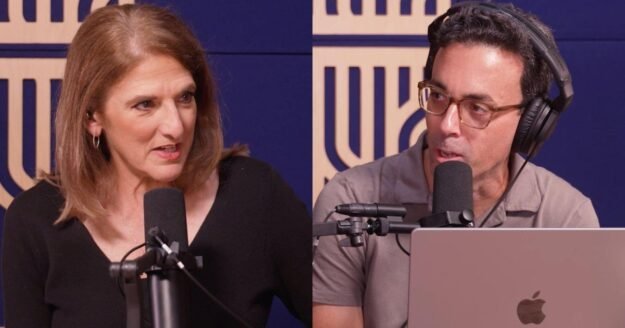
The 11th Circuit Court of Appeals last week ruled to strike down the part of Florida’s Stop WOKE Act, which applied to professors at public institutions. I knew lots of people would be talking to lawyers (with good reason!), but I also wanted to hear from a historian about this significant event. So I emailed Tim Cain, an academic freedom expert and professor of higher education at the University of Georgia.
This conversation has been edited and condensed for clarity.
Q: What is academic freedom? Why is there so much confusion about what actions fall underneath this term?
A: Academic freedom is the condition of work that allows higher education to do the job that society asks and needs it to do. In the U.S., we think of it as having four main parts: the freedoms to teach, research and disseminate the results, undertake extramural speech, and undertake intramural speech. The first two are obvious on their face, but the last two are just as important—extramural speech rights allow for faculty to speak freely about issues unrelated to their scholarly work, including on social media in the modern era. This is often termed the “full rights of citizenship,” though it is equally needed for noncitizens, who are particularly vulnerable right now.
The freedom of intramural speech allows for faculty to speak about issues related to their institution. Intramural speech rights not only allow shared governance to exist, but, when protected, also allow a faculty member to, for example, criticize a college’s curriculum on a website (as it is the topic, not location, that makes it intramural).
Within higher education, I think the confusion is largely because we have not done a good job talking about, explaining and working to understand academic freedom. Many faculty themselves don’t have good understandings of it because it is not part of the formal or informal preparation that most go through. And, if faculty don’t have well-developed understandings, they are not positioned to help future faculty understand it. I have been a faculty member for 20 years and have studied academic freedom since graduate school, but for most of that time, many faculty I spoke with were unconcerned with academic freedom, as they assumed it was protected. Many also assumed that it gave them more protection than it actually does.
We also know that external actors have worked to undermine academic freedom and higher education more broadly. Part of the larger project to label faculty as radicals and “the enemy” includes selling a distorted version of academic freedom and arguing that it needs to be reined in.
Q: Even with all this confusion, when I heard about the Stop WOKE law, I immediately thought it violated legal precedent on academic freedom. Was this act, and its subsequent legal cases, important to scholars of academic freedom?
A: The issues raised by the Stop WOKE law are incredibly important, as they represent a state government, in this case Florida, inserting itself into the college curriculum for partisan purposes. The act fundamentally undercut a core principle—that those who are the scholarly experts should control the curriculum. There is no governor who knows more about sociology or what is appropriate to teach in a sociology course than the sociology faculty. The same could be said about history, chemistry and every other field. So this incursion into the normal functioning of higher education damaged both institutional autonomy and academic freedom. And, because it did, it threatened students’ ability to learn what they should have been able to learn in college.
The ruling is promising, although I expect that the legal battle will continue. What I found most encouraging in the ruling was the rejection of Florida’s claim that paying faculty members’ salaries gave the state the right to control their classroom speech. The opposite decision would have fundamentally changed public higher education.
Q: Are we just seeing a repeat of past attempts to curtail academic freedom, like during the Red Scares?
A: The overreach by state governments that we are seeing in the 2020s is without true precedent. In the 1920s, more than 20 states considered legislation that would have banned the teaching of evolution, but only three enacted bans (one of them through a referendum). At the time, scientists and college presidents led the resistance to the legislation.
We could use more college presidents doing that today. We remember the Scopes trial because of Inherit the Wind, but after the verdict was thrown out due to a sentencing error, the ACLU continued searching for a test case for five years, hoping to get the anti-evolution legislation ruled unconstitutional. It eventually stopped searching because the legislation in the three states was having little effect.
In the late 1930s and even more so in the late 1940s and 1950s, higher education experienced a Red Scare that was truly damaging but was in many ways different than what we are experiencing now. Those attacks most frequently included faculty called before either a state or federal legislative committee to be questioned about their past or current Communist Party membership. What was truly damaging, though, was the way that institutions and higher education as a whole responded—institutions often proactively dismissed faculty members they were not required to dismiss. They overcomplied. That is probably the biggest parallel to the McCarthy period—institutions’ overcompliance—though what we are seeing [now] is more widespread and, in some ways, even more dangerous.
Of course, the attacks at the midcentury were broader than just anticommunism and included efforts such as the Johns Committee purges of LGBTQ+ faculty in Florida and the dismissals of Black faculty and others engaged in civil rights activism across the south. These, too, have echoes today, as institutions are dismantling diversity, equity and inclusion programs; the federal government is canceling grants that deal with related issues; and states are trying to reshape college curricula to deny the existence of structural racism and sexual and gender diversity.
Q: As you noted, the politicians who introduced, passed and championed Florida’s Stop WOKE law argued that university employees’ speech was all government speech simply because they work for state universities. The 11th Circuit disagreed. Why do you think that was? How does this align or diverge with what we know historically about academic freedom and the First Amendment?
A: As I said, this is the most encouraging part of the ruling to me. Academic freedom has an interesting relationship with the First Amendment; they come closest together when we are discussing extramural speech, but even then, academic freedom does not traditionally protect everything that the First Amendment protects. The American Association of University Professors’ 1964 Statement on Extramural Utterances includes: “The controlling principle is that a faculty member’s expression of opinion as a citizen cannot constitute grounds for dismissal unless it clearly demonstrates the faculty member’s unfitness to serve. Extramural utterances rarely bear upon the faculty member’s fitness for continuing service.”
But, when we get to classroom speech, for example, some of the connections are more tenuous. So, for example, arguing that the Earth is flat is constitutionally protected, but it might be disqualifying for a geologist. The same is true with Holocaust denial for an instructor of modern European history. The key here is that such determinations of unfitness must be made by other faculty experts, not a donor or an elected official.
So academic freedom and First Amendment protections are different, and the former has never meant “anything goes.” David Rabban, in a very good 2024 book titled Academic Freedom: From Professional Norm to First Amendment Right, proposes a legal theory that would recognize academic freedom as a special First Amendment right but still separate it from the broader First Amendment rights that apply to all people, including faculty in their private lives. It would do so due to the importance of the “production and dissemination of knowledge” and would protect teaching, research and intramural speech (related to educational issues). In Rabban’s approach, extramural speech would be covered by existing First Amendment protections.
Q: What’s the biggest higher education policy issue you’re thinking about right now?
A: I am not sure where to start. The last few years have been a lot, with state-level efforts to control the curriculum and diminish or eliminate tenure; the elimination of Grad PLUS; the politicization of federal grant funding; the Supreme Court’s ruling in Trump v. Slaughter, which will likely end Gwynne Wilcox’s efforts to regain her position on the National Labor Relations Board, with potentially devastating consequences for graduate student unionization; and many more.
But today, I am thinking most about the ongoing reshaping of accreditation that is fundamentally weakening institutional autonomy and breaking the regulatory triad.
You may be interested
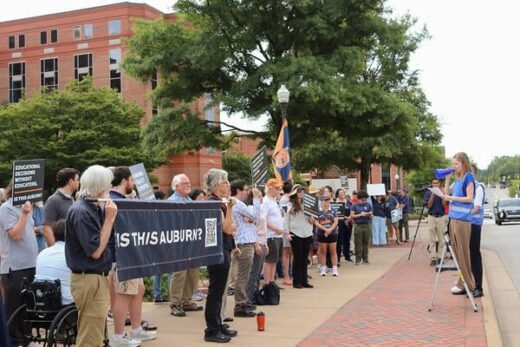
Auburn Faculty Protest Board’s Curricular Overhaul
new admin - Sep 15, 2026[ad_1] More than 160 faculty and community members attended a protest outside the board’s quarterly meeting on Friday. With the…
9/14: CBS Evening News – CBS News
new admin - Sep 15, 20269/14: CBS Evening News - CBS News Watch CBS News AI executives and President Trump disagree over doomsday warnings; the…
GOP Bill Aims to Cap International Student Athletes
new admin - Sep 15, 2026[ad_1] Representative Tim Walberg (R-Michigan) and Senator Jon Husted (R-Ohio) have introduced a bill to cap the number of international…